I’ve celebrated Rosh Hashanah my entire life. Apples and honey. Round challah. Buying a new outfit. Crowded services. The shofar. L’Shanah Tovah. I knew what we were celebrating, of course. It was the Jewish New Year.
But the older I get, the more I realize that knowing what a holiday IS and understanding what it’s asking of us are two very different things. Rosh Hashanah has been asking Jews the same question for a very long time: What have you done with the life you were given?
Interestingly, the Torah never actually calls the holiday Rosh Hashanah. It calls it Yom Teruah, a day of sounding the horn, and gives surprisingly very little explanation for why. Much of what we now associate with Rosh Hashanah comes from Jewish tradition built around those few words.
The rabbis connected Rosh Hashanah with the creation of Adam and Eve. Not simply the creation of the world, but the beginning of us. Of Humankind.
According to rabbinic tradition, Adam was created on Rosh Hashanah. During that same day, he was given a commandment not to eat from the Tree of the Knowledge of Good and Evil. He went on to break it, be judged by God, and receive mercy.
And I was “today years old” when I learned it wasn’t an apple he ate from the tree. We are never told what kind of fruit it was! Somewhere along the way, I just accepted the apple as part of the story and apparently never questioned it.
Which, of course, got me wondering about the apples we dip in honey every Rosh Hashanah. Turns out, they have nothing to do with Adam. Jews have been eating sweet foods at Rosh Hashanah for a very long time. The custom of dipping apples in honey became associated with Ashkenazi Jewish communities. We’re simply asking for a sweet year ahead.
Adam couldn’t even make it through his first day without screwing something up. I kind of love that. It’s so very human.
The Jewish year doesn’t begin with a perfect person standing in all his glory before God. It starts with Adam being given a choice and making the wrong one. He had to answer for it, and morning still came.
Judaism doesn’t ask us to pretend we don’t fail. The entire structure of the High Holy Days assumes that we do. We hurt people. We say things we shouldn’t. We don’t say things when we should. We get stubborn and distracted. Sometimes we know perfectly well that we’re doing the wrong thing and do it anyway.
So once a year, the Jewish calendar comes around and reminds us, hey, it’s time to take a look inward. Not at everybody else for a change, but at ourselves.
There’s a reason the great sound of Rosh Hashanah is the shofar. Maimonides wrote about it as a call to people who had become spiritually asleep. Wake up. Examine what you’ve been doing. Remember your Creator. Change your ways.
Jews have probably needed that reminder in every century because we really haven’t changed all that much. We get comfortable. We get busy. We tell ourselves we’ll deal with something later. We stop noticing things that once bothered us because we’ve seen them too many times. We can even get used to things we never should have accepted in the first place.
Sometimes sleep doesn’t look like sleep. Sometimes it ends up looking like going about our lives until something finally shocks us awake.
The shofar isn’t particularly beautiful in the way we usually think of beautiful music. It doesn’t have lyrics or explain anything. It’s breath forced through a ram’s horn.
Tekiah. Shevarim. Teruah.
Some of the sounds are long. Others are broken. One traditional interpretation hears crying in those broken notes. Then comes tekiah gedolah, the great final blast, held for as long as the person blowing the shofar has breath.
Rosh Hashanah is also Yom HaZikaron, the Day of Remembrance. During the traditional service, we recite Zichronot...verses of remembrance. We speak of God remembering Noah after the flood. We speak of the covenant. And we ask God to remember us.
For Jews, remembering has never meant simply looking backward. We remember because memory carries responsibility.
We remember where we came from and the people who came before us. We remember what was done to us and what we have done. We tell our children stories that were told to us by people who heard them from people before them. We say Yizkor. We say Zakhor. Remember.
A people that has spent thousands of years remembering also begins its year by being asked to remember. And you can’t return to something you’ve forgotten.
The Hebrew word teshuvah is usually translated as repentance. But its root means return. Personally? I like the Hebrew better. Repentance can sound like punishment. Return means you’ve wandered somewhere along the way and need to find your way back.
It doesn’t pretend nothing happened along the way either. Judaism doesn’t hand us an eraser. If we’ve hurt another person, Yom Kippur isn’t a loophole that lets us skip the apology. We have to go to the person and try to make things right. Some things can’t be repaired completely, and forgiveness can’t always restore what existed before. We are still expected to try.
And Rosh Hashanah comes first.
Before the fasting, before the long confessions, before we stand together and say Ashamnu, bagadnu — we have been guilty, we have betrayed — there is a birthday. Humanity’s birthday. We have another year of life and another chance to decide what we’re going to do with it.
That means more to me now than it did when I was younger. Back then, a year felt like an almost unlimited amount of time. There would always be another holiday, another dinner, another chance to call someone, another opportunity to say what needed to be said.
Eventually you learn that a year isn’t a promise. Neither is tomorrow.
So I find myself thinking about different questions now. Who needs to hear from me? What am I carrying that I need to put down? Where have I been silent when I should have spoken? Where have I spoken when I should have listened? What have I forgotten? Where do I need to find my way back?
Across the globe, there will be Jews hearing the shofar this Rosh Hashanah. Some will be sitting in large congregations, and others will be in front of their computers, live-streaming a service. Some will understand every word of the service, while others won’t understand much of it at all.
Someone will hear the shofar for the first time this year, while someone else may hear it for the last time. For a few moments, all of us will hear the same ancient sound Jews have carried from one year into the next. No speech. No explanation. Just breath moving through a ram’s horn, calling us to wake up, remember, and find our way back.
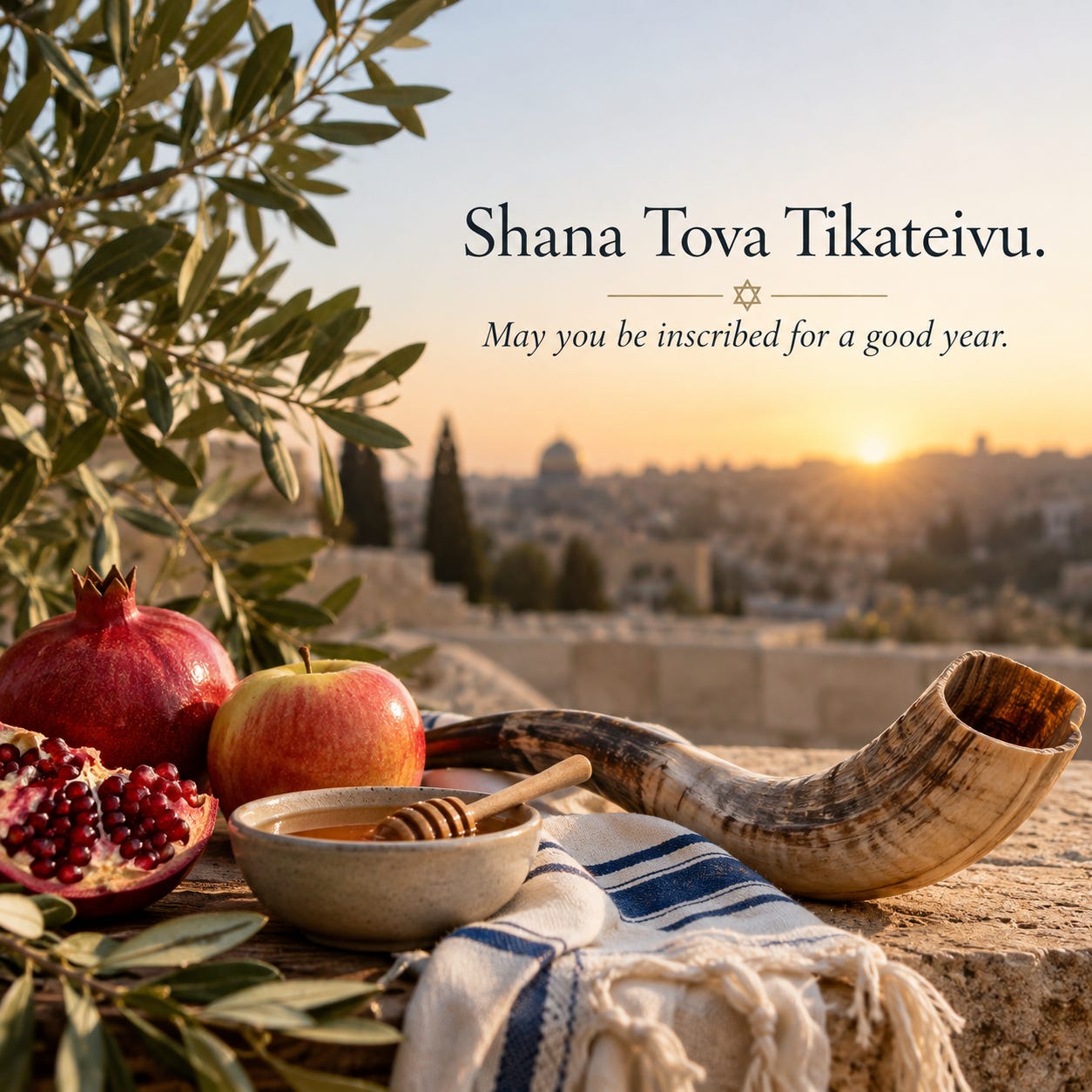
Shana Tova Tikateivu. May you be inscribed for a good year.