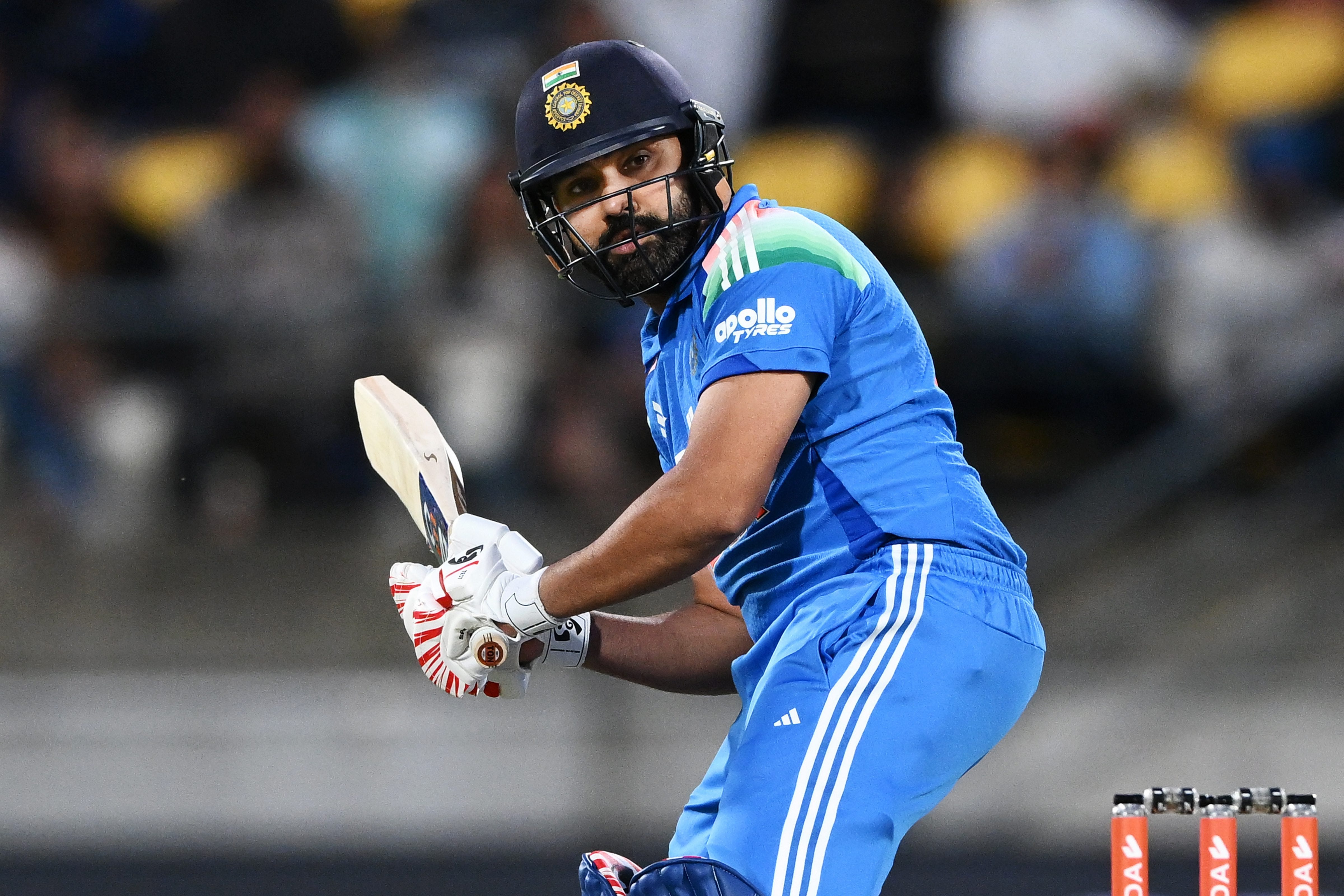
Four innings, 30 runs, an average of 7.50 with two ducks. A disappointing series, and discussions in Indian cricket have returned about whether Rohit Sharma should board the flight to South Africa for the 2027 World Cup. The veteran opener will turn 40 when the marquee tournament starts. The questions have some legitimacy given his age and his performance in New Zealand. But does Rohit deserve scrutiny after each lean phase? Had he not already given enough evidence of his ability to score runs before the series against the Kiwis?
Rohit did not have a great start to 2026. In the January ODI series against the same team at home, he managed only 61 runs in three matches at an average of 20.33. Similar questions followed. However, the record holder of three double tons in ODIs answered the critics in style.
In the next nine innings, Rohit scored 543 runs at an average of 60.33 and a strike rate of 109.26. He registered two centuries and two fifties, crossing the 75-run mark on four occasions. Rohit bounced back emphatically, delivering both volume and scoring speed. His improved strike rate also put to rest questions about his World Cup eligibility.
Rohit scored 138 off 110 balls against England at Lord’s during that stretch. Coming in a chase of 388, the innings underlined his ability to deliver under pressure. He further strengthened his case with a 101 off 75 balls against West Indies in a record chase of 406. Rohit shared a 255-run opening partnership with Shubman Gill in that game, effectively taking the contest away from the opposition much earlier than expected. He followed up the century with another impressive effort, scoring 92 off 85 balls to reinforce the consistency of his comeback.
Over the last couple of years, Rohit has repeatedly demonstrated the consistency and firepower required to earn a place in the World Cup squad. Since 2025, he has batted in 30 innings, scoring 1284 runs at an average of 44.28 and a strike rate of 100.94. His tally includes four centuries and six half-centuries. These numbers underline that Rohit still has plenty to offer ODI cricket.
The Rohit-Gill partnership at the top also lends solidity to India’s batting line-up. The two batters complement each other well, with the veteran bringing an aggressive approach that allows his partner to adapt to the demands of the situation. Rohit’s 28 sixes in ODIs in 2026 are evidence of his attacking intent. His exploits at the 2023 World Cup, where he scored 597 runs at 54.27 with a strike rate of 125.94, are a reminder of his ability to deliver on the big stage.
There are concerns, without a doubt. In the ODI series against England and New Zealand, both played away from India, Rohit has scored 205 runs in seven matches. Of those, 138 came in a single innings at Lord’s, highlighting his struggles for consistency. In South Africa, where much of the tournament will be played, he has managed just 19.69 runs per innings across 13 innings. That is a record he would be keen to improve upon.
Yet, one series should not be the deciding factor for a player of Rohit’s stature. India would not just lose stability at the top if he were to go; they would also lose a wealth of experience that could prove invaluable in an expanded World Cup. The management still has time to evaluate Rohit before the tournament. Its decision should depend on the strength of the back-up plan and how Rohit shapes up in the lead-up to the World Cup, rather than on four innings in conditions where he had little time to adjust.