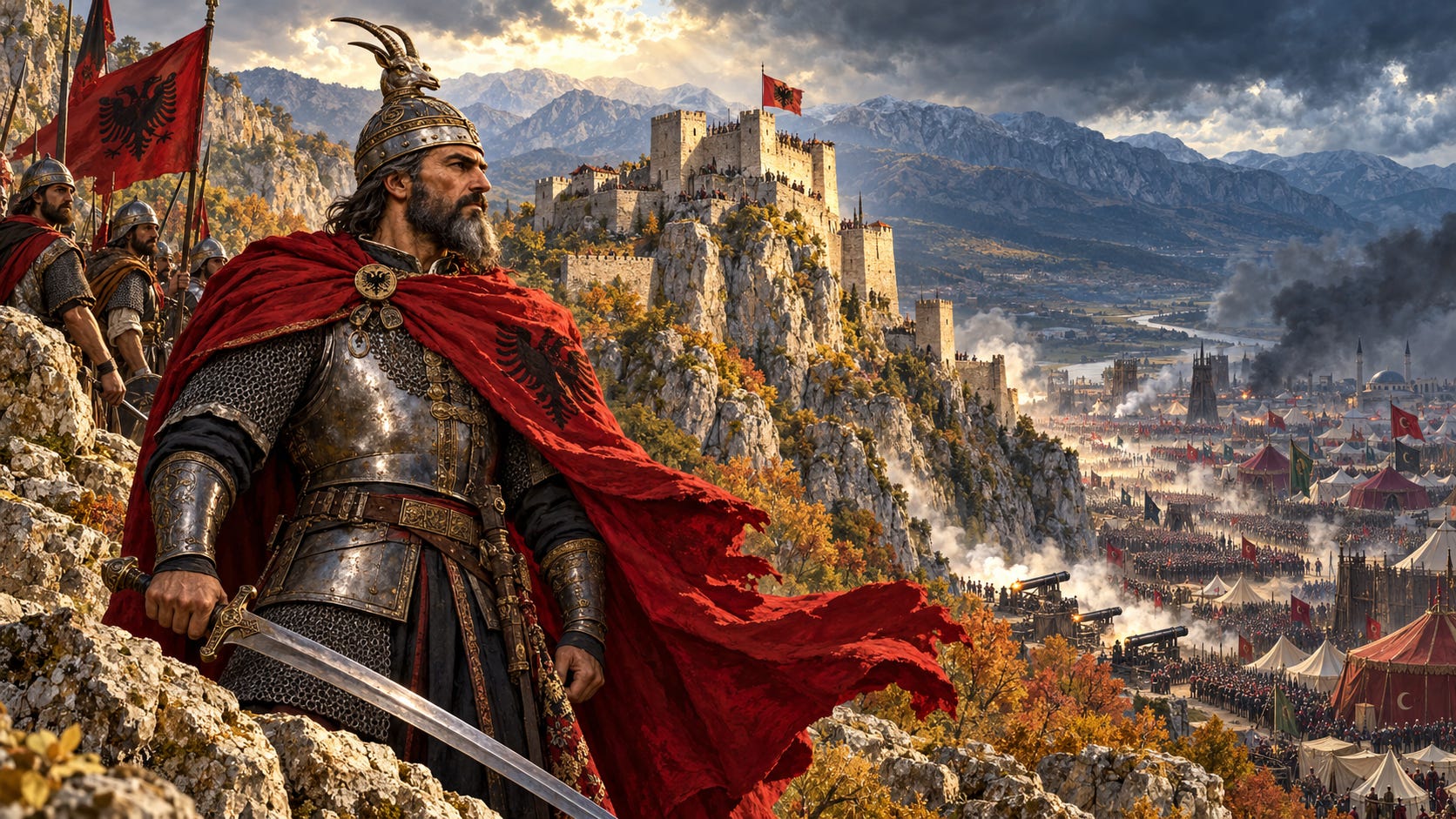
Today in history, a man who would come to be known as the “Albanian Braveheart” delivered his homeland — and by extension, all of Europe — from a brutal Muslim siege that followed a series of mindboggling events.
Nearly four decades earlier, this same Albanian, George Kastrioti — better known as Skanderbeg (“Lord Alexander”) — was taken captive as a small child by the Ottoman Turks and trained to be a janissary: a Christian slave turned Muslim soldier. Excelling at war, he quickly rose among the Ottoman ranks until he became a renowned general with thousands of Turks under his command.
But despite all the honors showered on him, once the opportunity came in 1443, he showed where his true allegiance lay: he broke free of the Ottomans and fled back to his native and continuously harried Albania. There, after openly reclaiming his Christian faith, he “abjured the prophet and the sultan, and proclaimed himself the avenger of his family and country.”
His “ingratitude” naturally provoked the Turks to no end and prompted wave after wave of jihadist invasions, each one larger and crueler.
Finally, in what was meant to be the campaign to end all campaigns, in the spring of 1450 Sultan Murad II himself led a gargantuan army of 160,000 men into Albania — straight for Skanderbeg’s stronghold, the White Castle in Croya.
Continue reading below.
If you value unflinching, historically grounded analysis that mainstream outlets soften or ignore, consider upgrading. Paid subscribers get:
**Several new, full-length articles every week.**Carefully researched pieces you won’t find elsewhere.
Full access to the complete premium archiveArchive of in-depth writing, research, and commentary — all in one place.
Entry into the subscriber chatA private space for serious readers and thoughtful discussion.