The Third Exclusive Guest Column for the Ever-Awesome Melissa Brodsky’s The Lioness Writes
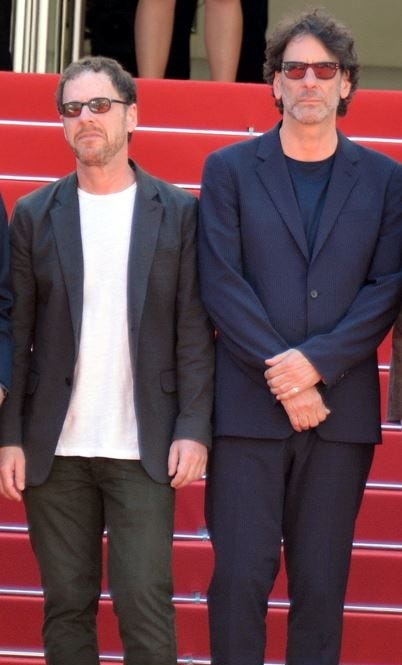
Over the last three decades, I have developed multiple doctorates’ worth of knowledge, research, and genuine field work into the films of Joel and Ethan Coen.
And now I have a series of degrees recognizing my expertise.
On October 15, 2026, I published “The Dave Abides: Why I’ve Decided to Add “Dr.” to My Name on Substack (And You Should Too)” in which I introduced readers to the Church of the Latter-Day Dude and its teaching wing Abide University. There they advocate for “Dudeism,” a satirical-but-actually-sincere religion derived from my favorite Coen Brothers film, “The Big Lebowski,” and based in emulating the lifestyle and values of its protagonist, Jeffrey “The Dude” Lebowski.
Using the web forms, anyone can receive an ordination to become a Dudeist Priest in the church, and earn degrees of their choice from Abide-U, home of our mascot, the Marmots.
After much careful deliberation, I selected the following in addition to my ordination:
Doctor of Divinity in Abidance Counseling
Master of Arts in Comedic Science
Doctor of Philosophy in Lebowski Studies
This is all very silly and absurd – degrees which take people years, dispensed from a website in an instant.
But there’s a serious side to it also: I actually *do *have this level of real-world experience in “abidance counseling,” “comedic science,” and especially “Lebowski Studies.” I do provide counseling to others with a Lebowski attitude. I have researched comedy like a science. And I have studied Lebowski to an absurd level, even writing a screenplay inspired by it 13 years ago, “Daughters of The Dude.” I’ve picked the damn film apart line by line.
Know how some academics make Marx their focus and then analyze the world through a Marxist lens? I have a Lebowski lens, which in turn means a broader Coen brothers lens.
The Greatest Jewish Filmmakers?
I’ll state my position simply: the Coen brothers as a filmmaking team were the greatest Jewish filmmakers of all time. They were better than Steven Spielberg and, yes, they were even better than Stanley Kubrick.
The reason is simple: the warmth, depth, and good humor of the characters. Spielberg and Kubrick will primarily be remembered for their special effects innovations and epic scope. The Coens’ engaging characters, more vivid emotional experiences, and complexity in storytelling are what bring them to the level higher. Further, when it comes to Jewish values and a Jewish sensibility, the Coens trump both of them by far. Their movies are infused with Jewish moral and ethical themes far deeper. Kubrick is instead primarily a cold satirist and Spielberg a sentimental entertainer.
And I’ll go further: the Coen Brothers were the second greatest American filmmakers of all time.
Only David Lynch surpassed them, because of “Twin Peaks,” particularly the singular experience of “Twin Peaks: The Return,” which is really an 18-hour-long film.
However, with both the Coens and Lynch, they achieved the same thing: their work spawned not just fans, but philosophies.
People watch “Twin Peaks” and “The Big Lebowski” obsessively for decades because they express ways of looking at and approaching the world. Lynch and the Coens were both satirists, but differently than Kubrick. Their work helps us to see the absurdity of America and of humanity as a whole. They give us the Lynchian lens and the Lebowski lens.
You don’t quite get that with the other top-tier American filmmakers: Alfred Hitchcock, Orson Welles, Francis Ford Coppola, Martin Scorsese, Quentin Tarantino, P.T. Anderson, Terrence Malick, Robert Altman, Darren Aronofsky, Spike Lee, David Fincher, the Safdie brothers… add whoever you’d like to the list of Usual Suspects. These are all incredible filmmakers who gave us masterpieces, but they did not translate a unique philosophy and moral ethos into their body of work which others could then embrace. (However, with Aronofsky and Anderson, they both still have many years of filmmaking ahead of them and may very well ascend to Lynch and Coen level, so they’re not out of the running yet. And both of them count as Jewish filmmakers too. I didn’t learn until recently that Anderson’s mother is Jewish, so he counts.) Some might argue that Tarantino has ascended from a film-to-philosophy level, but I’m not convinced of that yet. Tarantino has always been more interested in aesthetics and entertainment than characters, emotions, stories, and ideas.
Every People’s Films On Their Terms
Note that I’m separating us out as Americans here. As a film obsessive since my teenage years in the 1990s, I’ve come to conclude that individual countries’ and cultures’ films should generally be analyzed, interpreted, and understood within the context in which they emerged. Let’s drop the usual names: Japan’s masters Akira Kurosawa and Yasujiro Ozu, Italy’s masters Federico Fellini and Pier Paolo Pasolini, Sweden’s Emperor Ingmar Bergman, Germany’s King Werner Herzog, Russia’s saint Andrei Tarkovsky, India’s master Satyajit Ray, Mexico’s masters Alejandro González Iñárritu and Guillermo del Toro, and, of course, France’s masters François Truffaut and Jean Renoir. (And screw that antisemite Jean-Luc Godard; I’m not sticking him here even though many film people would.)
While we can do cross-cultural comparisons and so on, I’m not sure how helpful it really is to do that anymore. I feel like if we’re going to watch a French film or an Indian film or a Japanese film, we really should try and watch it through the eyes of the people of those cultures and on their own terms. In that way, a number of the international filmmakers above also reached similar levels as Lynch and the Coens. For me, those are probably Kurosawa, Fellini, Pasolini, Bergman, Herzog, Tarkovsky, and Ray. Each of them certainly projected a profound, unique vision and philosophical method into their films. For many of those filmmakers, you can spend a lifetime exploring their body of work. You can watch their movies again and again, finding new layers and realizations each time.
With all these filmmakers, when you discover them and come to understand what they’re doing, then you’ve got a new lifelong friend. You can go and revisit these artists in their work anytime you want.
And it’s time to make an appointment with The Dude.
So where to begin with the Coens if you have never encountered them before or if you are reengaging with them after a long time?
I have decided to assemble this list of the ten which I regard as their best and most important. I do acknowledge my biases here in these selections, as I do prefer some of the Coens’ films which are regarded as their more minor works, while feeling less enthusiasm toward some of their more celebrated works.
Regardless, if you’re going to be a serious film fan, you simply will get around to seeing them all eventually. They’re clearly watch-all-of-them filmmakers.
Before diving into the ranking, I’ll give a quick summary of the arc of their career and note some of the films which will not appear on the top 10 list and why. Their career comes in seven stages:
1. Mid-1980s Rising Independent Period:
“Blood Simple” (1984)****“Raising Arizona” (1987)
The Coens were part of a wave of rising independent filmmakers in the 1980s and early 1990s who broke through with innovative, low-budget genre pictures. “Blood Simple” is one of the most amazing American thrillers ever and “Raising Arizona” is one of the greatest, most iconic comedies of the decade, one of the core films of Nicolas Cage’s career. They’re both lower priority for Coen watchers. They’re wonderful films, it’s just that the later work is multitudes better.
2. Early 1990s Breakthrough Period:
“Miller’s Crossing” (1990)“Barton Fink” (1991)“The Hudsucker Proxy” (1994)
It was in the first half of the 1990s when the Coens rocketed from quirky ‘80s indie filmmakers to major, world-class artists. The back-to-back critical successes of “Miller’s Crossing” and “Barton Fink” made them legendary. “The Hudsucker Proxy” which followed is generally regarded as a disappointment in comparison, but don’t let that dissuade you from seeing it, as there’s a lot to love there too in what is probably, simply their genuinely weirdest film.
Of the films in this period, while “Barton Fink” is generally the celebrated big one of the period which won the Palme d’Or at the Cannes Film Festival, I find “Miller’s Crossing” much richer and more engaging. It’s now one of the classic American gangster films, truly one of the best of the genre. I don’t care for Barton Fink as a character very much, but others may disagree. It’s still an essential film for cinephiles to see to judge for themselves. And I might like it when I revisit it again eventually.
3. Late 1990s Golden Period
“Fargo” (1996)“The Big Lebowski” (1998)“O Brother, Where Art Thou?” (2000)****“The Man Who Wasn’t There” (2001)
“Fargo” set the film world on fire in 1996 and its flame has never stopped burning. “The Big Lebowski” initially did not, and was regarded as a weird failure. It took a long time for its flame to grow into the massive torch it has now become. Their following films in 2000 and 2001 are also extraordinary artistic achievements.
4. Early 2000s Mainstream Period
“Intolerable Cruelty” (2003)****“The Ladykillers” (2004)
During these years, the Coens attempted some more clearly conventional efforts — still worth seeing and owning — but with their ethos more restrained. You can put them at the end of your list for Coen brothers viewing, unless the premises and/or actors of either especially appeal to you, then by all means, jump in and enjoy.
This is a pretty normal thing which happens in great filmmakers’ careers. Their weakest movies are often when they try and go the most Hollywood conventional. For Lynch it was obviously with “Dune.” For Scorsese, it’s “Cape Fear,” “Hugo,” and “The Color of Money.”
I’ll note the exception which proves the rule: Spike Lee’s best movie is “Inside Man.” This may seem heretical to say it’s better than “Do the Right Thing” and “Malcolm X.” But it’s not to diminish those films, but rather just to lift up the serious cinematic achievement of “Inside Man.” Lee became a stronger filmmaker between finishing “Malcolm X” in 1992 and the release of “Inside Man” in 2006. He applies his skills here to a more conventional, high energy story told with amazing actors to create one of the most exciting, satisfying American thrillers of all time. My appreciation and respect for it has only grown over the years. It succeeds in a similar way to how the Coens succeed. By using a conventional genre story, then a filmmaker can layer in all sorts of depth and artistry.
Lee is an important filmmaker and people do need to engage with his work, however he’s similar to Woody Allen — a lot of the films are pretty self-indulgent, repetitive, experimental, trivial, and boring. They’ll also often produce eye rolls for those of us who don’t share Lee’s and Allen’s cookie cutter New York City secular leftist Democrat partisan vision-of-the-anointed ideologies.
5. Late 2000s Critical Boom Period
“No Country for Old Men” (2007)“Burn After Reading” (2008)“A Serious Man” (2009)“True Grit” (2010)“Inside Llewyn Davis” (2013)
During these years we have an explosion of creative energy across genres, resulting in much-deserved critical praise. These five films are so different in period, setting, and purpose, yet the Coens’ voice and vision still emerges with clarity. I am an advocate of the first four, however “Inside Llewyn Davis” still has yet to grab me. I need to give it more time eventually, but as with Barton Fink, Llewyn Davis as a character just does not engage me at the same level as other protagonists in the Coen canon. I find it a bit too much on the downer, depressive side for me. However, my objections are more on me than the film itself. Others will likely enjoy it more than I do.
6. Late 2010s Quiet Concluding Period
“Hail, Caesar!” (2016)****“The Ballad of Buster Scruggs” (2018)
The Coens’ final two films before ending their partnership to pursue solo projects made less of an impact critically and emotionally than their earlier work, I’d say that’s primarily because they are more episodic. While I will make the case for “Hail, Caesar!” as something particularly special, the Coens’ concluding picture also falls into their lesser works for me. The shorter stories just decrease the emotional impact, and I don’t care as much for the overall lean toward tragedy. The opening Buster Scruggs narrative is the strongest of the whole story collection and does make the movie more than worth seeing, but it’s downhill from there.
The movie was just overall a very tragic way to conclude such an amazing creative career. But that’s OK. It’s still better than many of their other films and is still very good. If this movie came from a new director then they would rightfully earn a ton of praise and attention. However, in the context of the bright light of the Coens’ career, it’s a minor work.
7. 2020s Post Break-Up Careers
Joel directed 2021’s
**“The Tragedy of Macbeth,”**released on Apple TV+Ethan directed the 2022 documentary
**“Jerry Lee Lewis: Trouble in Mind.”**Ethan’s first two solo narrative films are 2024’s
**“Drive-Away Dolls”and 2025’s“Honey Don’t!,”**which he has described as the first two installments of a “lesbian B-movie trilogy.”
The movies Joel and Ethan have each done solo since ending their partnership have revealed why their movies worked so well so often. Joel provided the tragedy, Ethan provided the comedy. Obviously, that’s an oversimplification — there’s certainly plenty of both in each. But those are the two poles of their films — dark sadness and horror Vs. zany comedy and wild absurdity. The best Coen brothers movies are when they get that ratio just right. Sometimes it may lean more in one direction than another, and that often yields some of their weaker films.
Think of it as a salty and sweet combination. Many people don’t get why chocolate covered pretzels are such a delight or how amazing fried chicken and waffles become together. That’s why many people often don’t understand the appeal of the Coen brothers or even more broadly of the American independent film tradition which they embody and led for decades.
“The Tragedy of Macbeth” is amazing. I am not especially a Shakespeare fan — the antisemitism-combatant in me has always had a hard time putting aside “The Merchant of Venice” and all the centuries of cultural damage it has done — but “Macbeth” is my favorite of his plays. I’d be happy sitting through a performance of “Macbeth” any day and this version with Denzel Washington and Frances McDormand does not disappoint. It’s as amazing as you would expect from this combination of directing, writing, and acting talent.
I still have yet to see Ethan’s new movies. They’ve received mixed reviews: “Drive-Away Dolls” reached 64% on Rotten Tomatoes while “Honey Don’t!,” achieved 44%. The Jerry Lewis documentary received 74%.
However, one wonders: if Ethan has openly said they are supposed to be at the B-movie level then wouldn’t a 44%-64% range make sense? Generally speaking, and being more generous than I should, couldn’t it be said that a good rule of thumb is that if a movie has a Rotten Tomatoes score of 70% or higher then chances are it’s a pretty “good” movie. If 2/3 or 3/4 film enthusiasts like a movie, then it’s a pretty safe bet that you will also. Whereas when you’re in 40-60% range, you’re getting more risky about whether you’re going to enjoy the movie or not. At that point, it’s often either it’…