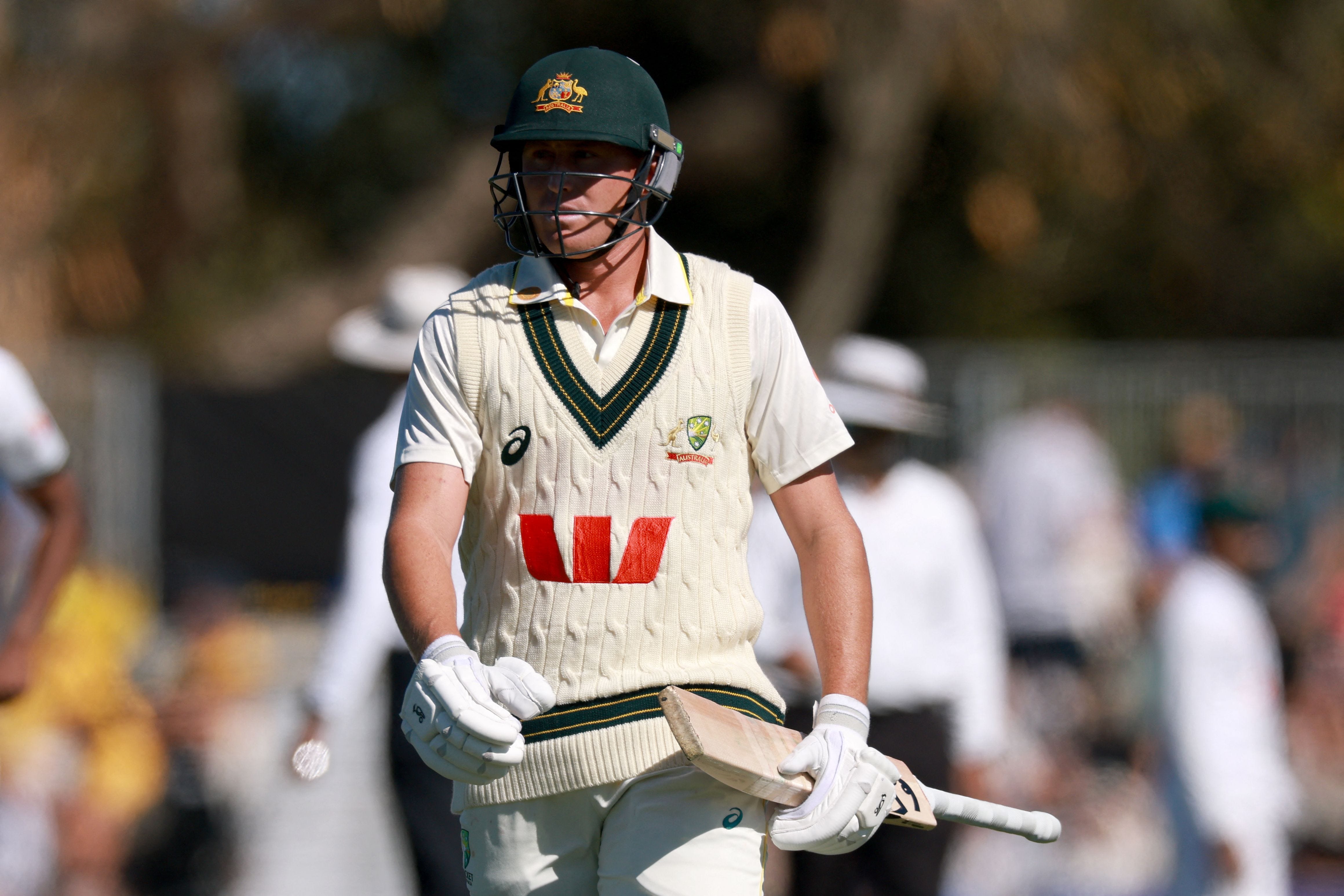
“At this stage we won’t be considering Marn for selection for certainly that first Test, but for the New Zealand series” - George Bailey.
And just like that, Marnus Labuschagne lost his spot in Australia’s Test squad. A batter once seen as the man to carry Australia’s batting for the next decade has become expendable, barely five years later.
From occupying the top spot in the ICC Test rankings in December 2021 to slipping to 40th in 2026, Labuschagne’s decline has been dramatic. The Australian batter has gone 49 consecutive Test innings without a century, with his last ton coming against England during the 2023 Ashes. This is the second time in 17 months that he has been dropped from the Test squad. Had someone predicted this fate for the right-hander even a couple of years ago, they might have been dismissed for having little understanding of the game.
The numbers behind Labuschagne’s decline
Labuschagne burst onto the Test scene as a concussion substitute for Steve Smith during the second Test of the 2019 Ashes at Lord’s. He gradually established himself as Australia’s No. 3 with a string of prolific performances. In 2019 alone, he scored 1104 runs at an average of 64.94. Between 2019 and 2022, he did not average below 55 in any calendar year.
His meteoric rise invited comparisons with some of the game’s greats, even while his career was still in its early stages. Then came 2023, and the extraordinary batter began to look human. Labuschagne finished the year with an average of 34.91 and just one century to his name.
The decline became even more evident in his numbers. In 2024, he failed to register a single century, averaging just 30.93, and things got worse from there. While he amassed 2990 runs at an average of 62.29 between 2019 and 2022, he managed only 1790 runs at an average of 28.87 over the next four calendar years.
Since his last Test century, a 111 against England at Old Trafford, Labuschagne has scored 1094 runs in 49 innings at an average of just 24.31. Such numbers are unbefitting of a top-order batter expected to provide stability to his team. In 2026, he has failed to register even a half-century in 11 innings.
How his slump compares with other greats
Comparing Labuschagne at his peak with the batter he is today, the decline is striking. But cricket has witnessed similar slumps among some of its greatest names. Cheteshwar Pujara went 51 innings without a century before scoring an unbeaten 102 against Bangladesh in December 2022. However, he did cross the 50-run mark 14 times during that period. The Indian No. 3 scored 1456 runs at an average of 29.12 across those innings.
One of the most severe slumps among modern cricket’s biggest names was endured by Virat Kohli. He went 41 innings without a century before finally ending the drought with a 186 against Australia in Ahmedabad. During this period, he scored 1028 runs at an average of 25.70. The lean phase also played a significant role in his Test average dropping from nearly 55 to below 50.
Even Australia’s own Ricky Ponting once went 33 innings without scoring a century. Widely regarded as one of the greatest No. 3 batters in the history of the game, he averaged just 31.50 during that period.
The slump itself is not the biggest concern; it is the manner in which Labuschagne is struggling. The very aspects of batting he once mastered - pace, bounce and swing - are now troubling him. His unusual stance, too, has come under greater scrutiny.
This is not the end of the road for Labuschagne just yet. Australia have not ruled out selecting him again in 2027 for the tours of India and England. The opportunity for redemption, therefore, remains. For now, he will have to return to the Sheffield Shield and restore the selectors’ faith in his ability to perform at the highest level. He has done it before, but this time, earning selection is not the only challenge. Labuschagne needs to rediscover the consistency that once made him indispensable to Australia.