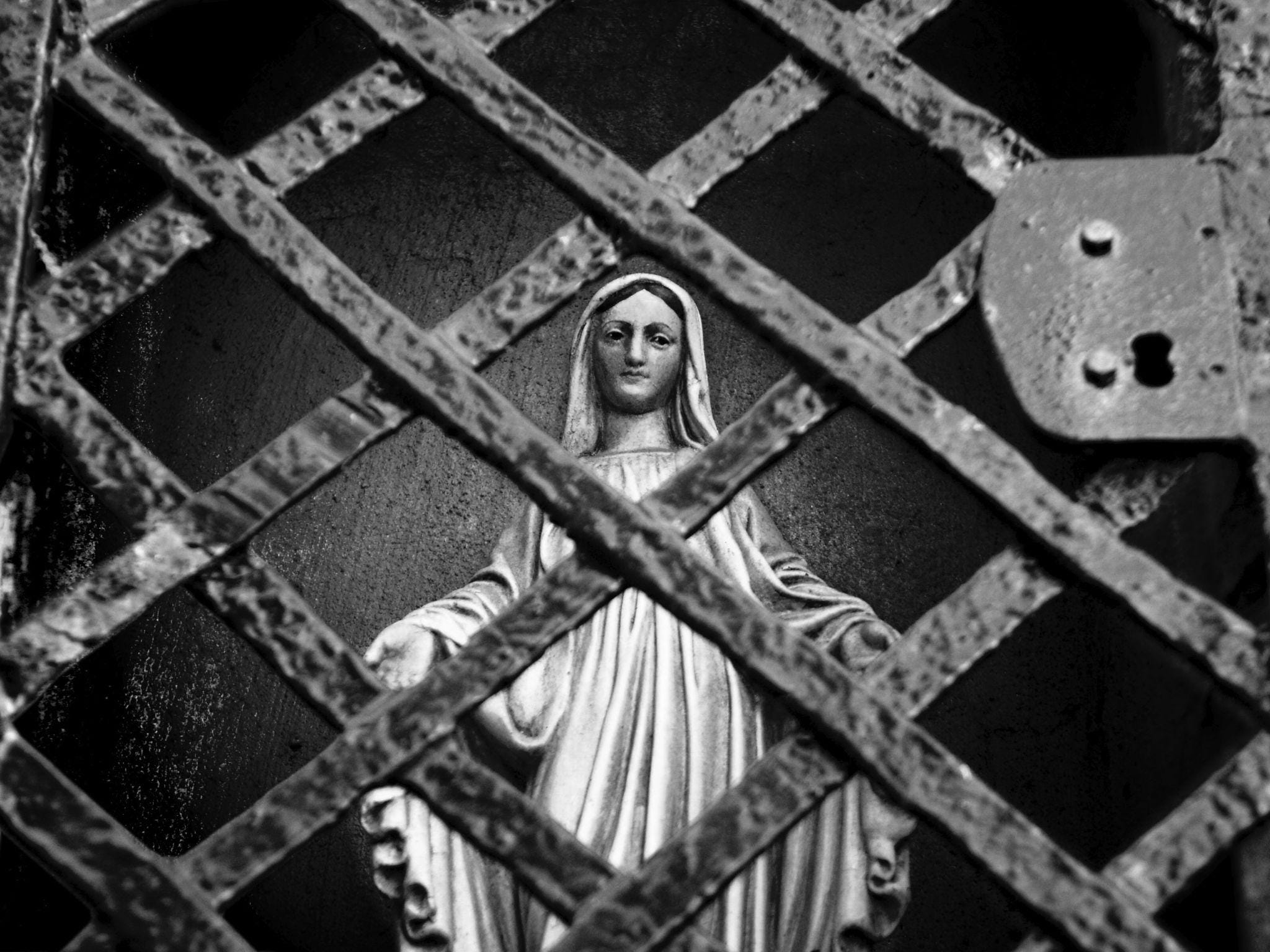
When I was a pastor, I believed I was helping people understand God. I was also helping them understand what to tolerate, whom to trust, which parts of themselves required suspicion, and where responsibility for their lives ultimately belonged. Theology entered the room as an account of heaven and left as a set of instructions for living on earth.
I do not remember understanding the full reach of that responsibility. I knew that sermons influenced people, but influence seemed largely a matter of what they believed and how faithfully they lived. The more difficult question concerned the world our beliefs were helping reproduce, including the relationships and arrangements that felt too ordinary to require theological examination.
A person who learns to mistrust their own judgment does not leave that lesson at the sanctuary door. It accompanies them into a marriage, a workplace, a voting booth, and the private conversation in which they decide whether their distress deserves attention. An understanding of authority becomes a way of encountering power, often before anyone recognizes that a lesson has been learned.
I wrote about some of these reckonings in . What troubles me now extends beyond the convictions I struggled to question. While I was struggling privately, I was still teaching publicly, and other people were making consequential decisions within a framework I helped authorize. My uncertainty belonged to me, but the effects of my authority reached into lives whose costs I did not have to bear.
For years, I have written about what happens ** when people leave religious systems** that have wounded them. More recently, I have asked what religion historically carried for human beings and what becomes of those responsibilities when its authority weakens. These inquiries have brought me to a question that neither religious defense nor religious critique adequately contains.
What kind of world do our accounts of ultimate reality help us make? The question reaches beyond whether a belief comforts its adherents, whether a tradition survives, or whether someone leaving religion eventually recovers a sense of ground. It asks what happens when ideas about existence become arrangements under which other people have to live.
Some of those people believe. Others do not, and many have never been asked. Theology has a public life that extends well beyond the community granting it authority, which means its consequences deserve a hearing beyond the boundaries of that community.
In an ** earlier article**, I described Big-R Religion as humanity’s capacity to inhabit shared symbolic worlds. I was trying to recover something obscured by arguments that reduce religion to supernatural propositions. Human beings have needed stories, rituals, obligations, and practices through which individual lives become part of a world held in common.
The achievement deserves serious recognition. A society requires more than people occupying the same territory or exchanging useful goods. It needs ways of sustaining trust, transmitting memory, accompanying loss, and making commitments intelligible across lives that will never directly meet. Religious traditions have been among the most powerful historical carriers of that work.
But the capacity to make a world habitable does not establish that the world is just. A shared narrative might help people endure an arrangement whose burdens fall disproportionately on some of its members. It might give the community coherence while making particular experiences difficult to name, because acknowledging them would threaten the story through which the group understands itself.
This complicates the evolutionary argument I have made. An institution’s contribution to continuity, coordination, or survival does not establish its adequacy as an environment for human development. We need to ask who gains from its coherence, who pays for it, and whether those carrying its costs possess meaningful power to contest the arrangement.
A household offers a smaller example. It might appear stable because one person absorbs conflict, anticipates everyone’s needs, and rarely voices their own. That stability is real, but it has been purchased through an unequal distribution of emotional responsibility. Praising the family’s closeness without examining that distribution mistakes the appearance of order for the health of the relationships sustaining it.
Religious institutions and societies face a similar danger. What looks like shared meaning from the center sometimes feels like compulsory accommodation from the margins. An existential account of religion has to examine both experiences, including the possibility that the same structure genuinely carries some people while requiring others to carry it.
Religious influence is often discussed through its most visible expressions: political endorsements, campaigns over legislation, or leaders claiming divine approval for a national project. Those activities deserve scrutiny, but they represent only part of the process. Theology also works through what a society gradually learns to regard as normal.
An account of creation establishes expectations about human nature. A teaching about obedience shapes intuitions concerning legitimate authority. Interpretations of sin influence whether distress is understood as information about a person’s circumstances or evidence of something wrong within the person. These judgments become habits of attention before they become explicit arguments.
From there, they enter institutions through the people who administer them. A school disciplines a student, a family responds to a disclosure, a congregation decides whose account of harm deserves belief. No one needs to quote a sacred text for an inherited understanding of order to shape the decision.
I think of this as the passage from explanation to permission. A story about why the world exists acquires social force when it authorizes particular people to decide how others should live. Its authority deepens when the arrangement itself comes to seem grounded beyond human judgment, so that questioning it sounds like defiance of reality rather than disagreement with an interpretation.
The process is never purely theological. Economic interests, racial hierarchies, political ambitions, family anxieties, and institutional self-preservation shape which interpretations gain prominence. Sometimes belief authorizes power; sometimes power selects the belief that authorizes it. The relationship requires investigation rather than a simple claim that religion causes whatever happens in a religious society.
Yet complexity does not make theology inconsequential. Sacred language supplies a distinctive kind of legitimacy when it presents a contested arrangement as an expression of ultimate order. People then face more than the difficulty of changing a rule. They face the fear that resisting the rule means betraying goodness itself.
Theology’s social reach becomes particularly consequential when it interprets suffering. A tradition teaches people what pain means, what responses are honorable, and where relief should be sought. In doing so, it influences whether suffering becomes a claim upon the community or an assignment given to the sufferer.
Imagine someone exhausted by years of caring for a dependent family member. Their religious community recognizes devotion, praises sacrifice, and offers encouragement to remain faithful. Those responses contain affection and respect, yet something has gone missing if no one asks how the work might be shared or whether the caregiver has any meaningful freedom to refuse it.
The exhaustion has received a spiritual interpretation before it has received a practical hearing. Once sacrifice becomes the governing explanation, the person’s distress risks appearing as a problem in their relationship to duty. The arrangement itself escapes examination, even though changing it would alter the suffering more directly than further instruction in endurance.
This is a transfer of moral attention with material consequences. Responsibility moves toward the person bearing the burden and away from the relationships or institutions distributing it. The community remains free to admire an endurance whose necessity it has helped preserve.
The caregiver might freely understand their commitment as sacred and deeply meaningful. Respecting that interpretation requires taking their agency seriously, including their right to name limits, anger, disappointment, or the need for assistance. A meaning chosen by the person carrying a burden differs ethically from a meaning others invoke to keep the burden in place.
That question belongs near the center of any public evaluation of theology. Who possesses interpretive authority over suffering, and what does their interpretation require of those who suffer? A system becomes dangerous when it grants the comfortable a privileged role in explaining why other people should continue to hurt.
Over the past several years, I have been developing existential health as a field of inquiry and practice. That work now includes a ** published peer-reviewed academic paper**, two volumes of
The inquiry begins with realities that accompany being human. We are mortal, vulnerable, dependent, and unable to secure the future. Love exposes us to loss, knowledge remains incomplete, and consequential choices seldom arrive with enough certainty to eliminate regret.
I have argued that these conditions are not defects from which a fully developed person eventually recovers. They require capacities for encounter, relationship, discernment, and participation. But that argument becomes an evasion if the human condition grows into a category broad enough to absorb suffering produced by human arrangements.
Mortality is universal; abandonment at the end of life is not. A person approaching death encounters an irreducible limit, while the availability of care, relief, company, and dignity depends substantially on the world around them. Describing the whole experience as the tragedy of finitude conceals the responsibilities still within reach.
Something similar happens with uncertainty. A secure household and a household facing eviction both lack control over the future, yet the word names profoundly different demands in their lives. Philosophical honesty requires acknowledging their common condition without flattening the difference between the openness of an unfinished life and insecurity intensified by preventable deprivation.
These dimensions rarely arrive separately. An illness brings mortality into view while exposing questions about money, employment, care, and access. Someone needs accompaniment through what cannot be removed and assistance changing what should never have been added to their burden. An adequate response holds both responsibilities together.
Drawing that boundary requires judgment, knowledge, and a willingness to reconsider what has been declared inevitable. The limits of what we currently prevent or repair are not necessarily the limits of what collective effort would make possible. An existential approach should keep that inquiry open, especially when those benefiting from an arrangement describe its costs as unavoidable.
Religious language carries a particular responsibility here because it so often teaches acceptance of what exceeds our control. Acceptance helps people inhabit reality when it allows them to face mortality, grieve an irreversible loss, or act without guarantees. It serves power when it teaches them to experience a revisable social arrangement as an unalterable condition of existence.
A theology worthy of human life must distinguish between accompanying vulnerability and legitimizing its needless intensification. Finitude tells us something about the limits within which we live. It does not absolve us of responsibility for the conditions we create within those limits.
This argument does not lead to a verdict that religion inevitably protects oppression. It asks us to take the disagreements within religious traditions more seriously, because they often concern the very distribution of responsibility at stake here. The same inheritance becomes a resource for defending an arrangement and for exposing its human cost.
Martin Luther King Jr.’s Letter from Birmingham Jail confronted religious leaders who criticized the timing and methods of the civil rights campaign. He challenged the preference for order over justice and the assumption that those enduring segregation should accept someone else’s timetable for change. Religious commitment animated his resistance to religious accommodation.
Read through the question of existential health, the encounter reveals a struggle over whose experience defines the situation. The comfort of those disturbed by protest had to be weighed against the lives constrained by segregation. King’s intervention challenged the authority to describe an imposed condition as something its victims should patiently continue to bear.
Another constructive possibility appears in Pope Francis’s Laudato si’, which links ecological degradation with deprivation and social organization. Its account of integral ecology directs religious attention toward the relations between human communities and the living systems sustaining them. Theology becomes a reason to examine economic and social arrangements rather than treating environmental damage as a collection of private moral failures.
Neither example exempts its tradition from examination or proves that religious institutions reliably act on their strongest insights. They show that theological commitment is compatible with confronting structures of harm. The question concerns which resources a community activates, which it neglects, and what its choices make possible.
Religion’s capacity to shelter power makes its capacity to challenge power more consequential. A public account must examine the conflict rather than resolving it through gratitude for religion’s achievements or condemnation of its injuries. Those living under its influence deserve an analysis adequate to both.
The social consequences of theology reach beyond specific moral teachings to the relationship people develop with authority itself. A community’s ** account of God** becomes formative partly through the way that God is represented in ordinary human interactions. People learn what sacred authority feels like from those claiming to exercise it.
Where questioning is treated as danger, a person practices suppressing the interruption their own experience makes. They learn to seek an approved interpretation before trusting what they have noticed. Over time, this becomes more than obedience to a particular leader; it becomes a diminished expectation of having standing in the conversation.
Other religious environments cultivate inquiry, interpretive humility, and the possibility of principled disagreement. Guidance helps someone develop judgment rather than making judgment unnecessary. Tradition offers resources with which to think, while remaining available for examination by those whose lives it shapes.
The public consequences arise because these habits travel. Family life, workplaces, and political institutions all require people to assess authority, recognize manipulation, and distinguish disagreement from betrayal. A religious community participates in civic formation whenever it strengthens or diminishes those capacities.
There is also the question of who enjoys interpretive freedom. Leaders sometimes claim considerable latitude in applying sacred teachings while expecting those beneath them to remain obedient to the application. Humility then becomes an unevenly distributed obligation, imposed most heavily on people who already possess the least power to influence the outcome.
Existential health asks whether someone is developing the capacity to stand in their own…