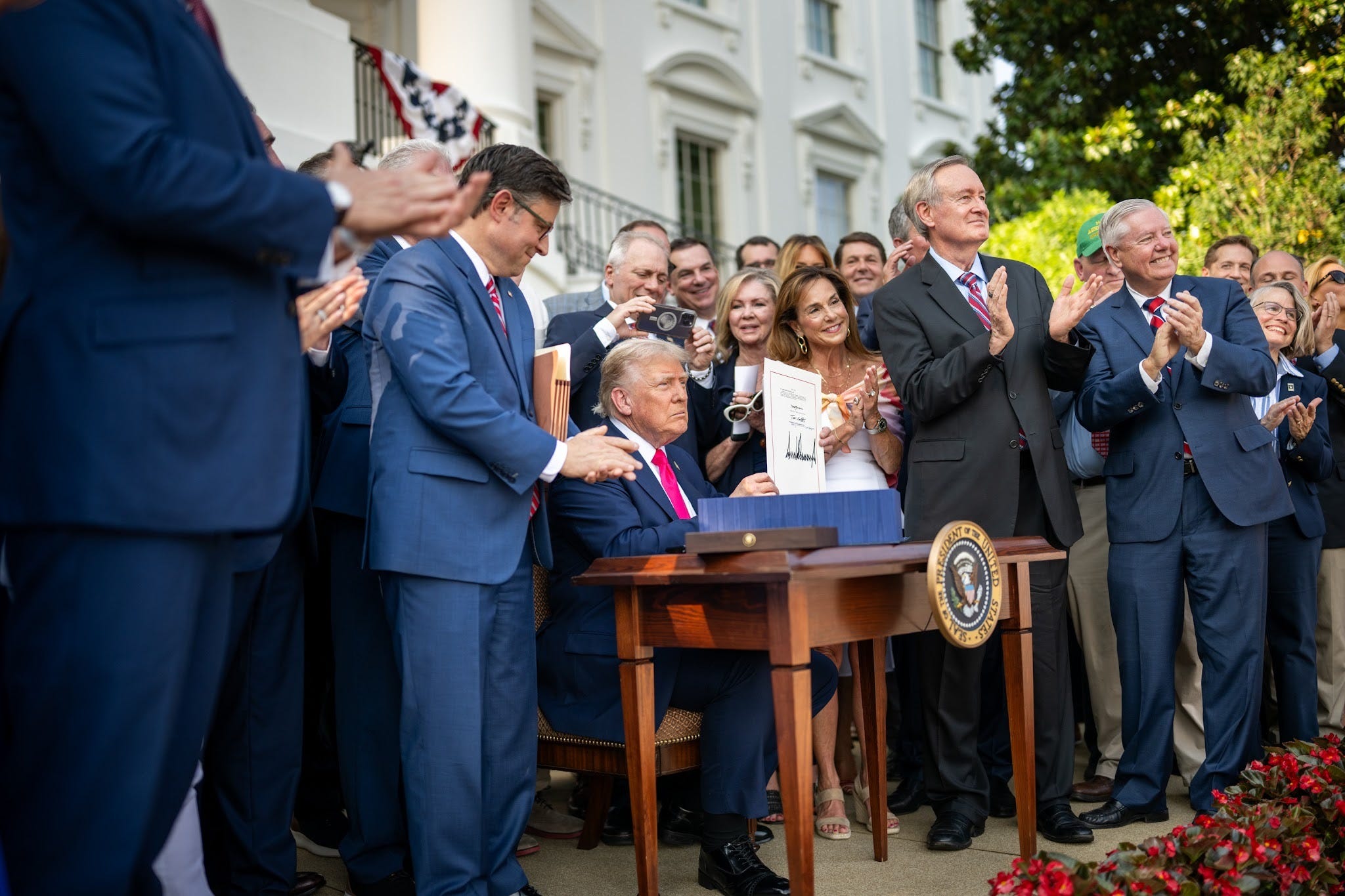
Trump signs the legislation on July 4, 2025. Photo: Daniel Torok / White House.
Republicans lost the election. Their law is still coming for your health insurance.
That ought to be leading every conversation in Washington right now.
While Democrats celebrate taking back Congress, some of the most damaging provisions in Donald Trump’s “Big Beautiful Bill” are approaching a deadline that didn’t move just because voters threw Republicans out.
January.
The election is over. The threat to your family’s budget isn’t.
Republicans wrote a law that puts major Medicaid restrictions into effect after the midterms. They got to campaign before many families experienced those restrictions firsthand. Americans get to discover afterward what all that talk about “savings” means when they need a doctor.
Call that timing politically convenient if you want. I call it making sure the bill arrives after the customer has left the voting booth.
Democrats have a mandate to fight this. They need to start acting like it.
Beginning January 1, 2027, states generally must implement new Medicaid work requirements for certain adults, with exemptions. The federal standard generally requires 80 hours a month of work or other qualifying activities. Keeping coverage can depend on the government verifying that someone meets the requirement or qualifies for an exemption.[1]
Think about how that works in an actual person’s life.
Your employer changes your hours. You’re trying to establish that a medical condition qualifies you for an exemption. A notice goes to the wrong address. You spend your lunch break trying to get somebody on the phone.
Now your ability to see a doctor can depend on getting that mess straightened out.
Washington can call it an eligibility procedure. The person standing at the pharmacy counter gets to call it something else.
The law also requires more frequent eligibility renewals for Medicaid expansion adults: every six months instead of annually. And beginning January 1, it cuts back retroactive coverage, the protection that can help pay qualifying medical bills incurred before someone applies. The window shrinks from three months to one for expansion adults and two for other Medicaid recipients.[2]
Picture an uninsured worker who winds up in the hospital and then applies for Medicaid. Shorten the period that can cover earlier bills, and more of that financial exposure can land on the patient.
That can mean debt. It can mean a credit card balance. It can mean putting off the next appointment because you’re still trying to pay for the last emergency.
This is a pocketbook issue with a hospital bracelet attached.
The Congressional Budget Office estimated that the law’s Medicaid provisions would leave 7.5 million more people uninsured in 2034. That is a projection of the cumulative damage over years, not a claim that millions of people will all lose coverage on New Year’s Day.[3]
The damage rolls out. That makes it easier to hide behind individual notices, renewal dates and state bureaucracies.
It also makes stopping it now essential.
Food assistance is part of the same fight, on a different schedule. The law has already increased states’ share of SNAP administrative costs, and a new requirement for many states to help pay for food benefits begins in October 2027, subject to the law’s exceptions and delays.[4][5]
Federal politicians get to advertise spending cuts. State officials get handed the financial hole. Families get caught in the middle.
Democrats should put the entire calendar in front of the public. Every restriction. Every deadline. Every foreseeable consequence for somebody trying to pay rent, buy groceries and stay healthy.
Democrats need to be honest about their own deadline.
The incoming Congress takes office January 3. Major Medicaid changes begin January 1.
Waiting for the swearing-in ceremony to start planning would mean arriving after the starting gun.
Draft the legislation now. Demand action from the outgoing Congress now. Get governors, hospitals, patient advocates and food-assistance organizations explaining what is approaching now.
Have repeal legislation ready for the opening days of the new Congress. Have an immediate delay ready to move if that can protect people sooner. Include a way to restore coverage for people who lose it before relief arrives.
Then make every Republican decide, publicly, whether they’re willing to help stop the damage.
I can already hear the objection: Trump will veto it.
Then put the bill on his desk and make him own that fucking decision.
A veto threat should change the strategy. It should never become an excuse to abandon the people who need the legislation.
Democrats will have to confront Senate rules, win votes and, if Trump vetoes relief, seek the two-thirds support in each chamber needed to override him. Winning Congress doesn’t erase those obstacles.
It gives Democrats the responsibility to organize a fight around them.
That means passing legislation wherever they have the votes, forcing recorded decisions and making Republicans answer for every roadblock. It means using hearings to put affected families in front of the people defending these cuts. It means pressing for protections in negotiations over legislation Trump wants signed.
And it means explaining the stakes in language that reaches somebody who has never watched a congressional hearing in their life.
We voted to protect your health coverage. Trump vetoed it.
We voted to preserve help with medical bills. Trump vetoed it.
We voted to stop the food-assistance cuts. These Republicans helped block us.
Use those sentences when the votes justify them. Name the provision. Show the vote. Explain what the decision could cost a family.
Don’t announce that “our reconciliation rollback encountered executive opposition” and disappear into a press conference.
Tell people whether their next medical bill could be harder to pay because the president refused to sign the protection Congress sent him.
Then keep fighting to get the protection enacted. A good headline won’t refill a prescription.
There’s another trap Democrats need to avoid: treating the people affected as an audience for the next campaign.
Help them now. Make sure district offices can connect people with enrollment assistance. Push states to use every lawful exemption and protection available. Watch for eligible people getting pushed out by administrative failures. Demand answers when it happens.
Fight to change the law while helping people survive the law that exists.
That’s what a mandate is for.
Voters gave Democrats power because they wanted something to change. Protecting families from a new round of medical debt and lost assistance ought to be an immediate test of whether that power means anything.
Republicans scheduled major pain for after the election. They should have to answer for that timetable every day.
Democrats need to throw the doors open, show Americans exactly what is coming and put stopping it at the center of the new Congress.
The clock is running.
Get the legislation ready. Put the costs in public. Make every vote count.
And if Trump chooses the cuts, make damn sure Americans know who made that fucking choice.