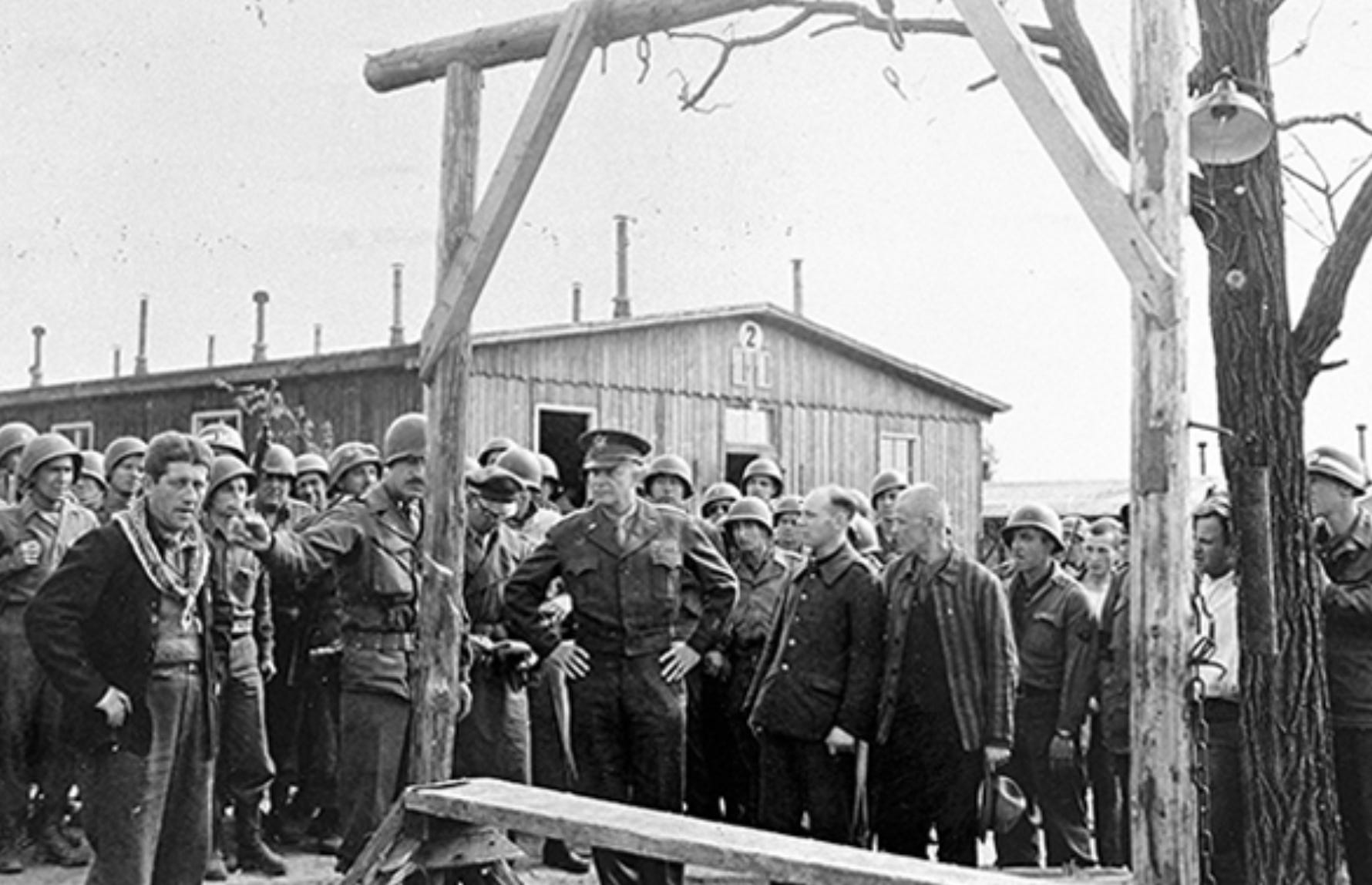
From the US Holocaust Museum, this reminder:
While Supreme Allied Commander Dwight D. Eisenhower had studied his World War II enemy, he was unprepared for the Nazi brutality he witnessed at Ohrdruf concentration camp in April 1945. Bodies were piled like wood and living skeletons struggled to survive. Even as the Allied Forces continued their fight, Eisenhower foresaw a day when the horrors of the Holocaust might be denied. He invited the media to document the scene. He compelled Germans living in the surrounding towns and any soldier not fighting at the front to witness the atrocities for themselves.
I post that because I received this from a Catholic priest friend yesterday, who watched The Fog Of War, the Errol Morris documentary about Robert McNamara and Vietnam. I share it with you with his permission. It’s the most important thing you will read today, I’d say:
For whatever reason, I was thinking about our growing cadre of Gen Z Nazis. Watching the McNamara movie made me think about the WWII vets I’ve worked with.
During my chaplaincy work in seminary, I worked with some WWII vets. One guy was traded to me by another chaplain because she was a woman and they wouldn’t speak with her.
That man told me about being present at the liberation of a concentration camp in 1945. His story, and the look in his eyes, is tattooed on my brain.
I can’t say any more without betraying confidence. It makes me realize I am effectively an old man carrying old stories the young no longer believe. I read jokes about “6 million pizzas” while I can still nearly smell the rotting flesh in my mind’s eye from the stories I was entrusted with.
The distance between the generations who experienced the ruin of the 20th century is growing so wide that we are going to do it all over again.
A modern Van Papen is going to make a deal with a charismatic anti-Christ figure that is going to light the world on fire.
That is my fear, yes. To be fair, I don’t think the Jew-hatred problem on the Right is nearly as advanced as it is on the Left, in terms of having infiltrated party politics. People forget that the Soviets were anti-Semites too, and the Jews who joined the Bolsheviks were useful idiots, in the end. But at least we conservatives, having watched how far and how fast anti-Semitism has grown within Democratic Party ranks, have a head start on fighting it among our own.
This is going to require wisdom. It’s simply a political fact that the once-unquestioned support for the State of Israel is no longer there, especially among the young. You know that I am a supporter of Israel, but precisely because I want to see Israel survive and thrive, I am trying to think about this issue with more subtlety — meaning that we are going to have to make practical distinctions between opposing Israel and hating Jews (though admittedly, in many cases this is a distinction without a difference.
(I would also love to see the Palestinians do so as well, but they never will as long as killing Jews matters more to them that building a future for their children. Remember what Bill Clinton said about Yasser Arafat’s intransigence at the Camp David Summit in the year 2000:
Former US President Bill Clinton has expressed disbelief over the reaction of young Americans when they learn that Palestinian leader Yasser Arafat turned down a historic opportunity for peace and a Palestinian state during the 2000 Camp David talks.
In an interview at the New York Times DealBook Summit, promoting his new book
Citizen: My Life After The White House, Clinton described how many young people in America are “shocked” when they hear about Arafat’s rejection of a deal that would have granted the Palestinians a state with a capital in East Jerusalem and 96 per cent of the West Bank. “I tell them what Arafat walked away from, and they, like, can’t believe it,” Clinton said.He went on to emphasise the significance of this decision, referring to it as a “once in a lifetime” opportunity that Arafat rejected.
The deal, negotiated with US mediation, included a proposed resolution for Israeli settlements in the West Bank, a key issue in the ongoing Israeli-Palestinian conflict.
“You can’t complain 25 years later when the doors weren’t all still open, and all the possibilities weren’t still there,” Clinton added, reflecting on the lasting consequences of the failed talks.
Clinton explained to the audience that the Camp David summit had represented the best chance for peace in the region, and yet it collapsed just six weeks before the end of his second term.
“All [young people in America] know that a lot more Palestinians have been killed than Israelis. But they don’t know the history behind that,” he noted.
In my forthcoming Weimar America, I write about the effect of the passage of time and the inevitability of forgetting history — this, with respect to what’s happening now, on both the young Left and the young Right, and what that might mean for the future. I draw on the English historian Alec Ryrie’s work on this issue; I recommend reading Brad East’s 2025 Christianity Today review of Ryrie’s book about this, to understand the psychosocial dynamics of the current situation.