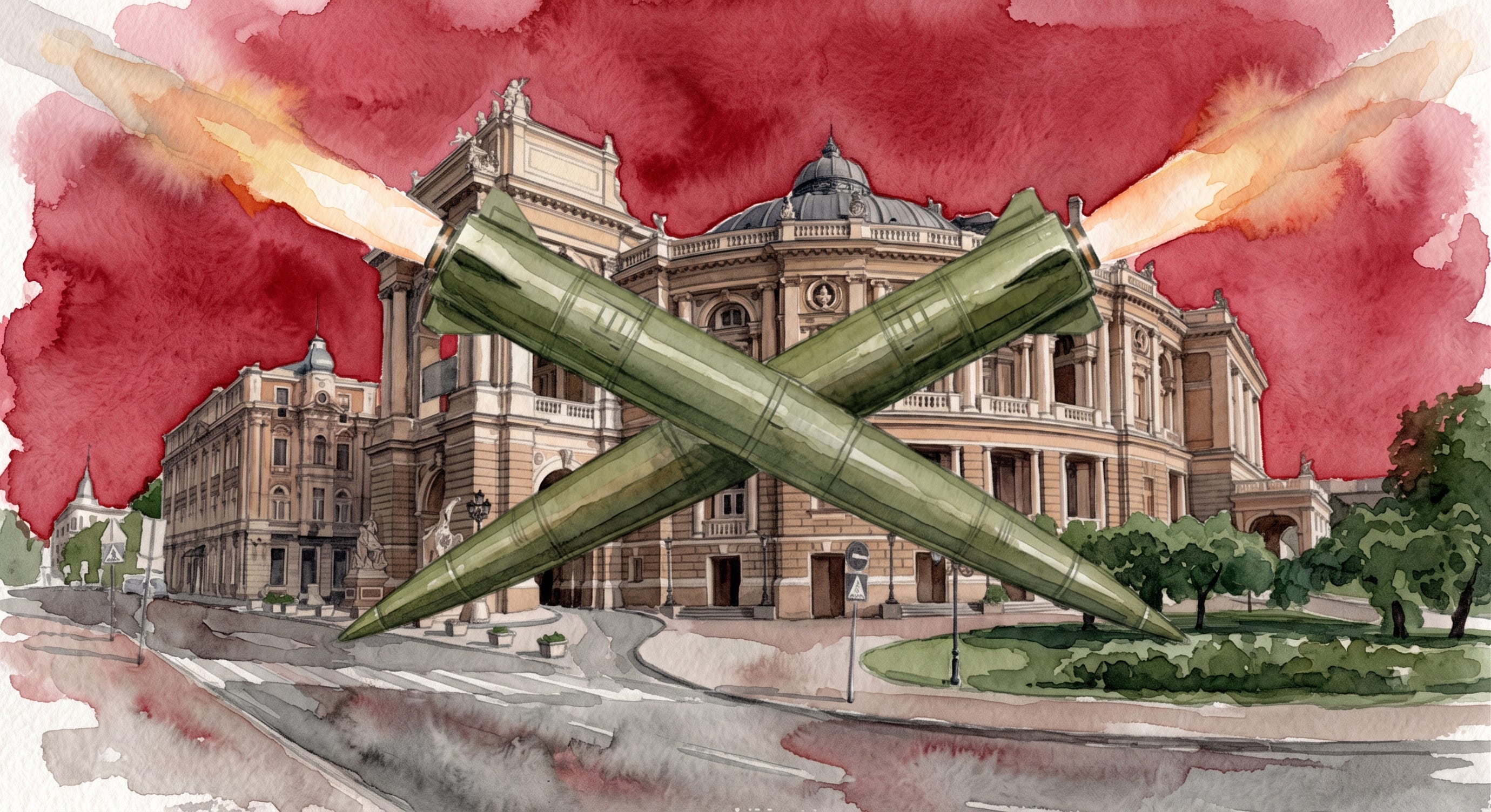
ODESA—Mykyta has been a civilian adult for roughly two months of his life. He is 26 now, speaks quietly and without much interest in making his biography sound more dramatic than it already is, and serves as a UAV operator in southern Ukraine, where the war has become a contest fought not only across trenches and minefields but increasingly through electronics, software and small machines chasing one another through the sky. Before all this he had completed his compulsory military service and expected, presumably like most young men leaving the army, that the uniform would now become something belonging to his past.
We publish this newsletter every day at 9:05am NYC time / 4:05pm Kyiv.Your subscription fuels our work.
The language spoken around the kitchen table did not necessarily determine which flag somebody wanted flying above the town hall.
Two months later Russia launched its full-scale invasion. He returned to military service and never really left it again. More than five years of his young life have now been spent in the military, he says, which at 26 means that an extraordinary portion of the years in which most Europeans finish university, begin careers, travel, fall in love, or simply waste time being young has instead been spent preparing for war or fighting one.
Alexander is older, a deputy commander of a UAV squadron, and his connection with southern Ukraine reaches back considerably further. He studied at Odesa Law University more than a decade ago, began his military service here and joined the Territorial Defence when the full-scale invasion came.
Talking to the two men in Odesa therefore means talking to representatives of slightly different Ukrainian wartime generations, but it also provides an opportunity to examine one of the more persistent assumptions surrounding this war. For years Moscow insisted that southern Ukraine was never entirely Ukrainian at all, that places such as Odesa were Russian cities temporarily separated from their natural political home, inhabited largely by Russian speakers whose language supposedly revealed where their real loyalties lay. If that proposition were true, then men such as Alexander ought to be rather difficult to explain.
[There is] discussion within parts of the Russian propaganda environment of southern Ukrainian territory as potential future settlement space for Kadyrov’s Muslim followers after a Russian victory.
The language question produces one of the more interesting answers of the conversation. Alexander knows Russian-speaking people in Odesa who still use the language every day and who sometimes jokingly apologise to him for speaking what they call the “trophy language,” трофейна мова. They grew up with Russian, it remains natural to them, and changing the language of ordinary conversation is not something accomplished by political decree within a few weeks. Some are trying to switch to Ukrainian and find it difficult, while others continue to move between both languages.
Within the Armed Forces, Alexander says, the matter is considerably less dramatic than outsiders sometimes imagine. He knows brigade commanders, battalion commanders, infantrymen, and servicemen of different ranks who communicate in Russian as well as Ukrainian.
The Russian-speaking south did not behave according to the political script Moscow had written for it.