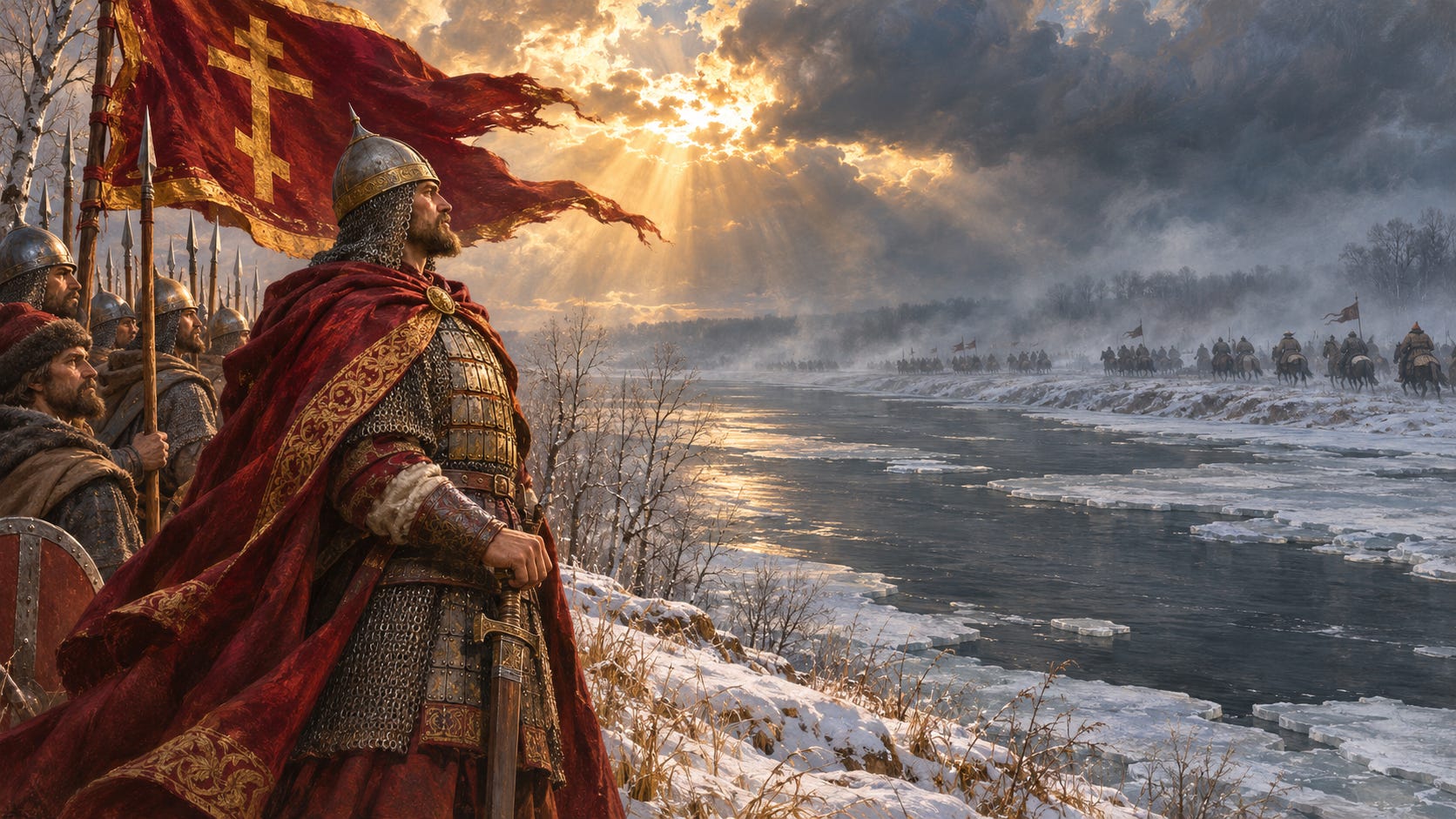
Today in history, on November 11, 1480, the Tatar yoke over Russia, which began over two centuries earlier, finally came to an end, at the Ugra River, where the forces of Grand Prince Ivan III of Moscow faced the army of Akhmat, Muslim khan of the Great Horde.
The struggle had begun under very different circumstances. The Mongols who devastated the Russian principalities beginning in the 1220s were originally pagan. Their Golden Horde eventually became Turkic and Muslim, with Islam firmly established as the ruling religion under Uzbek Khan in the early 1300s. Russian princes remained tributaries; their lands supplied wealth, captives, and an endless supply of slaves to their Islamic overlords.
The usual religious hostility that defined earlier (Seljuk) and later (Ottoman) Muslim-Christian interaction was par for the course. For example, in 1327, Uzbek Khan’s cousin Shevkal—“the destroyer of Christianity,” according to a Russian chronicle—asked a boon of his khan: “allow me to go to Rus to destroy their Christian faith, to kill their princes and to bring you their wives and children.” Uzbek consented.
At the head of a vast horde, Shevkal invaded Russia “with great haughtiness and violence. He inaugurated great persecution of the Christians, [using] force, pillage, torture, and abuse.”
Fifty-three years later the Russians were finally strong—or just desperate—enough to face the Horde head on. On September 8, 1380, Grand Prince Dmitri Ivanovich led his men against the Horde and its commander, Mamai, at Kulikovo Field, near the Don.
Dmitri rejected his nobles’ pleas to remain safely behind the fighting: “I want to die for Christianity ahead of anyone else, with deed as well as word, so that all others who see it will become bold.”
After hours of savage combat, a Russian reserve emerged from the woods and helped rout Mamai’s army. The victory bestowed immense prestige on Moscow and demonstrated that the Horde could be defeated.
Even so, full liberation was still a century away. For in 1382, the regrouped and recovered Tatars invaded Moscow, nearly burning the entire city to the ground and leaving some 24,000 corpses in their wake.
Kulikovo had opened the road to liberation; another century of struggle remained.
Continue reading below.
If you value unflinching, historically grounded analysis that mainstream outlets soften or ignore, consider upgrading. Paid subscribers get:
**Several new, full-length articles every week.**Carefully researched pieces you won’t find elsewhere.
Full access to the complete premium archiveArchive of in-depth writing, research, and commentary — all in one place.
Entry into the subscriber chatA private space for serious readers and thoughtful discussion.