ODESA—“This deal is a gift to our adversary and a betrayal of our Allies.”
That was the verdict of a bipartisan group of U.S. senators on Donald Trump’s Russian diesel agreement. Their 13 October letter demanded its reversal. Three days later, Trump went further in the opposite direction, giving Russia exemption from the Lindsey O. Graham Sanctioning Russia and Iran Act he had signed into law only the previous month.
We publish this newsletter every day at 9:05am NYC time / 4:05pm Kyiv.Your subscription fuels our work.
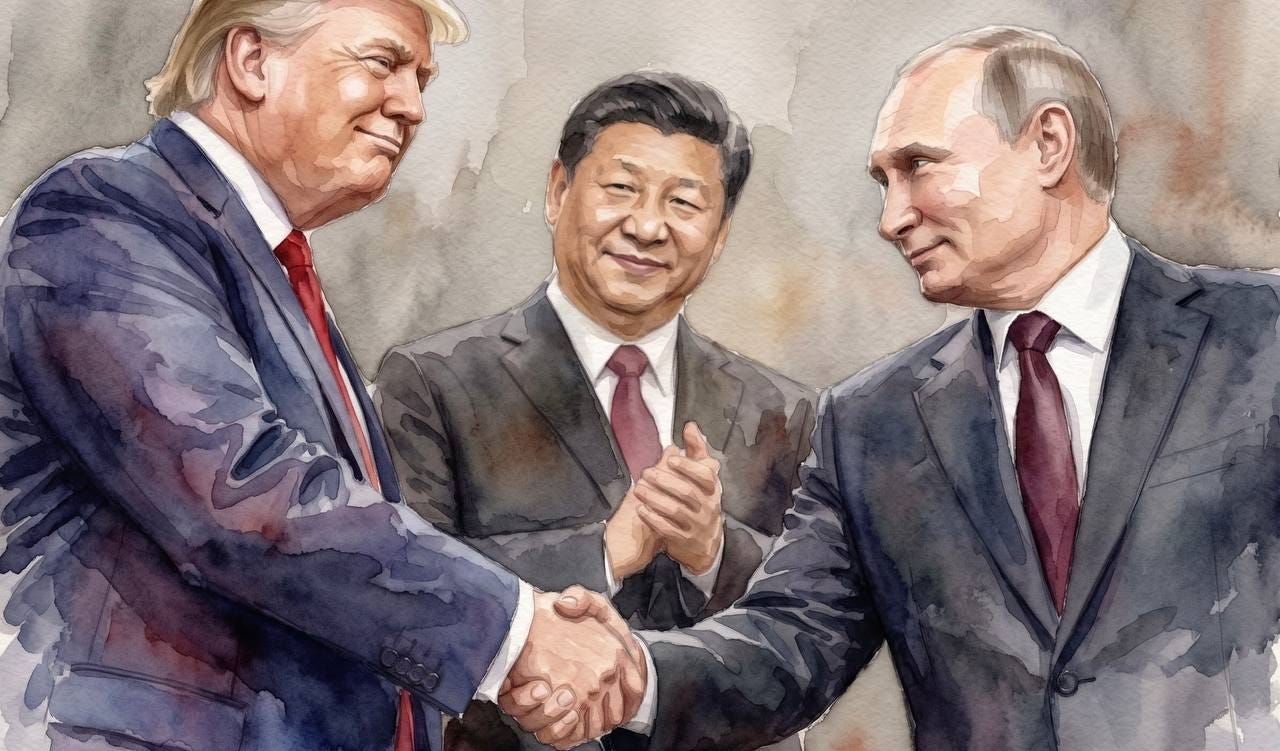
Vladimir Putin has obvious reasons to celebrate. But the more consequential satisfaction may be in Beijing, where Xi Jinping can watch an American president damage the alliance that Chinese diplomacy has long sought to loosen. Trump gets to announce a deal. Russia gets breathing room. China gets something harder to purchase: growing doubt among Western allies about whether they still belong on the same side.
Helping Russia while alienating European allies
makes the broader contest with Beijing harder.
Consider the sequence. On 9 October, Trump announced his diesel agreement with Putin. On 12 October, the EU added nearly 1,600 sanctions listings targeting Russia’s military-industrial complex. By 16 October, Washington was putting its new sanctions package on hold. Europe is trying to stop the Russian war machine while the United States is actively helping it. These policies do not merely differ. They work against each other.
The contradiction goes well beyond diplomacy. Ukraine is expected to trust a coalition whose leading power is easing pressure on its attacker, even as European governments try to increase it. Every such reversal gives Moscow another reason to wait for Western resolve to unravel. Beijing, meanwhile, gains an opportunity to turn European frustration with Washington into something more permanent.
Trump once imposed sweeping tariffs on China and restricted Huawei’s access to American technology. Even then, he praised Xi’s “beautiful letter,” so the personal fondness is hardly new. But the contrast with his first-term confrontation was striking when he anticipated a “big, fat hug” in Beijing this May, followed by more mutual praise in Washington in September. Alongside his indulgence toward Putin and his declaration that he and Kim Jong Un “fell in love,” the pattern is familiar. European leaders receive rather less affection. “I think they’re weak,” he told Politico.
Frustration with Europe is understandable.