You don’t have time for three hours of doomscrolling, twenty half-baked takes, and some guy online screaming READ THE THREAD. We are Front Page Detectives, this is your morning Drive-By, and here is what is real.
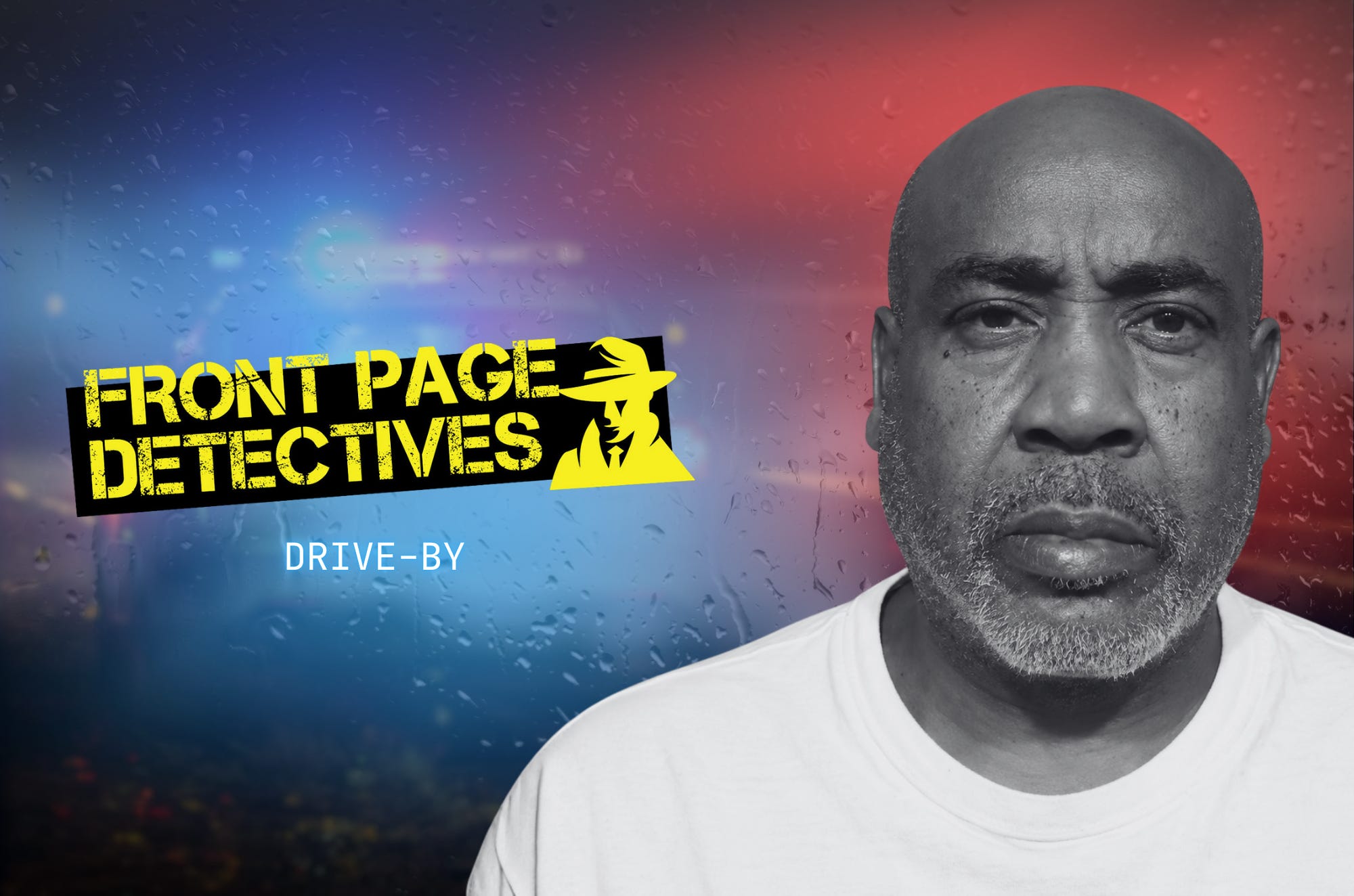
Former gang boss Duane “Keffe D” Davis received a minimum 40-year prison sentence for orchestrating the 1996 murder of Tupac Shakur, ending one of hip-hop’s most notorious cold cases.
Duane “Keffe D” Davis, the former South Side Compton Crips leader convicted of orchestrating Tupac Shakur’s murder, has been sentenced to at least 40 years in prison. The 63-year-old received his sentence Tuesday in Las Vegas, nearly 30 years after Shakur was gunned down in a drive-by shooting on September 7, 1996.
Shakur’s family confronted Davis in court, describing the devastating consequences of losing the 25-year-old rapper. His sister, Sekyiwa Shakur, told the judge that her brother’s death had “crippled my family” and robbed the world of a man determined to improve his community. She urged the court to impose the maximum sentence, telling Davis he would have decades to contemplate what he had done.
The prosecution’s strongest evidence came from Davis himself. During a confidential 2008 interview with investigators examining the murder of Christopher Wallace, better known as the Notorious B.I.G., Davis admitted being inside the white Cadillac from which Shakur was shot. He subsequently repeated and expanded upon those admissions in his 2019 memoir, Compton Street Legend, and numerous media interviews.
Davis’s attorneys insisted his accounts were exaggerated stories designed to sell books and enhance his reputation. Jurors rejected that explanation. At sentencing, Judge Carli Kierny reminded Davis that he had stolen an entire future from Shakur and his family. “The world never forgot about him and his death,” she said. Given an opportunity to address the court, Davis offered no apology. “I’m good. I’m gonna appeal this case for sure,” he replied.
Hot Take: Keffe D spent years telling anybody who’d listen how Tupac got killed. He told the cops, told the interviewers and even put it in a book. Then the jury took him at his word, and suddenly the stories were all fiction. Thirty years of running his mouth bought him 40 years behind bars.
Read more
The university has suspended fraternity house parties for the academic year following allegations that seven men sexually assaulted a student in October 2024.
Cornell University has banned parties and social gatherings inside Interfraternity Council fraternity houses for the remainder of the 2026-27 academic year amid mounting fallout from the alleged gang rape of a former student. President Michael Kotlikoff announced the restrictions Tuesday, warning that fraternities violating the order would face immediate emergency suspension.
The allegations have prompted a reopened criminal investigation, with New York Attorney General Letitia James appointed special prosecutor. Two defendants, Gillio Lopes and Winston Lee, have challenged her involvement. Cornell has also hired former Deputy Attorney General Sally Yates to examine its handling of sexual misconduct allegations. But attorney Andrew Miltenberg, who represents Lopes, accused the university of adopting a sweeping measure that creates the appearance of action without addressing underlying problems.
Miltenberg also criticized the collective treatment of the seven defendants, insisting each man’s alleged conduct must be assessed individually. Lopes maintains his encounter was consensual. Cornell is separately expanding survivor support services, introducing independent investigators and examining broader campus safety policies. Kotlikoff acknowledged that sexual violence extends beyond fraternities, while Miltenberg argued the university should apply consistent standards across campus rather than single out Greek organizations.
Hot Take: Cornell has locked the fraternity doors and announced the party’s over. The lawyers are already arguing about who gets blamed, who gets investigated and whether the students will simply find another address. Seven defendants, one alleged victim and a university desperate to get ahead of the headlines.
Investigators have discovered human DNA inside the former home of R.C. Horsch, where a disturbing archive has been linked to seven missing women.
Investigators searching the Philadelphia home of late pornographer Raymond “R.C.” Horsch have discovered human DNA in several locations, potentially providing a new forensic lead in the disappearances of seven women. Police sources told CBS News that the material was recovered after investigators used luminol inside the property at 417 West Chew Avenue, searching for traces of blood. The DNA will undergo further testing to determine its origin and whether it belongs to any of the missing women. FBI agents have also begun excavating the backyard, removing a shed and digging beneath it while treating the ground as a potential burial site.
The investigation began after Horsch’s son, Eugene, was arrested in June on unrelated drug and weapons charges. A subsequent search uncovered false federal credentials, ballistic evidence, chemicals, urns and an enormous digital archive belonging to his father, who died in 2025. Investigators recovered more than one million images and videos depicting 58 individuals, including seven missing women. Four appeared lifeless in the recordings, while another video reportedly showed what might have happened to a fifth. Among the women identified are Blair Tonzelli, Amy McHale, Maribel Fresses, Gabrielle Amarando and Nicole Fusaro.
Police have not recovered human remains from the house, although animal carcasses were discovered during the latest excavation. No homicide charges have been filed, and Eugene Horsch has not been identified as a suspect in the disappearances. Investigators are examining whether the newly recovered DNA provides a connection between the property and the women whose whereabouts remain unknown.
Hot Take: A million photographs, seven missing women and a house with enough secrets to keep the FBI digging through the backyard. Now there’s human DNA to examine, and the old walls are beginning to give up more than photographs.
Read more
New reports suggest the disgraced music mogul struck his head on an upper bunk, prompting an emergency hospital trip from FCI Fort Dix.
Sean “Diddy” Combs reportedly suffered his mysterious prison head injury after accidentally striking the upper bunk in his cell at FCI Fort Dix, according to a new account provided to Page Six. The explanation follows reports that the 56-year-old music mogul was rushed from the New Jersey federal prison for emergency medical treatment early Saturday morning.
An ambulance reportedly left the prison around 1 a.m. on October 10, with Combs returning before sunrise. Sources said he remained conscious and able to speak throughout the ordeal, and his injuries were not life-threatening. The latest account suggests an ordinary accident rather than an assault, although federal prison officials have not independently confirmed the circumstances. His representative said Combs’ health and well-being remained the immediate concern while his team established what happened.
The incident follows reports of disciplinary problems inside Fort Dix, including alleged contraband possession, unauthorized cellphone use and altercations with other prisoners. Combs is serving a 50-month sentence after his conviction on two federal prostitution-related transportation charges, having been acquitted of racketeering and sex trafficking.
Hot Take: Yesterday it was a mystery head injury, an ambulance in the dead of night and whispers about trouble behind bars. Today the suspect is a bunk bed. Diddy’s had plenty of enemies over the years, but apparently the one that finally landed a blow was prison furniture.
Read more
Police say forensic evidence has identified a former officer in the abduction and killing of Gloria Kowalewicz, more than 65 years after she vanished on her way to church.
Chicago police have identified one of their own former homicide detectives as the suspected killer of eight-year-old Gloria Kowalewicz, who was abducted and murdered while walking to morning Mass on November 12, 1960. Thomas F. McInerney Jr., who joined the department in 1959, has been linked to the killing through modern DNA analysis and a fingerprint preserved from the original investigation. Gloria disappeared shortly before 8 a.m. while heading to St. Mary of Mount Carmel Church. Her body was discovered approximately four hours later in a ditch at a forest preserve southwest of Chicago. She had been shot.
Investigators preserved evidence from the crime scene, including a bullet, Gloria’s clothing and a white communion purse containing her prayer book. A fingerprint recovered from the purse strap remained unidentified for decades. Modern forensic genealogy and advances in DNA analysis eventually directed investigators toward McInerney, who later became a homicide detective and served with the Chicago Police Department until his retirement in 1987. He subsequently worked for the Federal Public Defender’s Office in Nevada before retiring in 2004. He died in 2006, aged 70, without ever facing charges over Gloria’s murder.
The identification has prompted authorities to examine whether McInerney was involved in other unsolved crimes. The FBI is reviewing potential connections, while the Cook County State’s Attorney’s Office is assessing other cases involving the former detective. Chicago police condemned the discovery, stating that McInerney should never have worn a police badge. Gloria’s parents died without learning who investigators now believe killed their daughter. The man suspected of abducting and murdering her spent decades investigating violent crimes while the evidence against him sat in police custody.
Hot Take: For 65 years, Gloria’s killer was a ghost in the files. Turns out the man police now identify was wearing their own badge, investigating murders while his own sat gathering dust. He retired, collected his pension and died before the evidence caught up with him.