Love is as strong as death, its jealousy unyielding as the grave. It burns like blazing fire, like a mighty flame— Song of Songs 8:6
Pumpkin flowers open at dawn. They open wide, full of nectar, bright and welcoming. But they don’t stay open. By mid-morning, sometimes earlier, the petals pull shut. What’s inside when they close stays inside.
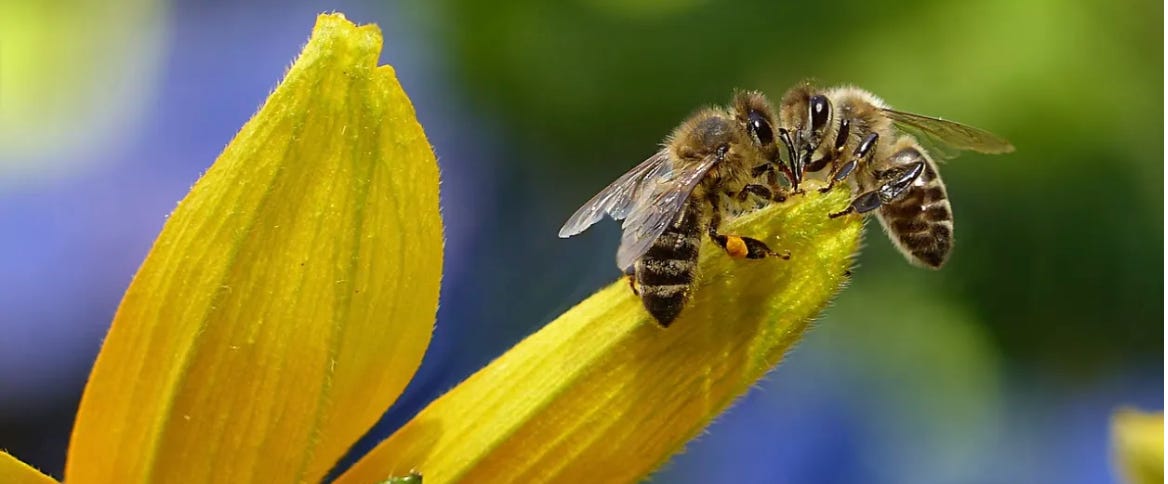
The two bees I found that morning had not been careless. They were doing exactly what bees do: following the sweetness. The flower invited them in. The flower closed around them. And they never came out.
I stood there longer than I expected to.
Song of Songs is one of the most debated books in the Bible. The rabbis who gathered at Jamnia around 90 AD argued fiercely over whether it belonged in Scripture at all (its language too intimate, too earthy, too human). Rabbi Akiva eventually settled the debate with words that have stayed with the Jewish tradition ever since: all the writings are holy, but the Song of Songs is the holy of holies.
Why? Because it tells the truth about love that we often prefer to soften: love has a weight to it. A grip. It does not stay where we put it.
Love is as strong as death. That is not romantic poetry softened for greeting cards. That is an honest warning. Death does not negotiate. Death does not release what it has claimed. And love, the text says, has the same grip.
The hunger for connection, for belonging, for someone or something to pour ourselves into: this is not a flaw. It is how we were designed (Genesis 2:18). The question is never whether we will love. The question is always: what are we letting pull us in?
The bees didn’t choose to die. They chose the nectar. The dying was what happened when they stayed too long inside something that was never meant to hold them.
This is what misplaced love looks like. Not sinister. Just sweet. A relationship that gradually becomes everything. An ambition that quietly becomes an identity. A comfort that becomes the one thing you can’t live without. None of them announce themselves as traps. They never do. They open like flowers at dawn: full of light, full of warmth, full of promise.
And then, at some point, the petals close.
Solomon knew this better than almost anyone. He was the wisest man who ever lived (1 Kings 4:31). He had met God twice (1 Kings 11:9). He had written the very words we are reading now. And yet, the text says plainly: his wives turned his heart after other gods, and his heart was not fully devoted to the Lord his God (1 Kings 11:4). It didn’t happen overnight. It happened across years, one love at a time, until the flower had closed completely around him. Knowledge did not protect him. Proximity to God did not protect him. The only thing that could have protected him was keeping the first love first.
I don’t say this to frighten anyone. I say it because I have watched it happen in ways that are hard to see from the inside. The sweetness is real. That’s what makes it dangerous.
Jesus was once asked which commandment was the greatest. He didn’t hesitate.
You shall love the Lord your God with all your heart and with all your soul and with all your mind. — Matthew 22:37
First. Before everything else. Not because the other loves don’t matter, but because without this one at the center, the other loves lose their shape. They expand until they fill the whole room. They become the flower that closes.
When God is at the center, our loves are ordered. The people we love, we love more freely: we are not asking them to be everything. The things we pursue, we pursue with open hands: we are not gripping them for our lives.
The bees died because the flower became their whole world.
The question worth sitting with today is not whether you love — it’s what you’re still inside when the petals start to close.
© 2026 Bible Portal. Free to share with attribution. Please keep the source and a link to Bible Portal intact. For other uses, contact us.