by CÉDRIC KARLIKOWSKI of CELLULE 51
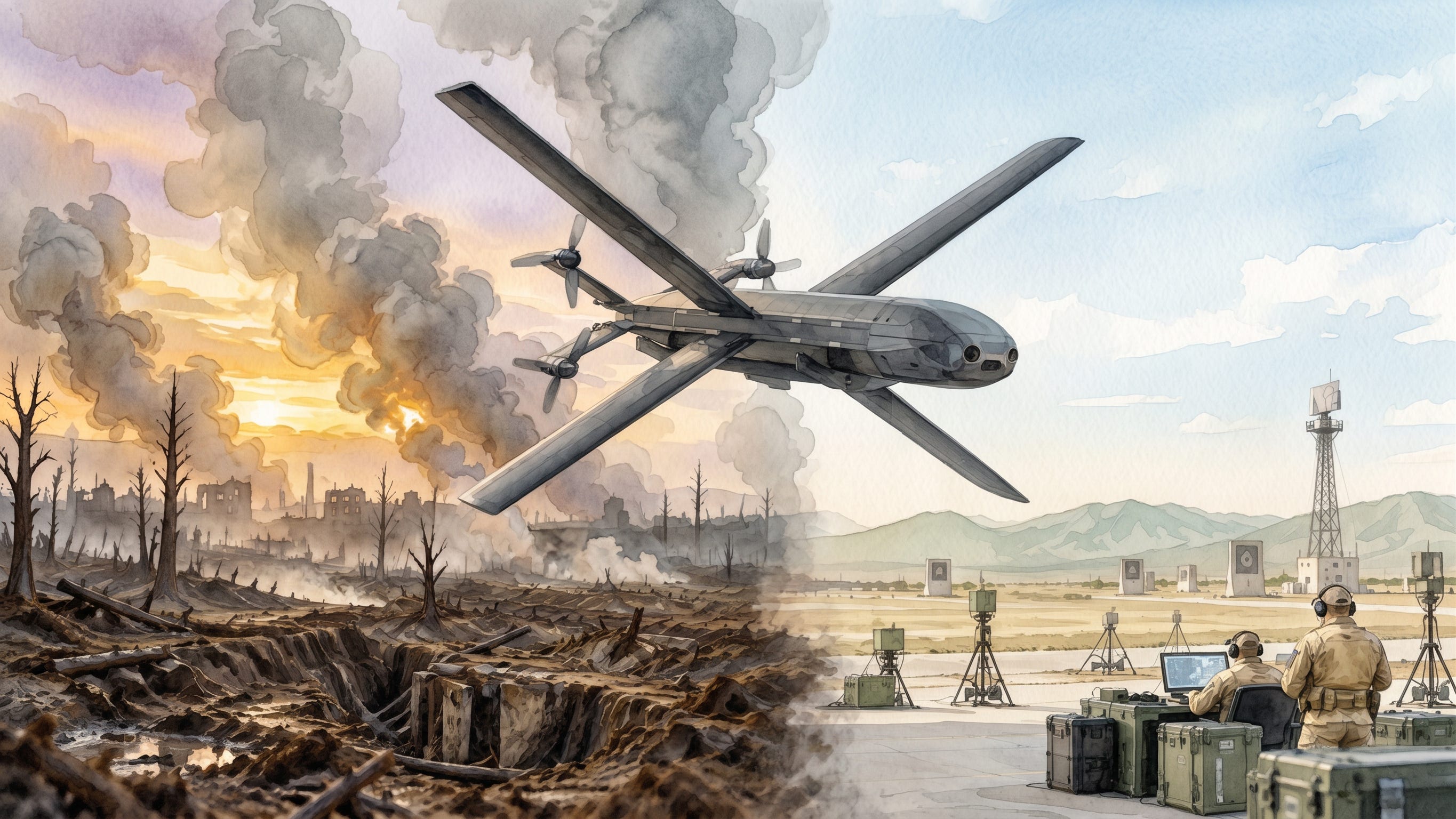
Fort Benning, Georgia, February 2026. American soldiers flew drones from some two dozen competing companies in the first test of the Pentagon’s Drone Dominance program. One was Ukrainian: the F10, made by F-Drones and entered by its American representative, UDD Tech Corp.
A drone built in Ukraine’s war still had to earn its grade on an American range. Ukraine now exports finished combat drones, and the buyer still tests them itself. This article explains why, and whether it must take so long.
We publish this newsletter every day at 9:05am NYC time / 4:05pm Kyiv.Your subscription fuels our work.
Our exams take months. Is the Western test necessary, or just bureaucracy ? Short answer: it is necessary, because the two sides ask different questions. How long it takes is another matter. If someone you know doubts Ukraine’s battlefield numbers, or asks why a drone proven in Ukraine needs a test in Georgia, here is the long answer.
One technical point: There are two ways to grade a drone. Ukraine’s exam takes place at the front and asks one question: did the mission work? The Western exam takes place on a test range and asks two: does it work for our soldiers, and can we buy from this company ? That second question covers production, supply chain and qualification.
Ukraine grades the mission, while the West grades the drone and the company.
In August, I argued here that aid went east and technology now goes west. This is the next step. Four things you will know by the end: how Ukraine grades a drone, how the West grades one, why neither reads the other’s grade, and what to ask the next time a company calls its drone “combat-proven.”
A unit uploads video of a mission to Delta, the military’s battlefield data system. Analysts check the claim. A verified mission earns points, which the unit spends on Brave1 Market, an online marketplace for military equipment. Strikes are only part of the list: reconnaissance, logistics and evacuating the wounded earn points too.
According to the Defense Ministry, items in stock arrive in about seven days. Units ordered $1 billion worth of equipment in the marketplace’s first year, and some 500,000 drones, ground robots and electronic-warfare systems have reached more than 400 units.
In May 2025, Kateryna Chernohorenko, then deputy defense minister for digital transformation, explained that analysts review every claim. Duplicate claims do happen, she said, but they are not systemic, and staff filter them out by hand.
Last November, Artem Bielienkov, chief of staff of the 412th Nemesis drone brigade, told the Ukrainian outlet Ukraïner that the points ranking reflects volume rather than effectiveness. An army checking its own numbers in wartime, and arguing about them in public.
The F10’s actual performance at the front is not public: Ukraine’s exam scores units, not drone models, and its detailed results stay in the army’s data system.
The F10 finished sixth on the official board, with 72.9 points out of 100. That put it among 11 companies awarded orders and earned it a contract for 2,000 drones.
The score blends performance in the trials, evaluations by military operators, and the maker’s production and supply chain. Sixth place grades the supplier, not just the drone.
On July 1, Ukraine granted its first export license for finished combat drones, while earlier ones had mainly covered components and technologies. The 2,000 F10s crossed the border. By early September, all of them had been delivered and accepted, according to the program’s public leaderboard. Stas Khutor, who heads F-Drones, addressed the obvious worry: the export, he said, does not come at the expense of the front lines.
A bigger order, up to 9,000, depended on a second round of trials, flown by American operators in August. The F10 entered the deep-strike category, but when the results came out on September 15, it was not in the top five.
The F10 was built for war, in a war. That record may have opened the door. The contract came from the Pentagon’s own test.