History of the Present — The Intellectualist Premium Series
For nearly eight decades, one of the central advantages of American power has not been that the United States could confront every adversary by itself. It has been that it rarely had to.
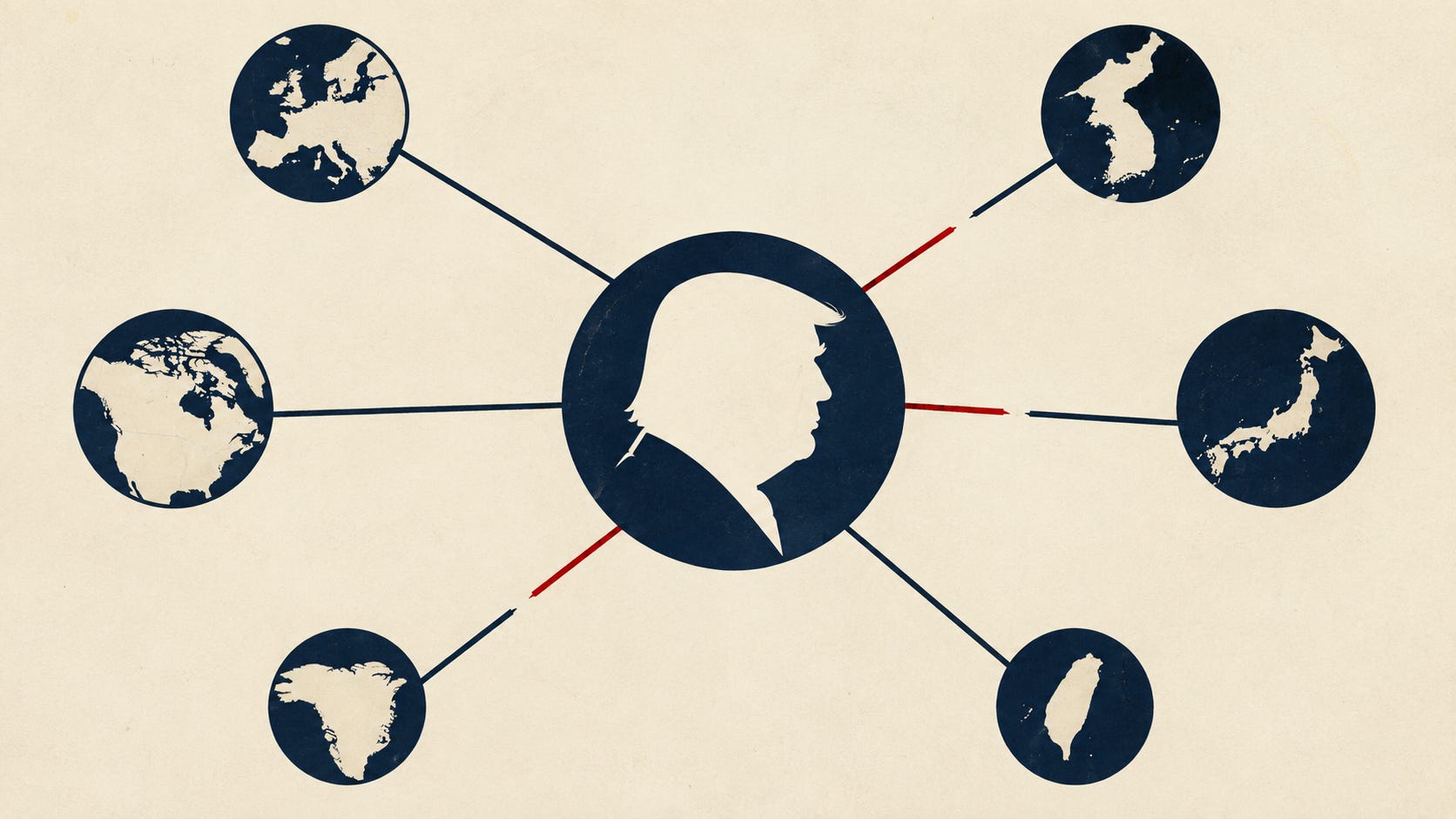
After World War II, Washington built an extraordinary network of alliances. NATO made an attack on one member a matter for the alliance as a whole. American alliances with Japan and South Korea created a comparable architecture in Asia, while less formal relationships, including the one with Taiwan, extended American influence farther still.
The system was never altruistic. Washington pressured allies, demanded concessions, and pursued its interests ruthlessly. American presidents quarreled with allies and negotiated with adversaries. What made the system durable was something narrower: core security commitments were generally expected to remain more stable than the political disagreements occurring inside the alliances themselves.
An adversary could be negotiated with without becoming an ally. An ally could be pressured without having to wonder whether its security had itself become the object of the pressure.
Donald Trump is putting that distinction at risk.
He is not simply withdrawing the United States from its alliances. American forces remain deeply embedded in Europe and the Indo-Pacific. What is emerging instead is potentially more destabilizing: a pattern in which security cooperation itself appears increasingly conditional on whether allied governments accommodate the president on issues that may have little to do with the alliance’s purpose.
The latest example came Sunday. Trump ordered the Pentagon to substantially reduce planned military exercises with South Korea after Seoul declined his request to participate in the campaign to denuclearize Iran. The 11-day Ulchi Freedom Shield exercise had been scheduled to involve about 18,000 South Korean troops and to strengthen readiness against North Korean threats. Trump emphasized his “very good relationship with Kim Jong Un,” described North Korea as “unthreatening and respectful,” and linked the episode to Seoul’s refusal regarding Iran.
North Korea remains nuclear-armed, continues developing ballistic-missile capabilities, and has gained battlefield experience through its participation alongside Russia in Ukraine. A president can reasonably conclude that an exercise is too large, too expensive, or strategically counterproductive. But when an ally’s refusal to support an unrelated military campaign is invoked while exercises designed to prepare that ally against an adversary are reduced, military cooperation begins to operate as political leverage.
The practical effect also advances a longstanding North Korean objective: Pyongyang has repeatedly demanded that large American-South Korean exercises be curtailed. That does not mean Trump has chosen Pyongyang over Seoul. American troops remain in South Korea, and the alliance remains intact. But on an important question of readiness, Trump has taken an action North Korea has long sought while pressuring the democratic ally those exercises are designed to help defend.
Trump’s warmth toward Kim is not new. In 2018, he said the two men “fell in love” and celebrated Kim’s “beautiful letters.” He also praised Kim’s intelligence, talent, toughness, and negotiating ability. Diplomacy with a nuclear-armed adversary can be prudent. The unusual feature is the intensely personal language Trump has repeatedly used to describe him.
The same instinct appears in Trump’s relationship with Vladimir Putin.
There is nothing inherently wrong with maintaining a workable relationship with Russia. Nuclear powers have especially strong reasons to communicate. The extraordinary feature of Trump’s relationship with Putin is the degree of personal deference he has sometimes displayed when Putin’s assertions conflicted directly with the judgments of Trump’s own government.
The clearest example came at Helsinki in 2018. Standing beside Putin after U.S. intelligence agencies concluded that Russia had interfered in the 2016 election, Trump invoked Putin’s denial and said, “I don’t see any reason why it would be.” He added that Putin had been “extremely strong and powerful in his denial.”
History of the Present: Premium Access“The past is never dead. It’s not even past.”
— William Faulkner
Power moves before it is named. Institutions fail before they admit failure. Public narratives harden after the choices that shape them have already been made.
History of the Presentis The Intellectualist’s flagship premium series for readers who want to understand the forces shaping the world before they become headlines, scandals, crises or consensus.Members get the analysis earlier — before events harden into conventional wisdom — along with full access to The Intellectualist’s premium editorial portfolio.
Save 33% on Your First Year
Limited to the first1,000 Founding Members.The first 1,000 members will be permanently recognized as
Founding Members of The Intellectualist’s next chapter.
What Members Get:History of the Present,One Person, One Vote,Scandal,Reality Check,Thoughts & Ideas,The Cost of MoneyandBits & Bytes— plus expanding access to early briefings, curated events, member discussions and The Intellectualist’s editorial process.
Know Earlier. Understand Deeper.
Become a Founding Member[https://theintellectualistofficial.substack.com/subscribe?coupon=8f060a60]