I’m supposed to be on vacation this week, but I’m apparently not so good at taking time off. I’ve got things to say, and not enough time to say them!
But on to today’s topic: After spending millions in federal funds on campaign-style advertisements, Trump promised to use private political money instead. But taxpayers aren’t getting their money back, new ads have continued to appear, and the controversy is now headed to federal court.
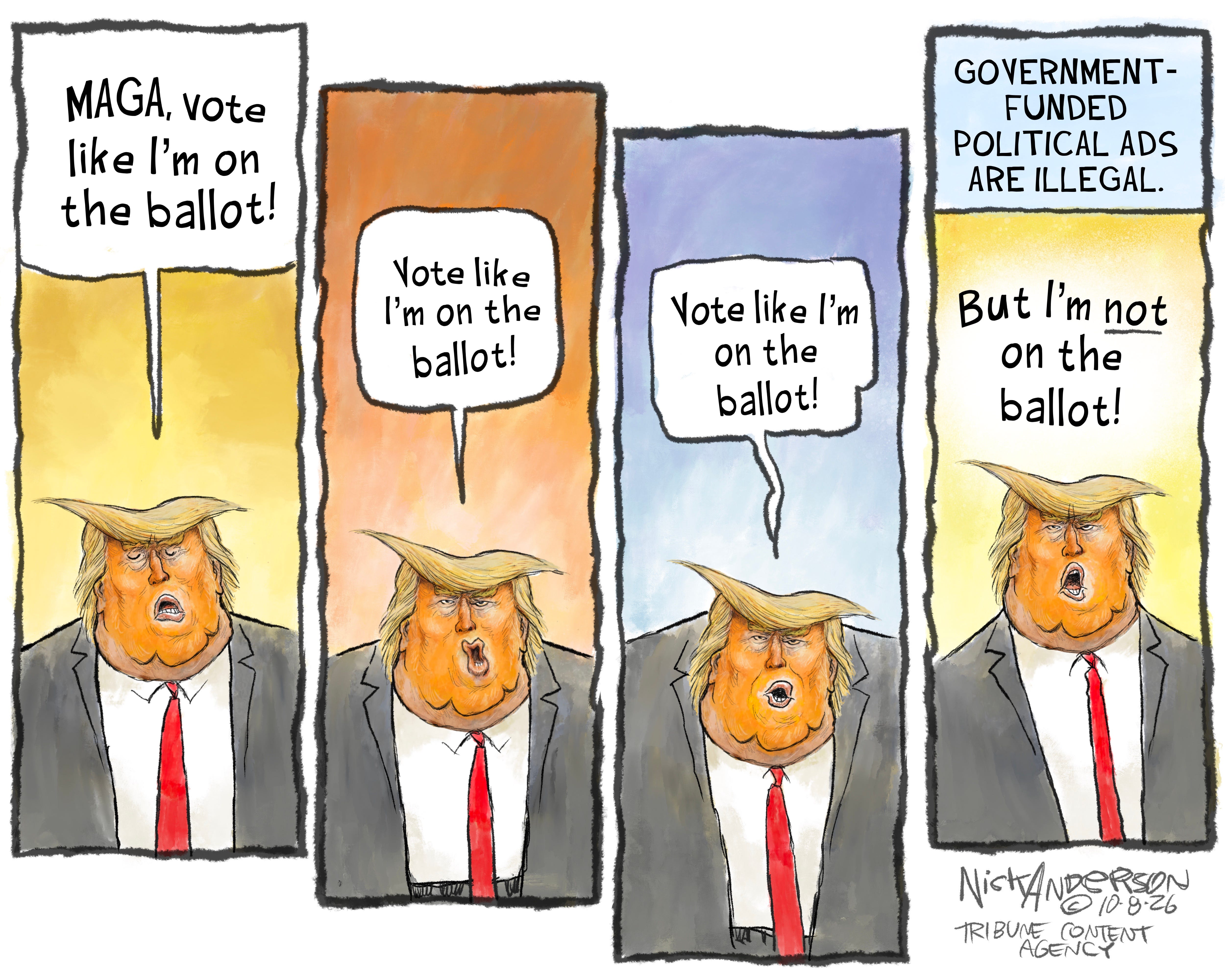
Trump has spent weeks defending his administration’s use of taxpayer money to purchase television advertisements promoting himself and his political agenda. His explanation was straightforward: Because he isn’t running for reelection in November, the commercials aren’t political campaign advertisements.
Never mind that Trump has explicitly instructed Republican voters to approach the midterms as though he were personally on the ballot.
Never mind that one of the government-funded commercials is nearly identical to an advertisement from his 2024 presidential campaign.
And never mind that the advertisements, airing just weeks before a national election, feature Trump attacking political opponents and celebrating his administration’s accomplishments.
According to the White House, these are simply patriotic public-service announcements.
The controversy began in late September, when advertisements featuring Trump started appearing on television with an unusual disclaimer: “Paid for by the U.S. Government.”
One featured Trump declaring that America would defeat communism, socialism and Marxism. Another celebrated what Trump called America’s new golden age. A third recycled his 2024 campaign rhetoric about defeating the deep state, globalists and the political establishment.
The commercials looked remarkably like campaign advertisements, except that the people paying for them weren’t campaign donors. They were American taxpayers.
The money came from the Department of Homeland Security. Federal records show that $20 million was transferred into an account for commemorative events before the department awarded a $20 million national media contract to an advertising agency.
By October 6, nearly $12 million in taxpayer-funded advertisements had already aired, according to advertising-tracking firm AdImpact.
Trump initially dismissed criticism. The president argued that the advertisements promoted America rather than his political interests. The White House emphasized that he wasn’t on the ballot and that the commercials didn’t explicitly ask viewers to vote for Republican candidates.
But that explanation failed to satisfy even some members of his own party. Senate Majority Leader John Thune said he liked the advertisements’ message but didn’t believe taxpayers should pay for them. Republican Sen. John Kennedy similarly argued that public officials shouldn’t use public money for advertisements promoting themselves.
Legal experts also questioned whether the commercials violated federal prohibitions against spending appropriated funds on publicity or propaganda.
Then, on Monday, October 5, Trump reversed course. In a social media post, he insisted the advertisements were a legitimate promotion of the country but announced that he would pay for future commercials himself or use money raised for MAGA Inc., his affiliated super PAC.
The reversal followed mounting bipartisan criticism and calls for federal investigations. But there was a catch.
Trump’s announcement concerned future advertisements. It did not include a promise to reimburse taxpayers for the millions already spent. On October 6, a White House official confirmed to Axios that the administration did not intend to repay the government for the earlier commercials.
When reporters asked Trump whether he would reimburse taxpayers, he declined to commit. “We’ll decide,” he said.
The distinction is significant. Trump’s decision to stop using taxpayer funds going forward does nothing to resolve whether the government was legally permitted to finance the original advertisements. Nor does it restore money already spent from a federal budget intended for government purposes.
And it raises another question: If the advertisements are legitimate public-service announcements, why should a political fundraising organization pay for them? Conversely, if they’re appropriate expenditures for a political organization, why were taxpayers paying in the first place?
The White House maintains that the commercials were lawful government communications, and previous administrations have used public money to explain and promote government programs.
But these ads are fundamentally different because their primary purpose obviously promotes Trump personally and advances partisan political messages.
Richard Painter, a former White House ethics lawyer under President George W. Bush, told FactCheck.org that he considered the commercials government propaganda. Other legal experts have raised similar concerns.
Whether the advertisements actually violated federal law remains an unresolved legal question. And then came another government-funded advertisement. On Tuesday, a fifth advertisement began airing, this one highlighting the Trump administration’s capture of former Venezuelan President Nicolás Maduro.
The commercial joined a growing collection of taxpayer-funded spots celebrating Trump’s presidency. Reuters subsequently reported that government-funded advertisements continued airing after Trump’s announcement. A source familiar with the plans said the existing government-funded advertising campaign was expected to end later this week.
On Wednesday, the Democratic National Committee filed a federal lawsuit seeking to stop the administration from using public money for the ads. The suit alleges that the commercials violate federal restrictions on using appropriated funds for publicity or propaganda. A separate lawsuit filed in New York by Common Cause, a public employee union and an Alabama political candidate makes similar allegations.
Both cases challenge the administration’s characterization of the commercials as legitimate public-service announcements. The DNC argues that Trump has made himself the centerpiece of the midterm elections and that the advertisements are designed to advance his political interests and those of Republican candidates. The administration disputes that characterization.
The controversy also carries potential political consequences. A Reuters/Ipsos poll released Wednesday found that nearly nine in ten American voters considered it inappropriate to use taxpayer money for campaign advertisements featuring a president or Cabinet member. That finding clearly suggests the criticism extends well beyond Trump’s usual political opponents.
The broader issue is whether an incumbent administration can use government resources to promote political messages that closely resemble campaign advertising, particularly immediately before an election.
So, to summarize: Trump initially insisted the advertisements were appropriate government expenditures because he wasn’t running for office. Then, facing criticism, he announced that his political fundraising operation would pay for future advertisements. He declined to reimburse taxpayers for the money already spent, and the government-funded commercials continued airing.
Trump’s explanation appears to have changed. The bill, however, remains with the American taxpayer.