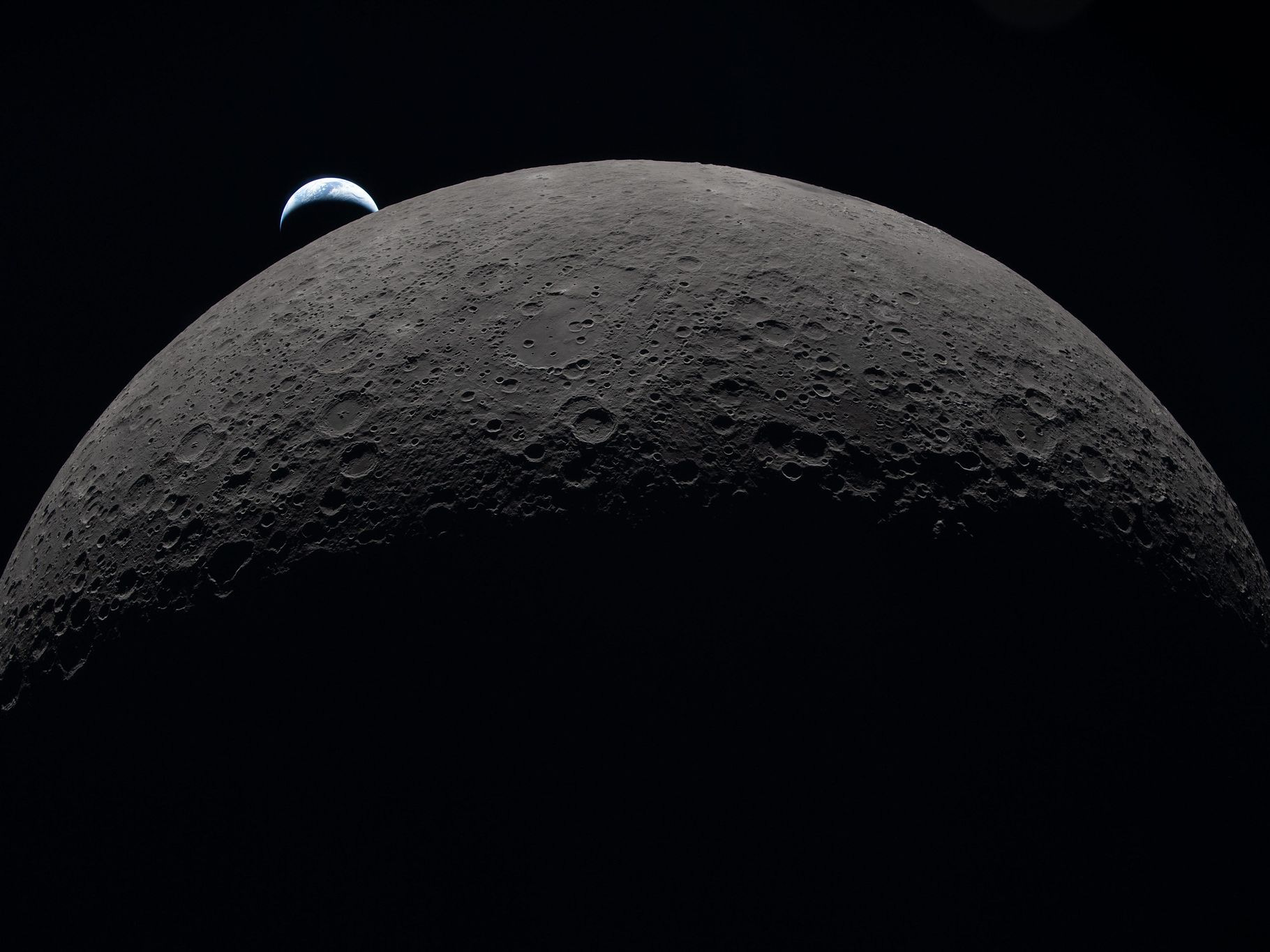
While we’re plagued with the ravages of war and the leadership of idiotic men, I invite the feeling, thoughtful, empathetic amongst us to remember the glories of the Moon.
Within the first 24 hours on Threads, NASA got around 12 million followers. The internet loved the glories Artemis II was sharing. Why? Because the skies are wondrous. Even as science explains more of the specifics about space, the mysteries remain evocative. Knowledge does not diminish wonder.
In our very cynical, so-called data-driven age, wonder is a scarce resource, right up there with empathy. We must grasp these moments and hold the feeling in our souls. We should resist returning to our regular selves wholly. Instead, we should foster wonder.
Made around 23,000 years ago, this female figure holds the crescent moon1. What did ancient people see in the moon? Why did they have a woman holding it? In some ways, our lack of knowledge about the iconography is a boon. We can imagine. A great mother goddess, perhaps, or a trickster. What sorts of odes might they have had?
Civilizations have come and gone, but the moon has always been there. Everyone on Earth has seen it. And even if you never meet most of the world’s people, you share the moon in common.
In ancient times, many cultures worshipped the moon. In ancient Babylon, Nabonidus was deeply devoted to the moon god, Sin, whom he raised to the highest rank in the Babylonian pantheon. Ancient Greeks, Egyptians, and Indians also saw divinity in the moon.
But, even outside the auspices of faith, the moon has kept humanity in thrall for millennia. In art, you see the ways its glowing presence speaks to the soul. These images highlight the pure delight the night sky gave people. That eternal body appears most nights, a constant companion in everyone’s time on this mortal coil.
The impetus to anthropomorphize the moon might stem from its constant companionship. Or is it instead due to its glory? How can something so enthralling be just a rock in the sky? I can see how comforting it would have been to imagine a friend looking down on you.
But even as a heavenly body, its physical form is such a glory. Its rolling craters create a field of half tones. While the actual surface is inhospitable, it is visually appealing from afar.
But, it’s also gone. Early risers might catch a faint view, but for most of the day, you usually reside in the land of the sun. In comparison to the moon, the sun is too bright to observe easily. But even more, our society has structured days around the sun we experience while we toil away. The moon, on the other hand, is there when we relax.
But here’s why I wanted to write this. The moon might be there when we unwind, but its glory is lost if you don’t notice it. It’s not a lunatic who spends time enjoying the night sky. It’s the poet, the dreamer, and the thinker. To notice the moon is to live in the moment.
There’s a reason the moon features so commonly in Japanese prints. Partly due to Shinto beliefs, Japanese society places a premium on enjoying nature, often as social events. Nature is an antidote to the strictures of society.
Paul Verlaine in 1869 in “Clair de Lune” wrote, “All sing in a minor key, of victorious love and the opportune life, they do not seem to believe in their happiness and their song mingles with the moonlight.” The moon reminds us of joy and goodness at any time, but most certainly in difficult times. To experience the moon takes little effort but offers great enrichment for your soul. The moon can draw out of you what society often diminishes. Allow yourself a moment, even just once in a while, to deliberately spend some time in the glorious lunacy of being in the moment.
Many scholars suggest it could be a bison horn, so this one is definitely debated. Without written language or numerous comparables its hard to confirm what it is.