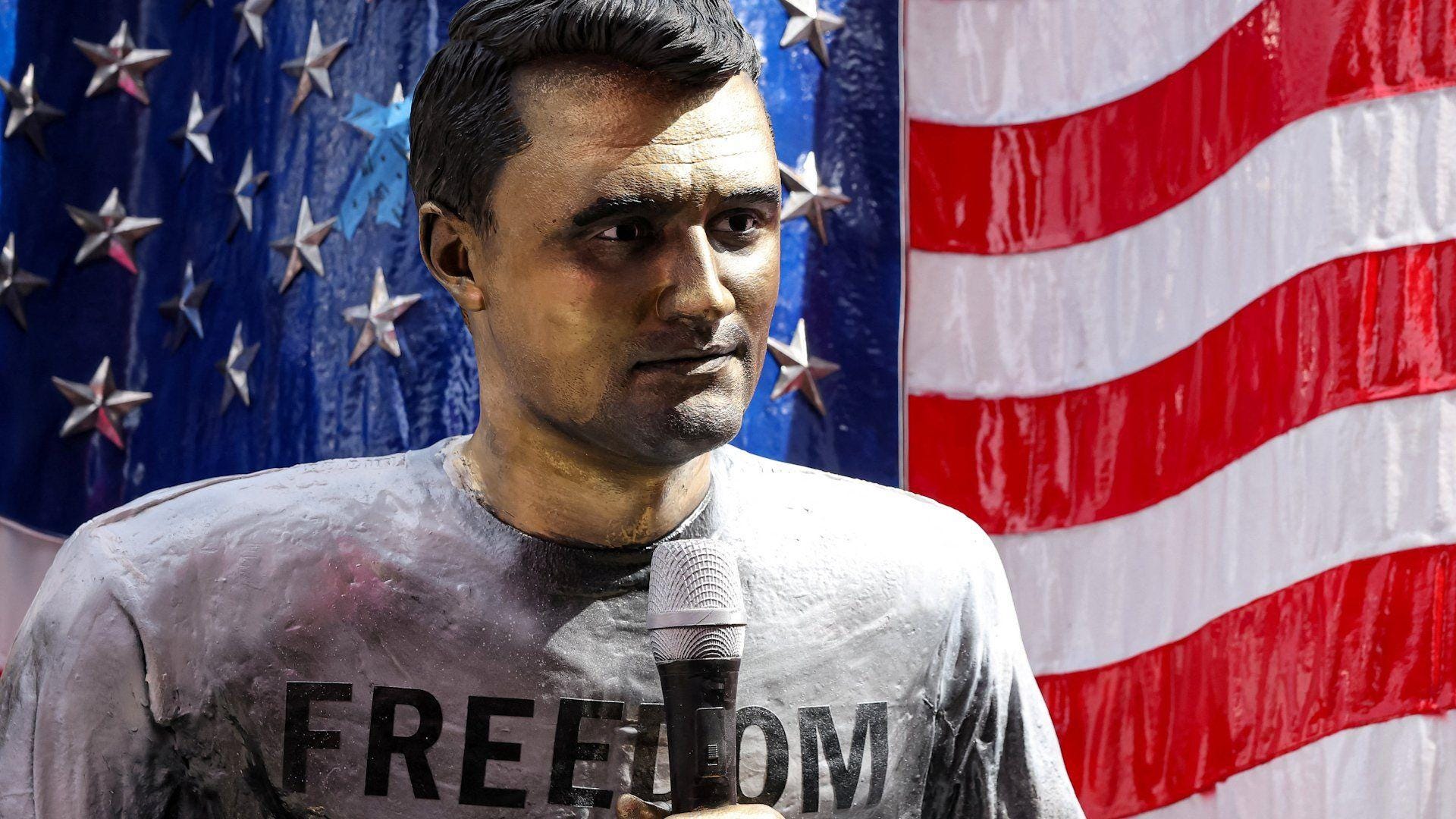
In the year since Charlie Kirk’s assassination, the United States has been through it. On the one-year anniversary, two statues were erected: one temporary in Times Square and the other near the Turning Point USA headquarters. One was widely panned, and the other was quickly defaced. Both raise the question of whether we need a statue of Charlie Kirk to move forward as a society.
This is the weekly paid post. It’s too long for email, so read it on the web or in the app for the full thing. I appreciate every one of you. If you can upgrade, it would be helpful, as I’m using these earnings to focus on writing my book. Suppose you can’t afford to buy me a coffee. I run on caffeine. If you can’t, no worries; I always make a lot of my content free.
In the first days after Charlie Kirk’s assassination, conservatives became very emotional when anybody suggested Charlie Kirk wasn’t blameless in creating a gun culture. People lost their jobs for repeating Charlie Kirk’s own words. Quickly, conservatives spun up a meme saying, "I am Charlie Kirk."
This movement conservatives clung to was fairly short-lived. Charlie Kirk started his podcast in 2019. During the long days of COVID, when the online ecosystem churned out dissent, his podcast became a mainstay for isolated young men. Turning Point USA reported that the podcast averaged 500,000 to 750,000 downloads per day in 2024. Men heard someone who liked them believed that white men got the short end of the stick. He validated them, and they made him rich.
But the quick conservative backlash seemed to oppose their actions. Many people felt that his widow’s pyrotechnic funerary extravaganza tour, complete with performative tears, came off as disingenuous. His own words seemed even less saintly in context, as his followers demanded. Finally, given the speed of our media environment, those memes quickly moved from heartfelt to humorous and derisive.
Underlying the saga of going from dropout to media Mogul to joke, we see an important through line in contemporary society. The poorly made monuments to him and the public’s response are a particularly telling part of this whole incident. We went from possible saint to punchline within a year, but in that we see one of the biggest problems in our society—the plight of white men. In Charlie Kirk, we see the wages of patriarchy, American white supremacy, tribalism, and false idols. We also see if we are Charlie Kirk.
Patriarchy hurts everybody. The systematic structuring of society around gender impacts everybody, but differently. The disproportionate impact, though, obfuscates the system depending on your role. For example, online, men often complain about paying on dates. Their reaction highlights a central challenge in American intellectual life. It would really suck to always be required to pay. That feels inequitable. Similarly, you are the one going on the date. This feels personal; a system is wronging you. So in the very small frame of a man looking at his finances and potentially his lack of second dates, this is busted. Many men online focus on themselves and how the world interacts with them. It certainly feels bad when people treat you badly or when you feel wronged.