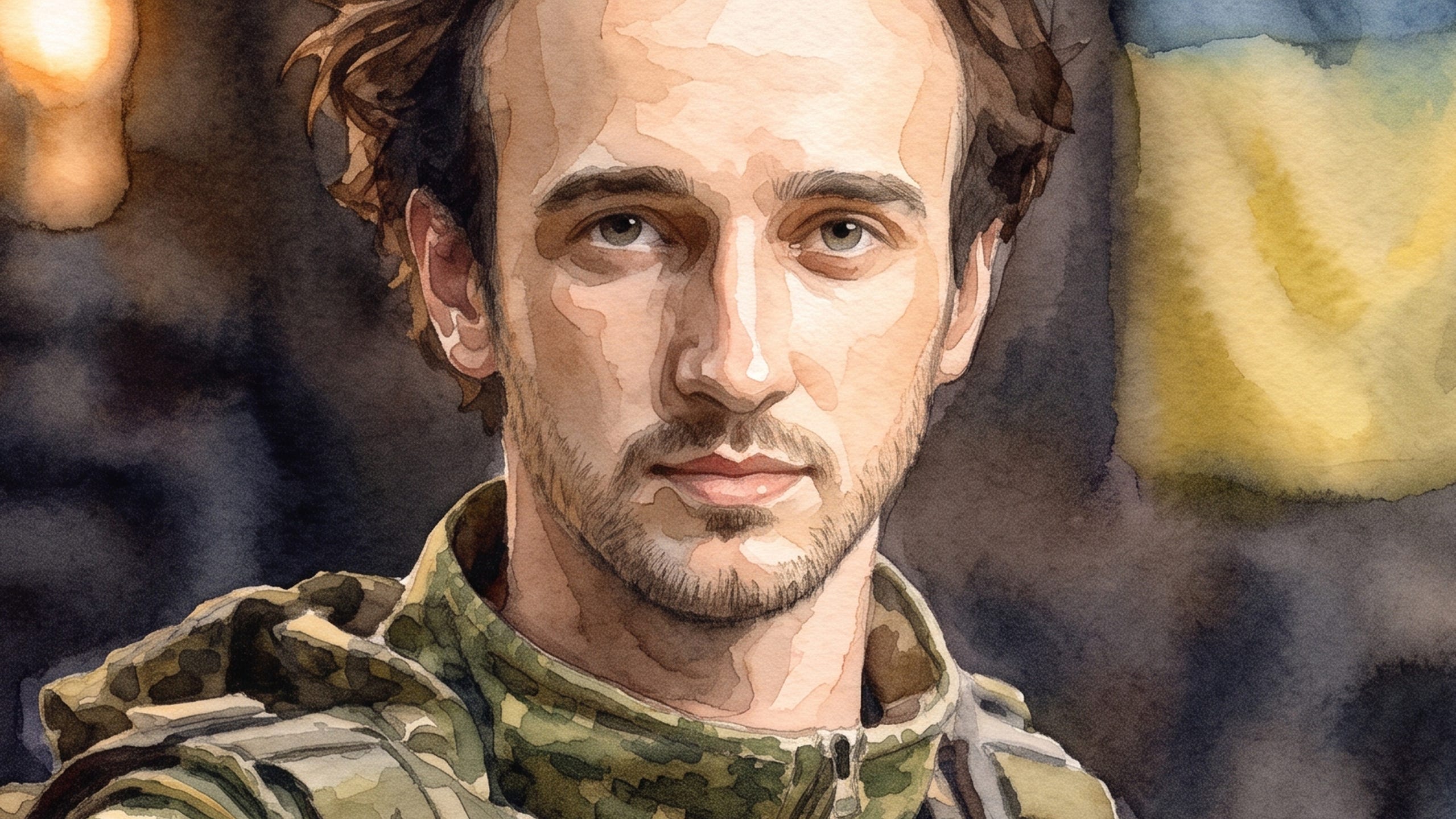
Welcome to Voices of the Fight— a Saturday Q&A series featuring the warriors, innovators, advocates, and volunteers standing under fire for free people.
My name is Dimko Zhluktenko. I’m serving in Ukraine’s Unmanned Systems Forces. Previously, I was a combat drone pilot. Before joining the military, I co-founded Dzyga’s Paw, and before the full-scale invasion, I worked in IT and traveled as a digital nomad.
My mission has changed several times during this war because the war has had such a profound effect on my family and me. But the purpose is the same: securing a future for my family and my nation.
We publish this newsletter every day at 9:05am NYC time / 4:05pm Kyiv.Your subscription fuels our work.
I do that through military service and, when I have the opportunity, through advocacy abroad, speaking with politicians, ministry officials, and military leaders.
The motivation is basic. We want our country, our way of life, and our identity to survive. I think most people can understand that.
What pushed me to act was realizing that we were among the people with the skills, education, and initiative to do something. If we didn’t act, who would?
Our generation faces an enormous challenge. The decisions we make now will determine the future we have.
Because we wanted to support Ukraine’s fight for survival, my wife, Iryna, and I first established Dzyga’s Paw. The charity specializes in supplying technological equipment to Ukraine’s armed forces and has delivered more than $7 million worth of assistance. That has come through crowdfunding, social media, newsletters, and the support of organizations such as Under Fire News.
Once we had established the processes the foundation needed, I joined the armed forces. There are many people in Ukraine who cannot defend themselves. Those of us who can have to step forward for them as well as for ourselves.
Serving as a combat drone pilot changed me in many ways. It also reinforced my understanding that stopping an invasion requires people willing to fight the invading force.
When I say that people with skills and initiative need to act, I mean that leadership comes with responsibility. If you’re a leader in your community, your workplace, or your university, people look to you. Your decisions can influence theirs.
Someone who might otherwise have stayed home sees you volunteering, donating, or joining the military and decides to contribute, too.
That applies far beyond Ukraine. If you’re a leader, you’re obliged to act.
One experience that changed me was watching Russian infantry assaults while serving as a drone pilot.
Before that, I had seen the daily reports of Russian losses and wondered about the accuracy of the reported scale of them. Then I saw the assaults myself.
It wasn’t necessarily a great wave of people advancing at once. Three men would come during one hour. Another three would come the next hour. Then more.
They were moving through areas where others had already been killed. They could see the bodies, yet they kept coming. The number of people being sent into those positions was staggering.
Watching that made me think about how people can be pushed into doing something so contrary to their own survival.
At first, it was depressing. Then we began mocking the absurdity of what they were doing. Eventually, it became something you expected. The rain falls, the sun shines, and another Russian assault comes.
That process of getting used to it was itself disturbing. It changed how I understood human life and the value placed on it.
At the same time, I saw Ukrainian comrades fighting to stay alive with everything they had. Even after terrible wounds, they were mentally present and determined to survive.
Those experiences sit beside one another in my mind: people repeatedly being sent toward death, and people holding on to every chance of living.
That is something you don’t understand in the same way from reading a report.
Be flexible about tactics, but stubborn about the decision to defend.
You have to adapt how you work. But the underlying decision is that we are going to defend our country, no matter what.
Some days, the weather is terrible. You’re stuck in the mud, you don’t feel well, or you don’t have all the equipment you need. You may not have seen your wife for months.
You still wake up and do your job because other people depend on you doing it. If I do my part properly, they have a better chance of doing theirs.
That is what I tell the soldiers under my command. The challenges can be overwhelming. Sometimes you need to step back, rest a little, and then return. But you keep the reason you’re doing this in front of you.
No one ever promised it was going to be easy.
At the same time, resilience is limited. One person might manage this for a year, another for five, another for longer. It consumes physical and mental resources.
We would obviously prefer not to have to discover how much we can endure. Some people may grow through parts of the experience, but many will have enormous difficulties recovering from it.
That’s why support from outside matters.
Take Dzyga’s Paw’s Secret Santa project. You might be a Ukrainian soldier sitting in a dugout or underground bunker somewhere, and a person in another country decides to send you something you’ve asked for.
They don’t speak your language. They aren’t part of your culture. They don’t know you personally. But they’ve made a deliberate effort to find something for you, your family, or your unit and get it to you.
That tells you that you aren’t alone.
There’s also a very ordinary side to military life that people might not imagine. A lot of the time, you wait. You observe, carry out the same tasks, and spend day after day with the same people.
Eventually, you run out of things to talk about.
Then something arrives from a stranger abroad, and suddenly there’s something new in your life. You talk about who sent it, where it came from, and why someone so far away wanted to help.
That can lift the mood enormously. I’m proud that Dzyga’s Paw makes those connections possible. The team is deeply committed, and they’re doing excellent work.
4 | How can people support your work?
I would ask people to support Ukraine’s armed forces in general.
If you know someone serving, speak with them. Ask how they are, and ask what their unit needs. It might be a portable power station, a generator, a tablet, or a laptop. Equipment that helps them work more effectively can also help keep them alive.
You can support someone directly, go through a charity you trust, or help through Dzyga’s Paw and projects such as Wolves on the Hunt or Secret Santa.
The important thing is to remember the men and women spending Christmas in trenches, dugouts, and underground bunkers. And remember them after Christmas, too.
Military service demands a great deal from a person. You give your physical energy, your mental resources, and time you could have spent building a civilian life.
You do it for the people you want to protect, without knowing when you’ll be able to go home.
I have enormous respect for the people in my regiment and in other units. I want to do everything I can for them, whether that means sharing a request, making a connection, or donating my own money.
Looking at politics around the world can be exhausting. Governments change direction, politicians behave unpredictably, and support becomes uncertain. Through all of that, Ukraine’s armed forces continue doing their job under enormous pressure. I’m proud to be part of that.
5 | Where can people follow you?
My main platform is X. I’m also on LinkedIn, which is partly a legacy of my IT career. I was surprised to discover how large and active the Ukraine-supporting community is there.
From time to time, I make YouTube videos explaining the drone warfare taking place in Ukraine and the lessons it offers other militaries, particularly the United States. Those videos are in English and focus on defense and national security.
You can also follow Dzyga’s Paw to see the team’s work, current equipment requests, and projects such as Wolves on the Hunt or Secret Santa.
Your subscription fuels our work.
Nikolaus Muchitsch is chief of staff and strategy at Under Fire News.
underfire.news | PayPal | X | Instagram | LinkedIn | Youtube | Facebook