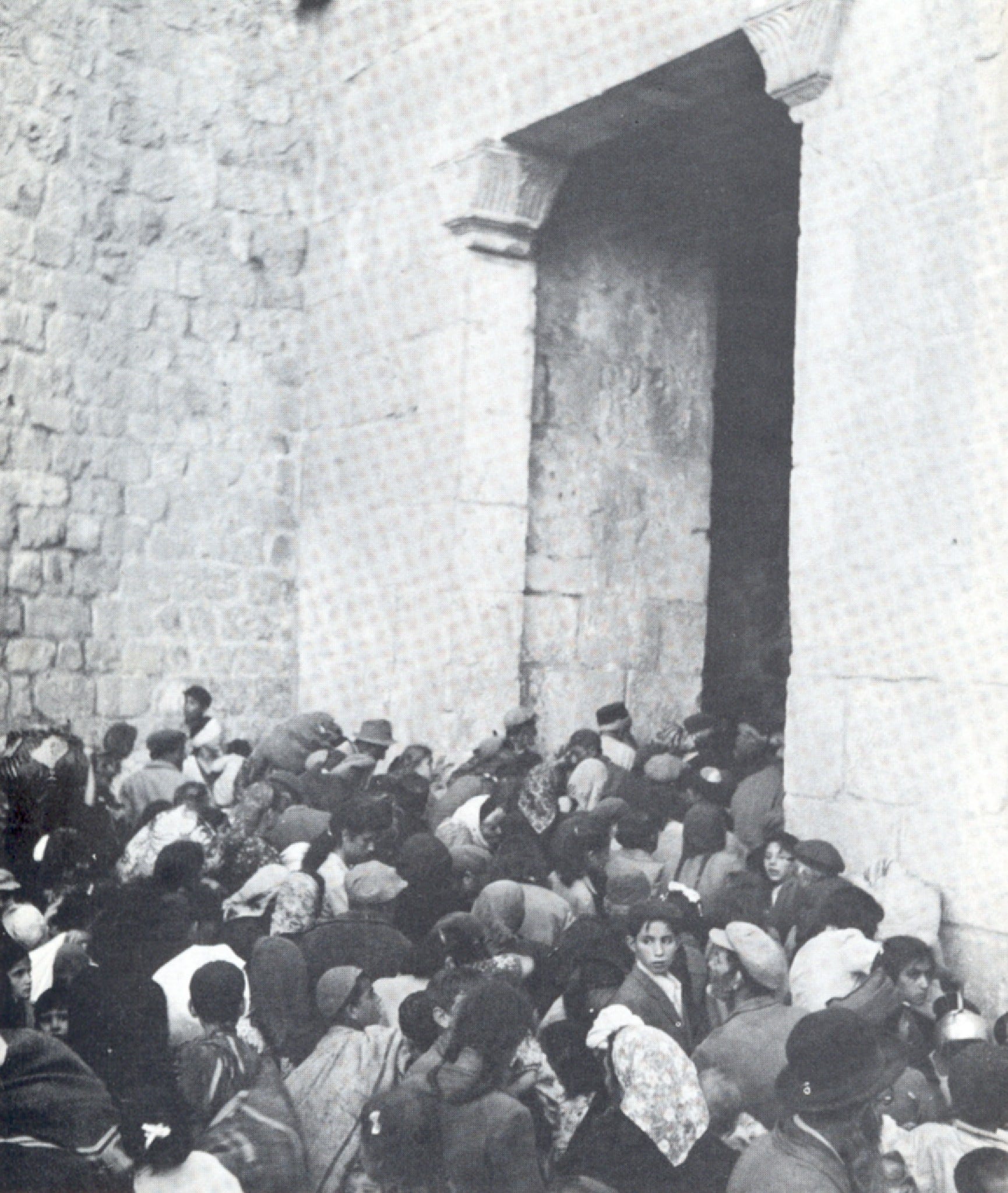
By May 27, 1948, the Jewish Quarter of Jerusalem’s Old City was close to collapse. The roads into Jerusalem had been blocked, Arab forces controlled the Old City around the Quarter, and mortar, automatic weapons, and sniper fire continued across the city. U.S. Vice Consul William Burdett cabled Washington that conditions inside the Quarter were “desperate.” The surrender came the next evening.
Around 2,000 women, children, elderly, and religious Jews were evacuated into Jewish-controlled Jerusalem. About 300 military-age men were taken to Amman as prisoners of war, and about 150 people were wounded, with the seriously injured turned over to the International Red Cross.
Even getting the civilians out nearly went wrong. Shooting broke out near Zion Gate while around 900 Jews, including wounded people, were still making their way through. Abdullah al-Tal, the Arab Legion commander in the Old City, called the American consulate shortly after 11 p.m. and warned that he couldn’t guarantee their safety if the firing continued. The consulate contacted the Jewish Agency, and around midnight, the shooting stopped.
The Arab Legion carried out the evacuation according to the surrender agreement. The Jews were allowed to leave, but they couldn’t take the Jewish Quarter with them. Homes, shops, synagogues, religious schools, and generations of Jewish life remained behind. Al-Tal later described directing mortar fire into the densely populated Quarter and wrote of “operations of calculated destruction.”
The people who came through Zion Gate joined thousands of other Jews already living away from home.
Historian Nurit Cohen-Levinovsky estimates that 60,000 Jews became refugees during the 1948 war. The Jewish population was about 650,000, which meant close to one Jew in ten was displaced.
They came from cities, neighborhoods, kibbutzim, moshavim, and small agricultural settlements. Some left ahead of approaching armies. Others were evacuated to get women and children away from the fighting. Some fled shelling and gunfire, while others surrendered and were taken captive. Plenty expected to be gone for a few days and discovered that the border had moved while they were away.
Jerusalem was filling with displaced families before the Jewish Quarter fell. By early May, about 5,000 Jewish residents had left the city entirely, while another 3,400 had been forced out of their neighborhoods. Empty apartments were requisitioned, schools and public buildings became temporary shelters, and families squeezed wherever space could be found.
Atarot was rapidly running out of time.
Atarot was north of Jerusalem on land Jews had begun purchasing before World War I. Families had built an agricultural village there, raising cattle, growing crops, and operating a dairy that supplied Jerusalem. By April 1948, the fighting had reached their doorstep.
Ben-Gurion’s diary recorded 153 armed men between Atarot and nearby Neve Yaakov, with almost no ammunition. Arab forces were in the surrounding area, the road was dangerous, and the women and children needed to be removed if the two settlements were going to be held. Someone asked whether the children could be evacuated without the army. “There are no vehicles for it.”
Eventually, they found a way. The women and children left, while the men stayed behind. On May 14, Atarot had about 200 armed men and Neve Yaakov another 120, but the decision had been made. Atarot would be abandoned, and the men would move to Neve Yaakov.