There is a question that seems to find most of us eventually: Is this it?
Sometimes we mean something enormous by it. Is this all there is? Is this brief human life the whole thing? Is there some deeper reality beneath what we can see, some larger meaning we have not yet discovered?
But the question also finds us in much more ordinary places. We look at the life we have built, the person we have become, the days unfolding one after another, and wonder whether this is really the life we were waiting for. We thought there would be some arrival, some deeper clarity, some unmistakable sense that we had finally become who we were supposed to be.
Instead, there are bills to pay, bodies that ache, relationships that need tending, work that never quite gets finished, and another morning waiting for us when we wake. “Is this it?” carries the suspicion that surely there must be something more than this repetition of ordinary days.
Lately, I have found myself wondering whether the question contains a possibility we usually miss. What if this is it, not in the despairing sense that there is nothing more, but in the more unsettling sense that this life is not preparation for something else?
What if this is the life we keep waiting to arrive?
Most mornings here ** in Costa Rica** begin without ceremony. I make coffee while Riley and Lily wait for me to acknowledge that their priorities are more urgent than mine. There are usually dishes from the night before, messages waiting on my computer, and some small collection of things Amy and I need to figure out about the day ahead.
Eventually I step outside. Some mornings the mountains are visible in extraordinary detail, every ridge sharpened by the early light. Other mornings the clouds have already moved in and swallowed them. I have lived here long enough that I do not stop in wonder every time I see them. My mind may already be inside an article I am writing, worrying about money, or drifting toward the thoroughly ordinary question of what we are going to eat later.
There is very little about these mornings that feels spiritual in the way I once understood the word. There are no candles burning, no sacred text open on the table, no music creating an atmosphere of reverence. Most mornings I am not contemplating the mystery of existence while drinking my coffee. I am drinking coffee because I want coffee.
The day fills quickly with ordinary things. Someone writes to me because their life has come apart, and for an hour I will sit with questions of grief, identity, meaning, religion, belonging, or what a person does when the world they trusted no longer makes sense. Then I will close the computer and discover that the trash needs taking out.
By evening, the light will begin disappearing from the mountains. Amy and I will talk about something that happened during the day. Riley and Lily will have another opinion about what should happen next. There may be rain on the roof, one of us scrolling through something on our phone, or the familiar realization that I did not accomplish everything I intended to accomplish. Then another day of my life will be over.
Lately I have been wondering whether this is where spirituality was supposed to lead me all along.
For much of my life, spirituality belonged to a distinct category of experience. There were ordinary things and spiritual things, and I knew the difference between them. Prayer was spiritual. Washing dishes was not. Reading scripture was spiritual. Paying bills was not. Worship was spiritual. Taking out the trash was certainly not.
There were places where spiritual things happened as well. Churches, sanctuaries, prayer rooms, retreats, conferences, and quiet spaces set apart from the normal traffic of life carried a significance that kitchens and grocery stores did not. Even the language suggested that we occasionally stepped out of ordinary existence and entered sacred space.
I do not dismiss those experiences now. Some of them were beautiful, and some changed me in ways I still carry. There is something deeply human about creating spaces where we become quiet enough to notice what the noise of everyday life can obscure.
But the division itself has become more difficult for me to maintain. Somewhere along the way, spirituality can become another way of separating the moments that matter from the enormous amount of life we are simply trying to get through.
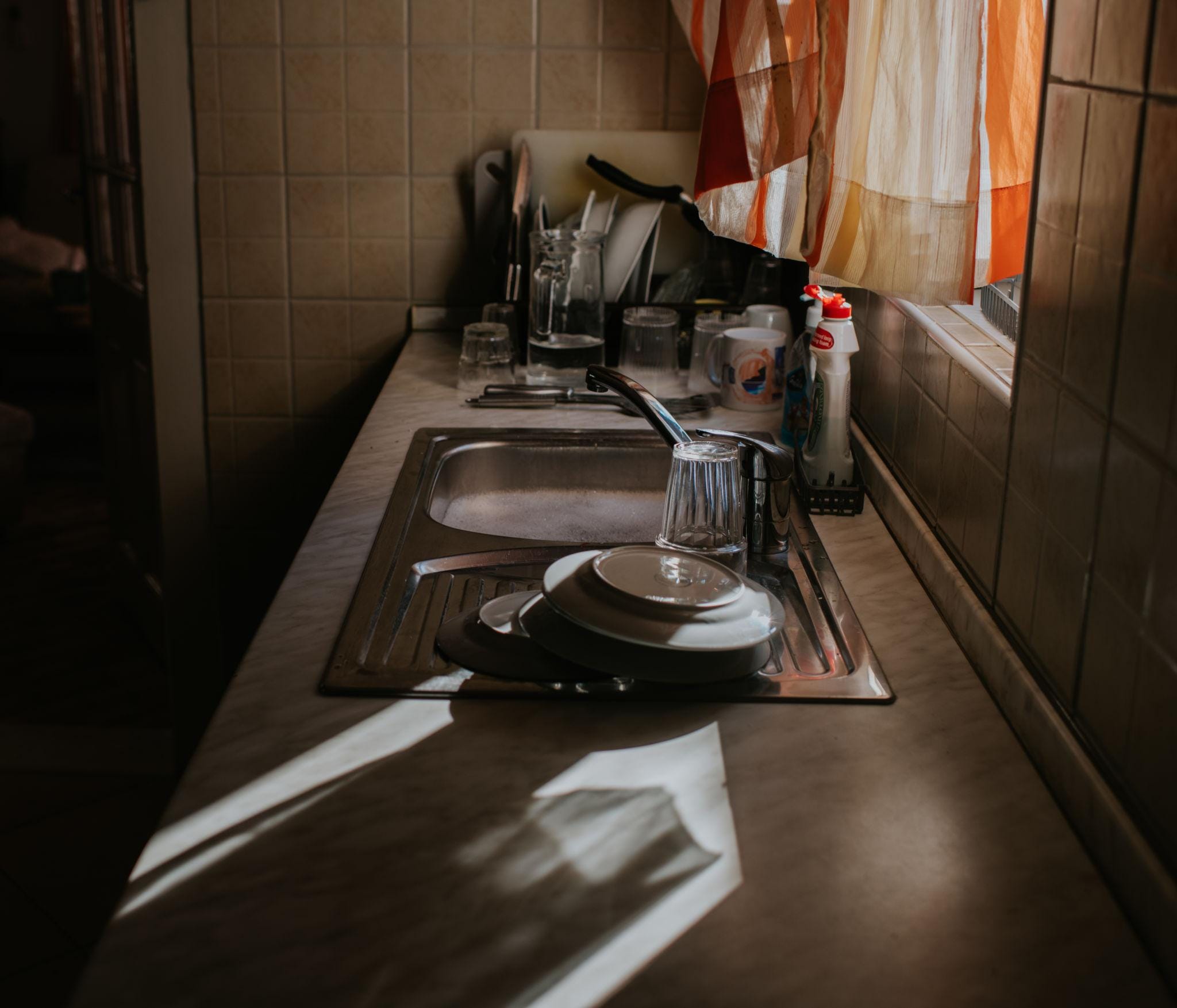
That separation did not disappear when my religious beliefs changed. It simply learned new language. Meditation and silence took on spiritual significance. A profound experience in nature seemed to belong there too. Awe, contemplation, transcendence, and mystical experience easily inherited the category once occupied by prayer meetings and worship services. Meanwhile, the dishes were still sitting in the sink.
Human beings have developed countless ways of being somewhere other than where we are. Some are obvious enough. We disappear into phones, work, entertainment, shopping, substances, fantasies, arguments, and endless streams of information. An astonishing amount of modern life is designed to ensure that we rarely have to remain alone with our own experience for very long.
Other forms of departure are more respectable. We turn ourselves into projects and begin constructing a future version of ourselves who will eventually be capable of living properly. That person will be healed enough, disciplined enough, successful enough, secure enough, wise enough, psychologically integrated enough, or spiritually evolved enough to finally inhabit life without all this difficulty.
There is nothing wrong with wanting to grow. There are wounds that deserve attention, patterns that need changing, skills worth developing, and circumstances that should not be accepted merely because they happen to exist. I have spent much of my own life trying to understand myself more clearly and become a more responsible participant in the lives of others.
But growth quietly becomes another form of absence when we become so consumed with improving ourselves that we overlook the life happening in the meantime.
Religion sometimes intensified this tendency by locating the destination somewhere beyond ordinary human existence. Heaven, salvation, holiness, enlightenment, transcendence, awakening, liberation from the ego, union with God: the language differs, but the movement often points away from the unfinished life we are living toward another condition we imagine will finally resolve it.
Leaving religion does not necessarily change the architecture. We pursue healing, optimization, manifestation, higher consciousness, purpose, authenticity, our potential, or our best self. The destination moves closer to home, but we can still spend years waiting to arrive.
I have begun asking myself a question that makes me uncomfortable precisely because I cannot dismiss it easily. How much of my life have I spent preparing to become the person who would eventually live it?
There is a familiar spiritual invitation to discover the sacred in ordinary things. Wash the dishes mindfully. Turn the morning walk into meditation. Notice the miracle contained in a cup of coffee. Stand before the mountains and allow yourself to experience awe.
I understand the impulse, and there are times when I experience life exactly this way. A shaft of evening light can stop me. A conversation can unexpectedly open something inside me. There are moments when the sheer improbability of existing at all feels almost overwhelming.
Still, I wonder whether our insistence on finding the sacred in ordinary life sometimes reveals that we have not quite relinquished the old division. The ordinary moment must still become something else before it deserves our full attention. We have simply learned how to promote it into the spiritual category.
Maybe washing a dish does not need to become sacred, and walking Riley does not have to become meditation. The mountains do not owe me transcendence, nor does the rain have to yield some lesson before I can simply experience it.
There is something demanding about our insistence that life reveal a deeper significance before we give ourselves fully to it. We want hardship to produce growth, loss to contain meaning, silence to reveal wisdom, and ordinary experience to become a doorway into something more profound.
Sometimes a walk is simply a walk, and sometimes rain ruins your plans. Dinner is forgettable, the conversation goes nowhere, and an entire Tuesday passes without offering a single revelation worth writing down. Still, that Tuesday was your life.
Not the life waiting for you after you finally solve yourself. Not the life that begins when circumstances improve or when you understand what everything means. This ordinary, unfinished, occasionally tedious existence is the one that is actually happening.
I have become increasingly interested in spirituality as the quality of our participation in existence rather than a special category of belief or experience. That shifts the question for me. Instead of asking whether something spiritual is happening, I find myself wondering how I am meeting what is happening.
Participation does not require us to feel profound. It does not demand constant presence, gratitude, serenity, wonder, or mindfulness. Those expectations quickly become another spiritual performance, another standard against which we measure ourselves and discover that we are failing at being sufficiently awake.
Participation is usually less impressive. It means being in relationship with what is actually happening rather than continually negotiating for another reality. It means noticing when we have disappeared from ourselves and finding our way back without turning even that return into an achievement.
Sometimes participation means listening while another person is speaking instead of preparing what we will say next. It means admitting when we were wrong, making the phone call we have been avoiding, or sitting beside someone whose suffering we cannot repair. It can mean enjoying something beautiful without needing to possess it or allowing something painful to hurt without immediately turning the pain into a lesson.
Much of this will never look spiritual from the outside. You walk the dog because the dog needs walking. You wash the dish because someone has to wash it. You put down the phone because the person sitting across from you deserves more than the remainder of your attention.
Perhaps this is one reason ordinary life is so difficult to inhabit. There is rarely an audience for it, and almost none of it produces evidence that we have accomplished anything. Most of our existence disappears as quickly as it happens.
Living in Costa Rica has made it harder for me to romanticize ordinary life. There are mornings when the mountains are astonishing, but there are also mornings when the internet stops working and whatever mystical relationship I have with my surroundings disappears remarkably quickly.
Rain is beautiful when I am sitting under a roof listening to it fall. It becomes less poetic when I need to get somewhere. Learning Spanish has opened an entirely new world to me, but it has also left me standing in front of another human being unable to find a ridiculously simple word while my brain offers me everything except the word I need.
I am grateful for the way ordinary life resists becoming a metaphor on demand. It reminds me that participation is not the same thing as romanticizing existence. Being present to life does not require pretending that everything about it is beautiful.
There are circumstances we should resist, relationships we should leave, injustices we should confront, and realities we should work to change. Participation does not mean passive acceptance of whatever happens. It means beginning with enough contact with reality that our response is actually a response to what is there.
The older I get, the less interested I am in a spirituality that requires reality to become something else before I can meet it. I want something capable of surviving an ordinary Tuesday, something that still matters when there is no breakthrough, mystical experience, profound insight, or satisfying resolution.
I want a spirituality with room for dishes, deadlines, aching bodies, misunderstandings, laughter at the wrong moment, money worries, unfinished conversations, and nights when we go to bed knowing that tomorrow we will have to try again.
Most of our lives will be made from moments no one else will ever know happened. History will not record the conversations around our tables. No biography will describe most of the mornings we woke up tired and got on with the day anyway. The small kindnesses, private disappointments, minor irritations, shared jokes, and unnoticed acts of care will disappear with us.
These moments are not interruptions in the story of our lives. Gather enough of them together and there is very little else the story could possibly be made of.
Mortality has a way of changing the proportions of things. At some point there will be a last morning when I make coffee, though I will probably not know it is the last one. There will be a final walk, a final conversation with someone I love, a final ordinary dinner, and a final evening when the light disappears behind these mountains.
I do not say this to turn mortality into another strategy for appreciating life. The instruction to cherish every moment easily becomes its own form of tyranny. No human being sustains that level of awareness, and I do not want to spend the rest of my life feeling guilty because I failed to experience sufficient wonder while folding laundry.
Some days will be wasted. Some conversations will be missed because we were distracted. We will occasionally treat people we love as though there will always be another opportunity to pay attention, and we will give enormous emotional energy to inconveniences we will later struggle to remember.
That belongs to being human too. We do not honor the brevity of life by demanding that every moment become meaningful. We honor it, perhaps, by gradually becoming more willing to inhabit the moments we have.
Mortality reminds me that ordinary life is not the waiting room for something more important. Whatever else existence may be, this is the portion of it I have been given to experience from inside this particular body, among these particular people, during this brief period of time.
There is no rehearsal for that. Most days, however, it will not feel remotely dramatic. It will feel like standing barefoot in the kitchen wondering what to make for dinner.
I think this is part of what I have been trying to understand while writing ** The Practice of Being Alive**. The title once sounded almost embarrassingly simple to me because being alive hardly seems like something a living person needs to learn how to do.
I understand the title differently now. Being biologically alive happens without our participation, at least for a while. Inhabiting a life asks considerably more of us.
We are asked to remain in relationship with an existence we cannot completely control, explain, secure, or keep. We find ourselves inside relationships that change, bodies that age, questions that remain unanswered, hopes that are sometimes disappointed, and ordinary days that disappear almost without our noticing.
For many years, I thought spirituality was supposed to help us reach something beyond the ordinary conditions of human existence. I am less interested in getting beyond them now. I have spent enough of my life imagining that somewhere beyond the uncertainty, incompleteness, and vulnerability of being human there must be a more spiritual place to stand.
Tomorrow morning I will probably make coffee again while Riley waits impatiently for the day to begin. There will be messages waiting for me and dishes somewhere that need washing. A…