Therefore, if anyone is in Christ, he is a new creation. The old has passed away; behold, the new has come.— 2 Corinthians 5:17
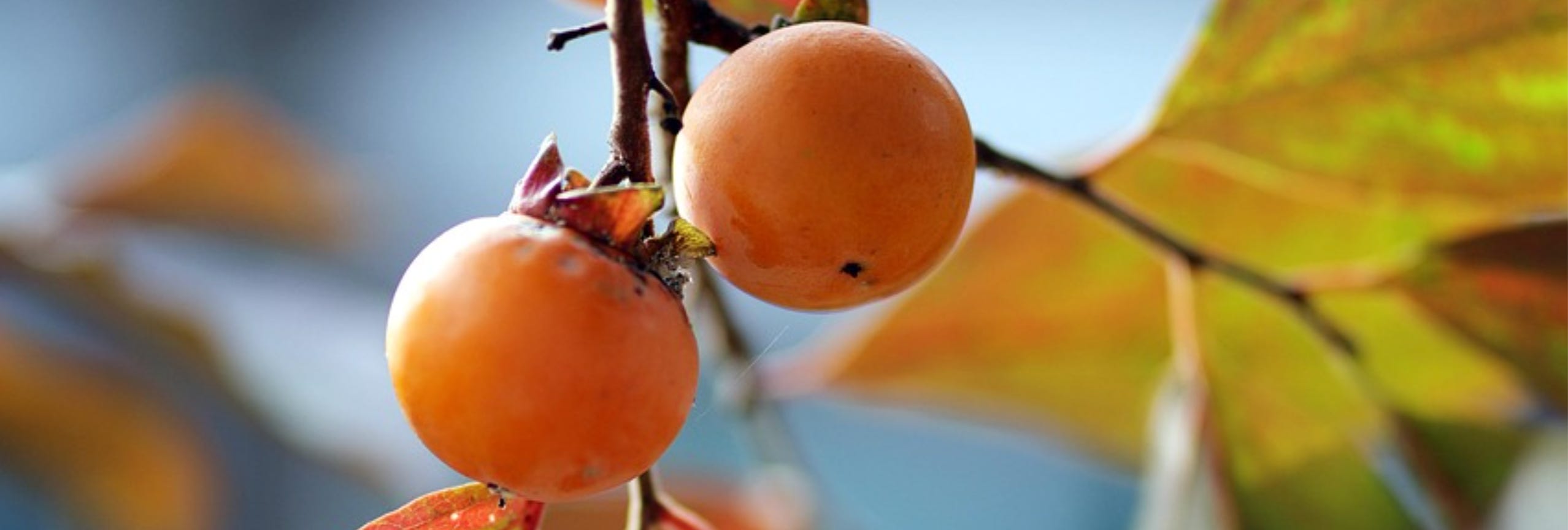
My pastor once told a story from his childhood. He grew up in the countryside, and one day his father took him out to a field where a large persimmon tree stood, branches full, leaves beautiful. A ripe persimmon is the color of a sunset and soft enough to eat with a spoon. An unripe one will dry out your mouth for an hour.
Then his father picked up a saw.
“Why?” he asked.
“This tree will bear fruit,” his father said. “But it will be small and bitter. No one can eat it.” He kept sawing. “In a few weeks, you will see new buds. And then this tree will bear real persimmons.”
When the branches were gone, his father grafted new shoots onto the bare trunk. Healthy ones. From a different tree entirely.
He told me he never forgot it.
The tree was not sick. It had leaves, height, good shape. But it was a wild persimmon, not a cultivated one, and that difference is not about care. It is about what the tree came from. Left alone it would have made a full crop every autumn for the rest of its life, faithfully, without fail, and not one of those persimmons would have been worth picking up.
Botanists named the persimmon Diospyros, from the Greek for food of the gods. That is the name on the tree. That was never going to be the fruit on it. The problem was not neglect, and it was not disease. It was what the tree was.
Scripture is honest about this. Sin came into the world through one man, Paul writes, and death spread to all because all sinned (Romans 5:12). We were not born neutral and then went wrong. We were born into a nature already bent, already producing the wrong kind of fruit. The tree was damaged before we arrived.
Elsewhere in the same letter, he goes further down and names what that bend actually is. People did not see fit to acknowledge God (Romans 1:28). The phrase “see fit” is δοκιμάζω (dokimazō), the word for testing metal to see whether it is worth keeping. They put God on the scale and ruled against Him. That is the wild wood in us. Not a list of bad behaviors but a leaning, older than any of our choices, away from the God who made us.
This is the part we resist, and I understand why. It is easier to believe the problem is behavioral, because behavior can be managed. But the first sin in the garden did not begin with a hand reaching for fruit. It began with a question about whether God could be trusted (Genesis 3:1–5). The eating came after. The trouble was already in the root, and a root is not something we can reach.
A damaged tree can be pruned. It can be watered and staked and fed. But it cannot, on its own, produce what it was not made to produce. No amount of tending will do it. Something has to come from outside.
Farmers have known the answer for thousands of years, and it is not a gentle one. You do not improve the tree. You replace what grows on it.
In grafting, the fruit follows the graft. Whatever wood is joined to the trunk decides what grows there. The old root still sends up water and sap, but it no longer gets a vote on the fruit. That is why the father never tried to fix the old branches. He did not prune them into shape or wait for them to improve. He cut them off and gave the tree a new source.
This is what Paul means when he says if anyone is in Christ, he is a new creation (2 Corinthians 5:17). Not if anyone tries harder. Not if anyone improves sufficiently. In Christ. Everything turns on that phrase. And notice what he says next. The old has passed away; behold, the new has come. Passed away, not repaired. What changes the fruit is not the effort of the old tree but the new life joined to it.
Jesus tells the same story from the other side. I am the vine; you are the branches. Whoever abides in me and I in him, he it is that bears much fruit, for apart from me you can do nothing (John 15:5).
In the persimmon story we are the trunk and He is the shoot. In John 15 He is the vine and we are the branches. The picture flips, but it holds in both directions. The fruit comes from what you are joined to. Apart from that joining, the old wood produces what it always produced. Fruit, yes. A full tree of it. And none of it edible.
There was one more thing the father said, and it is the part I keep returning to.
The persimmon tree had no feet. It could not run from the saw. It could not flinch when the blade went in, could not argue that the branches were fine, could not pull away from the new shoots once they were bound to the trunk. It stood where it was planted and received what was given.
We have feet. That is the whole difference, and it cuts both ways.
It means the grafting is not done to us against our will. Nobody is dragged into the new creation. But it also means we can leave. We can pull ourselves off the vine in the middle of the growing season. We can decide the old fruit was not so bitter after all, that we would rather have small fruit that is ours than good fruit that is given. We can walk away from the only source that was ever going to change what we produce.
And here is the harder part. Walking away rarely looks like walking away. It looks like getting busy. It looks like a stretch of weeks where the reading stops and the praying thins out and nothing bad happens, so we assume nothing has happened at all. The graft does not fail loudly. The new shoot simply loosens its hold, a little at a time, until one season it is taking nothing from the trunk at all.
The tree had no choice. We do. And that is the weight of it.
The old branches had to go. Not because the tree was worthless, but because what it was producing on its own was not what it was made for. The cutting was not punishment. It was preparation.
And the shoot did not arrive by itself. Someone carried it to the field. Someone knelt at the trunk and bound it there. God so loved the world, that he gave his only Son (John 3:16). Christ came to us because a wild tree was never going to graft itself.
What grows after that is not our achievement. Paul lists it. Love, joy, peace, patience, kindness, goodness, faithfulness, gentleness, self-control (Galatians 5:22–23). He calls it the fruit of the Spirit, not the fruit of our discipline. All of it on one branch, growing on a trunk that was cut down to nothing.
We spend a great deal of energy trying to improve the fruit without addressing the root. We modify behavior, manage habits, discipline ourselves into better patterns. These things are not wrong. But they are not enough. The fruit changes when the source changes.
The question is not whether we are willing to be pruned. It is whether we are willing to stay grafted.
© 2026 Bible Portal. Free to share with attribution. Please keep the source and a link to Bible Portal intact. For other uses, contact us.