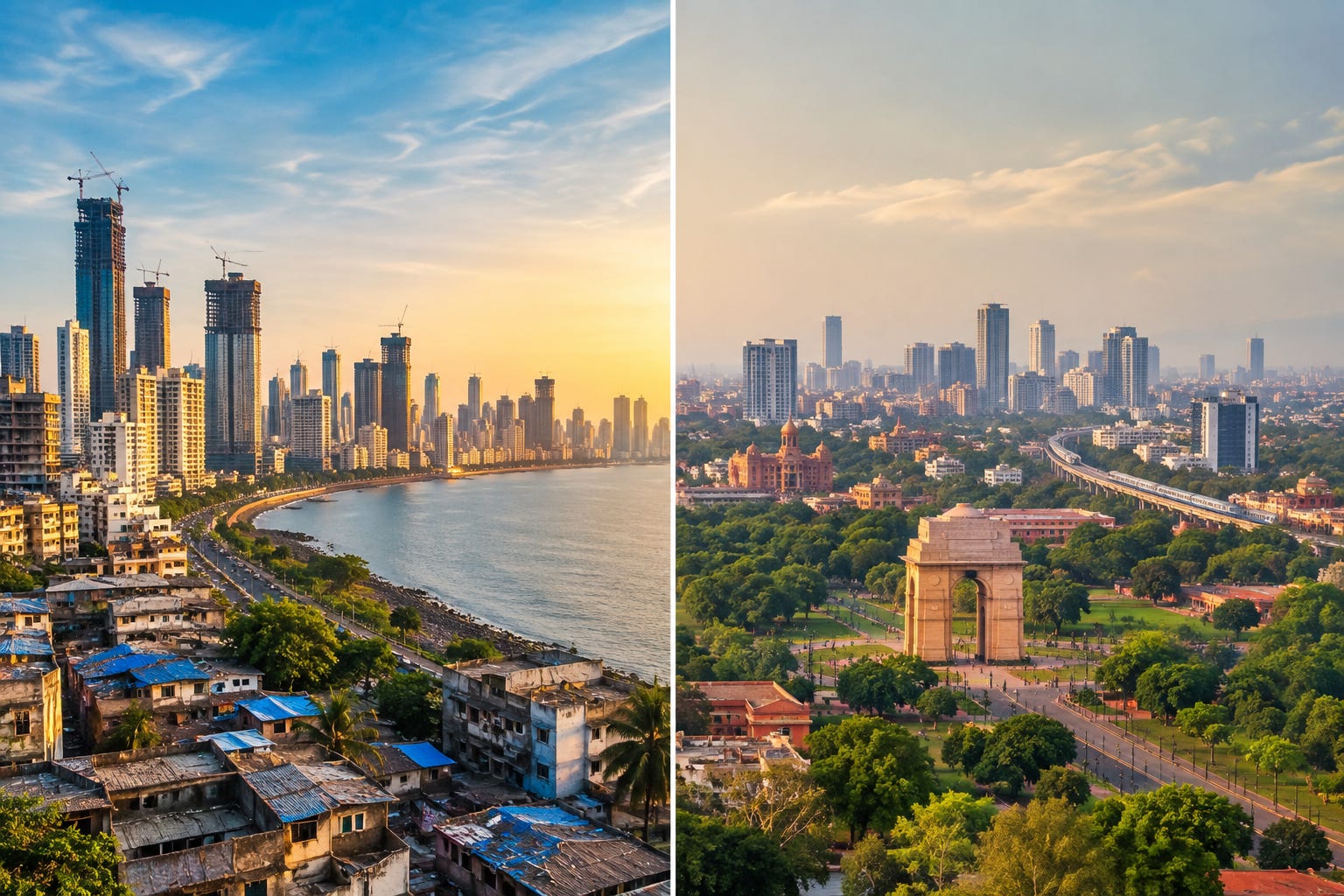
Maharashtra Chief Minister Devendra Fadnavis has positioned redevelopment, particularly cluster redevelopment, as a key part of the state’s broader urban growth strategy, as the Mumbai Metropolitan Region (MMR), Pune Metropolitan Region, and Nagpur prepare to drive the next phase of urbanisation.
“With the government’s cluster approach, in the next 10 years, Mumbai will be slum-free. The roadmap is ready, and efforts have started on the ground,” Fadnavis said last week at a Naredco event.
For Mumbai, the approach goes beyond replacing old buildings with new towers as the city has limited scope for conventional outward expansion. Much of its land is already built up, while ageing buildings, cessed properties, housing societies and informal settlements occupy strategically located urban land.
Cluster redevelopment could therefore become one of Mumbai’s biggest growth levers: unlocking existing land, creating additional housing, replacing ageing structures and enabling better infrastructure without continuously expanding the city’s footprint.
The opportunity is significant because redevelopment is no longer just a housing story. It can unlock land value, generate construction activity, improve living conditions and reshape established neighbourhoods across Mumbai and the wider MMR.
Interestingly, Mumbai’s redevelopment-led growth strategy parallels Delhi’s Master Plan Delhi-2047 (MPD-2047), which places greater emphasis on the redevelopment and regeneration of existing urban areas.
The two cities are approaching it differently, but the underlying idea is similar: India’s largest metros cannot rely indefinitely on peripheral expansion. Their next phase of growth will increasingly depend on renewing, densifying and integrating existing urban areas with modern infrastructure.
For Delhi, MPD-2047 envisages urban transformation through redevelopment, higher-density development and planned expansion, alongside major infrastructure upgrades. Mumbai, constrained by geography and its already-developed urban fabric, is perhaps even more dependent on unlocking the potential of the land it already occupies.
If executed effectively, cluster redevelopment can create a virtuous cycle: ageing and under-utilised urban stock is replaced, additional housing supply is created, land values are unlocked, and infrastructure can be upgraded alongside redevelopment. But execution remains the biggest challenge.
Cluster redevelopment involves multiple stakeholders, residents, developers, lenders and government agencies, and projects can become complicated when consensus, financing, approvals and rehabilitation must move in tandem. Maharashtra has introduced a range of incentives to accelerate redevelopment, but the scale of the opportunity will ultimately depend on how effectively these policies translate into on-the-ground projects, say experts.
Redevelopment is not the only opportunity Maharashtra is pursuing.
Fadnavis has also positioned the state as a major destination for data centers, advanced manufacturing and frontier technologies. The MMR, in particular, is emerging as an important digital infrastructure hub, as demand for cloud computing, artificial intelligence, and other digital services drives the need for large, power-intensive facilities.
The real estate impact could extend well beyond the data center buildings themselves, creating demand for land, industrial and commercial infrastructure, reliable power and high-quality connectivity. For Mumbai and the MMR, this offers a way to diversify the region’s growth story beyond conventional residential and office development.
The larger shift, however, is towards regeneration rather than simply expansion. Mumbai’s redevelopment push and Delhi’s MPD-2047 are different responses to different urban realities, but they point towards the same emerging trend: the next generation of cities will have to grow by rebuilding, densifying and modernising what already exists, even as they expand at the periphery.
For Mumbai, cluster redevelopment could become one of the defining real estate stories of the next decade. For Delhi, MPD-2047 suggests that redevelopment and regeneration will be central to accommodating future population growth while modernising the capital’s existing urban fabric.