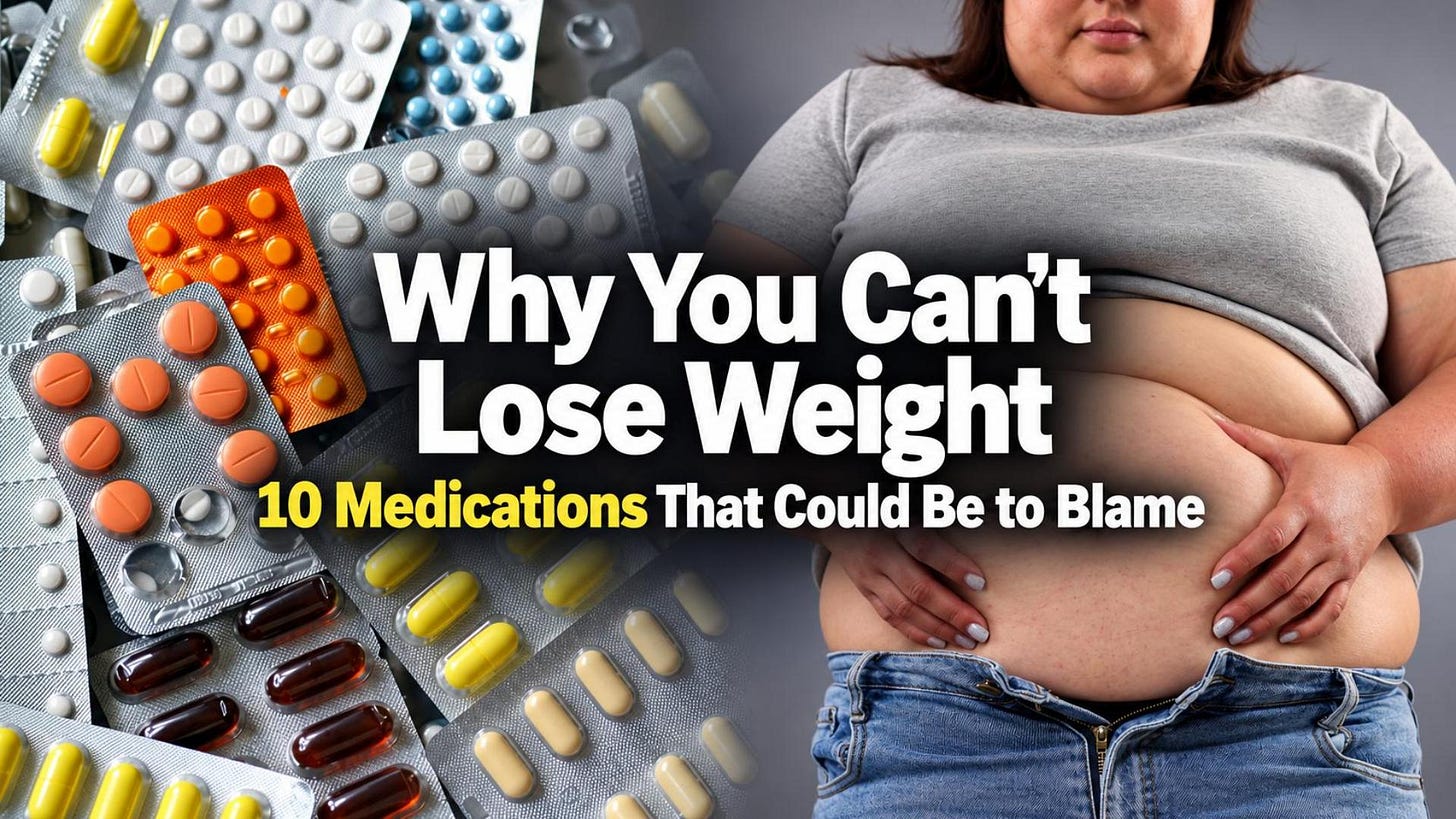
You cut carbs. You walk every day. And the scale still climbs. Before you blame yourself, check your medicine cabinet.
Take Mary. She’s in her early 50s. She swapped bread for vegetables, takes a brisk walk after dinner, and logs every bite. Six months in, she’s up 9 pounds.
Her doctor says, “Eat less, move more.” She’s already doing both.
So we lined up her medication list against her weight history. Pills for her ** blood sugar **and
She hadn’t failed. Her medications were working against her, and nobody had told her.
Weight gain is one of the most common side effects of everyday medications, and one of the least discussed. It’s buried in the package insert, so when the scale moves, most people blame their willpower.
But medication driven weight gain is real. It’s predictable. And in many cases, it’s fixable.
When a medication pushes your weight up, it often pushes your blood sugar and blood pressure with it. That can lead to a second prescription to fix the effects of the first. Then a third.
Meanwhile, you restrict harder, feel worse, and lose trust in your own body. That cycle is exhausting, and it isn’t your fault.
The good news is for almost every drug on this list, there’s a conversation you can have with your doctor that could change the picture.
A 2015 systematic review in the Journal of Clinical Endocrinology & Metabolism pooled hundreds of trials and confirmed weight gain across several of these drug classes,
The Endocrine Society’s clinical practice guideline on obesity medication management goes further. It recommends that doctors choose weight-neutral or weight-reducing alternatives when they’re available.
In other words, asking about alternatives isn’t being a difficult patient. It’s exactly what the guidelines say should happen.
In this video, we break down the 10 medications linked to weight gain, why each one happens, and the 4 steps you can take without stopping anything on your own. Do not stop any medications without talking to your healthcare providers.
In this video, you’ll learn:
✅ The 10 drug groups that cause weight gain, ranked
✅ Why some drugs raise appetite, slow metabolism, or drive belly fat
✅ The common sleep and pain prescriptions most people never suspect
✅ What to ask your doctor about weight-friendlier alternatives
✅ How to support your metabolism while staying on your medication
1. Insulin
Insulin is one of the most important medications in diabetes care. It’s also anabolic, meaning it tells your body to build and store, including fat.
There’s a second reason that’s less obvious. When blood glucose runs high, you lose calories through sugar spilling into your urine. Once insulin brings glucose under control, those calories stay in your body instead.
When your blood sugar runs high, some of that sugar, and the calories it carries, spills out in your urine. Once insulin brings your blood sugar down, those calories stop leaking out and stay in your body instead. That can make you gain weight. Insulin is your storage hormone.
Taking Blood Pressure Pills? Watch Out for This “Silent” Side Effect That 1 in 3 Patients Miss
The Silent Spike: The Shocking Truth About Meds That Spike Your Blood Glucose
Why Your Cholesterol Pill Is Quietly Spiking Your Blood Sugar
The Hidden Side Effects of Diabetes Medications - Read This First
Low Dose Steroids: The Silent Destroyer
The Dark Side of Steroids - From Weight Gain to Adrenal Failure
Ozempic Side Effects No One Warns You About: Muscle, Bone and Your Face
Are Your Cholesterol Lowering Medications Sabotaging Your Health?