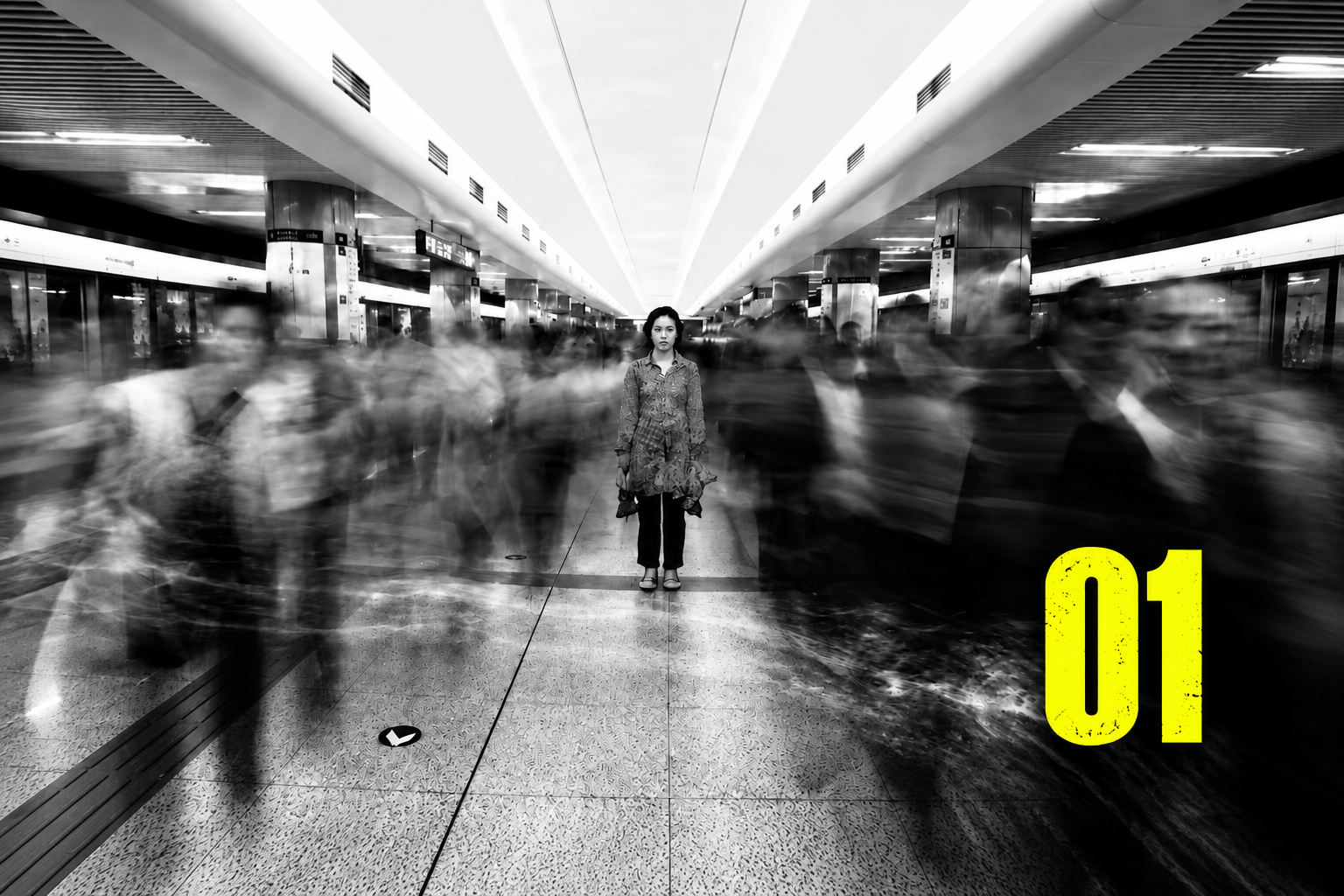
Today, October 13, The Practice of Being Alive: Modern Humans in Search of Ground is ** available**. This book grew out of a question that followed me through theology, ministry, the loss of my religion, and the long work of learning to live beyond the explanations that once held my world together. I wanted to understand how a person comes to inhabit a life, especially when certainty no longer supplies the ground beneath it.
Over the next five days, I’ll share a passage from the book each day and explore the human experience behind it. We’ll move through the distance we develop from ourselves, the loneliness that survives inside acceptance, the difficulty of living without guarantees, and the vulnerability of loving people we cannot keep. Each article will be freely available, with enough room around the excerpt to bring its questions into your own life.
You’ll find information about the book and where to purchase it on ** the book website**. I want to begin here with an ordinary afternoon when nothing visibly went wrong, which is precisely why I nearly missed what was happening.
Functioning and inhabiting are not the same thing, and confusing them is one of the great self-deceptions of modern life. Functioning is staying operational — competent, reliable, keeping the system running. Inhabiting is being present to your own life as it happens, letting it actually reach you. A life can work from the outside and be missing from the inside, and nothing has to visibly break for that to be true. Functioning is necessary, often impressive. But when it replaces inhabiting, something thins. Your life continues; it just stops touching you. Nothing is wrong, and you are not there.
I want to show you what I mean, because this is easier to recognize than to define. It was late afternoon, the kind of light that makes the day feel already decided.
I had finished running errands — milk, coffee, a few items in a basket — and sat in the car longer than necessary, hands on the steering wheel, engine off, watching people move in and out of the store. Nothing was wrong. But for a moment, I wasn’t inside it. Something in me had stepped out. I wasn’t upset or anxious. This wasn’t a breakdown. Carts passed, doors opened and closed, people moved with purpose. I could see it clearly, but I was missing from it.
We have recognizable language for a life that stops working. We know what it means to miss deadlines, neglect responsibilities, withdraw from relationships, or struggle to get through the day. These disruptions attract attention because something expected no longer happens.
A different kind of difficulty develops when everything expected continues to happen. You answer the messages, keep the appointment, remember what someone needs from the store. Other people experience you as dependable, and you have good reasons to value that dependability. Yet the day reaches its end without much of it having reached you.
The unsettling thing about this absence is how little evidence it leaves. A completed task records that something got done; it reveals almost nothing about your relationship to the hours spent doing it. The calendar confirms attendance without registering whether you felt present. Much of what we use to assess a successful day measures activity while leaving the experience of living largely unexamined.
There is nothing inherently empty about ordinary responsibility. Washing dishes, earning a living, caring for another person, and buying groceries belong to the substance of a human life. The trouble begins when our ability to carry out those responsibilities becomes sufficient evidence that we are fully there.
I had no reason to regard that afternoon as a crisis. What unsettled me was the recognition that a day did not require my felt participation in order to proceed. I could remain useful to its demands while becoming increasingly remote from its experience.
For much of my life, I understood myself through roles that came with clear expectations. Ministry gave me an especially elaborate structure for being useful: people needed reassurance, interpretation, leadership, and answers. There was always something to prepare, someone to help, some responsibility waiting to confirm that my presence mattered.
I do not dismiss the care I gave or the work I did. But being needed made it harder to ask a quieter question about the person doing all that work. When usefulness supplies your identity, stepping back from it feels threatening. You begin to confuse a reduction in demand with a reduction in worth.
Leaving that world did not immediately undo the habit. The beliefs changed faster than my relationship to myself, and I carried familiar expectations into a life that appeared very different. I still knew how to become valuable through what I offered. Learning to be present without proving my value took longer.
That history has made me attentive to the way people describe themselves when they are struggling. Often, they begin by defending the legitimacy of their discomfort: they have a job, people who love them, a decent place to live. Their lives contain much to appreciate, so they suspect that feeling estranged from those lives amounts to ingratitude.
But gratitude does not require us to misreport our experience. Appreciating what a life contains and feeling present within it are different human tasks. A person deserves room to acknowledge both the goodness of their circumstances and the distance they feel from them.
My work in existential health begins with the human relationship to existence itself. Alongside questions about how we are functioning, I ask how we are meeting meaning, identity, belonging, freedom, uncertainty, and mortality. These realities shape our lives even when we have little language for the relationship we are living with them.
The parking-lot experience helped me recognize a question that outward competence had obscured. I was concerned with more than whether I understood myself or managed my emotions effectively. I wanted to know what allowed experience to feel inhabitable, and what happened when that contact wore thin.
Existential health gives me a way to investigate that terrain. It directs attention toward the person inside the life, including the conditions that help them stay there. Those conditions extend beyond private attitude into relationships, communities, and the wider worlds that either hold human experience or leave each person to manage it alone.
This is why I resist turning every experience of distance into an individual assignment. Someone who spends the day under relentless demands will not recover a livable relationship to time simply by receiving better advice about attention. A workplace that treats exhaustion as commitment, or a community that welcomes only the agreeable parts of a person, participates in the estrangement it then asks that person to overcome.
There is personal work here, but there is also a public question. What kinds of institutions are we building if they depend on human beings remaining operational while requiring so little concern for whether those people feel able to inhabit their lives? Efficiency becomes an impoverished measure of success when it loses interest in the experience of those who make it possible.
Once we notice the distance, the familiar impulse is to correct it. We resolve to be more mindful, spend less time on our phones, appreciate small things, and stop letting life pass us by. Some of those changes help, but the pressure beneath them deserves attention.
A person already exhausted by evaluating themselves has little need for another standard against which to fail. If presence becomes a daily performance review, we reproduce the very relationship that kept us standing over our lives in the first place. Now we supervise ourselves for aliveness as diligently as we once supervised ourselves for productivity.
Inhabiting a life also includes experiences we would rather escape. An afternoon feels lonely; a conversation hurts; uncertainty accompanies a decision we still have to make. Being present does not guarantee that what reaches us will be pleasant, or that we will know what to do with it.
There are times when distance protects us from more than we are ready to feel. That protection deserves understanding rather than contempt. The invitation is to notice how we are relating to experience, with enough gentleness that noticing does not become another form of punishment.
I think about how easily an ordinary moment becomes subordinate to whatever follows it. We eat while preparing for the next conversation, listen while arranging our reply, and rest while calculating whether we have earned it. The present acquires value mainly as preparation, and the life we intend to inhabit stays somewhere ahead.
There are moments when that arrangement loosens. During a conversation, we stop rehearsing and hear the person speaking. While making coffee, we register the warmth of the cup rather than moving immediately into the morning’s demands. An emotion arrives, and for a little while we allow ourselves to feel it without requiring an explanation.
These experiences are modest enough to overlook. They do not necessarily improve the day or produce anything worth reporting. Their significance lies in the contact itself: something happens, and we are there to receive it.
I did eventually turn the key and leave that parking lot. The errands still needed finishing, and the unresolved parts of my life came home with me. But the question that surfaced there stayed, because it exposed something I could no longer measure by how much I accomplished.
At the end of today, alongside whatever remains on your list, there is room for a different kind of attention. Consider a moment that actually reached you, whether it brought pleasure, difficulty, affection, or grief. You do not have to make it signify progress; it belongs to the finite life you are already living.
The Practice of Being Alive begins with that recognition and follows it into the larger questions of being human. The book is ** available today**, and
If you’d like to explore these questions with me, becoming a paid subscriber ($50 annually) also includes membership in the ** Center for Non-Religious Spirituality**. There, we bring existential health into daily life through reflection, conversation, and community.
I’m also offering a ** six-week online course** based on