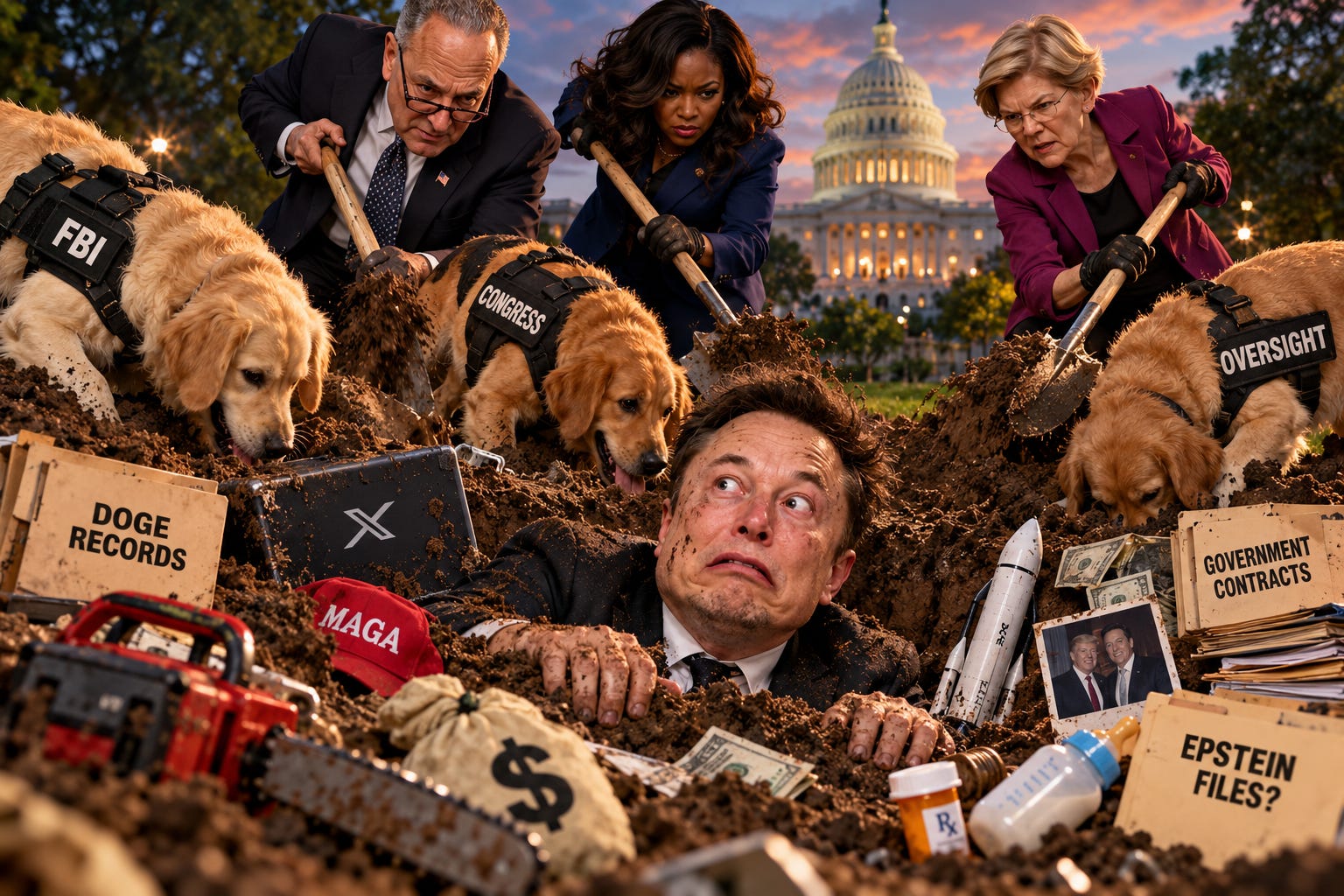
Every generation produces a figure whose humility, wisdom, and moral clarity set the standard for the rest of us, and ours, of course, is Elon Musk. A shining example of restraint. A beacon of self-awareness. A man whose decision-making deserves to be taught in business schools and Sunday schools alike, although I suspect both institutions would eventually ask him to leave.
This month, the world’s most humble man sat down with his biographer Walter Isaacson on The Builders podcast and offered the kind of reflection that would make a monk weep. Looking back on his time running DOGE, Musk admitted he had let the whole thing go on too long and should have stayed more in the background. When Isaacson asked whether the experience had been seductive, Musk confessed, “It was a little bit.” Sitting in the Oval Office while momentous decisions were being made was, in his words, kind of cool. Isaacson observed that Musk seemed to have gotten a bit intoxicated by it all, chainsaws included, and Musk delivered the line that belongs engraved on his headstone: he got carried away, basically. Somewhere, a monastery lost its most promising applicant.
Then came my favorite moment. When Isaacson brought up the strange weekend Musk left government, the man who insists he has done nothing wrong told his own biographer, “let’s let sleeping dogs lie,” and warned against putting a spade in the backyard because you never know what you’re going to find. Now, I don’t know about you, but when someone starts talking about sleeping dogs and warning me against digging in the backyard, my first instinct is to call the police and ask whether they have a cadaver dog available. Most people reminisce about their time in government by discussing their accomplishments. Musk sounds like he’s giving instructions to the next owner of a house featured on Dateline.
I was so moved by this extraordinary display of contrition that I walked straight into an InterVarsity meeting at my job and started confessing every misdeed I have ever committed. The overdue library books. The “I’m five minutes away” texts sent from my couch. The occasional unauthorized use of the office printer. I walked out lighter, cleansed, spiritually renewed, and ready to forgive the world. Then I remembered who had inspired me and immediately felt the need to wash my hands.
Musk has accumulated a fortune so enormous that he can buy rockets, satellites, politicians, and an entire social media company whenever his feelings get hurt. Yet somehow, with all that money, the one thing this man has never managed to purchase is a fucking clue. And considering he spent $44 billion buying Twitter, a company he then proceeded to rename after the letter kindergarten teachers use to mark wrong answers, I have serious doubts about his ability to recognize a bargain. Imagine spending $44 billion to own a website where strangers can tell you to go fuck yourself, something the rest of us have been enjoying for free since the invention of the internet. When I look at Musk’s public life, I see a man who has been handed the right decision over and over again and has picked the wrong one every single time. He doesn’t stumble into bad choices. He rents a bulldozer, clears a path to them, and then congratulates himself for disrupting the landscape.
Twitter deserves special recognition in the Elon Musk Hall of Monumentally Stupid Decisions. He paid $44 billion for a social media company, tried to get out of the deal after signing the agreement, and discovered that Delaware judges are considerably less impressed by his genius than the people who pay eight dollars a month for a blue checkmark. Musk complained about bots, tried to escape the contract, and eventually bought the company anyway rather than face the trial. Nobody explained to the world’s smartest man that a purchase agreement is legally binding and that you cannot return a $44 billion company to customer service because you woke up the next morning feeling like an idiot. And the humiliation didn’t end when the deal closed. In March 2026, a federal jury found Musk liable for misleading Twitter investors through public statements during his attempt to wriggle out of the acquisition. Imagine spending $44 billion on a company, trying to escape the purchase, getting dragged into court, buying it anyway, and then having another jury conclude that your bullshit misled shareholders. At some point, even the business school teaching your case study has to move the class into the remedial section. He subsequently renamed Twitter X, throwing away one of the most recognizable brands on the planet so he could give his midlife crisis a logo. Imagine paying $44 billion to purchase a global communications platform, only to turn it into the world’s largest digital bathroom wall, where the owner spends his days arguing with strangers and personally demonstrating why content moderation was invented. I have made some questionable purchases in my lifetime, but at least when I buy something stupid, I don’t have to hire a legal team in Delaware to explain why I own it.
The Don Lemon debacle belongs in the same museum. Lemon did not approach Musk begging for employment. According to Lemon’s lawsuit, then-Twitter CEO Linda Yaccarino and the company’s head of talent recruited him, and Musk and Yaccarino promised him a $1.5 million deal plus a share of revenue. Musk seemed to think he was purchasing his very own left-wing journalist, someone who could sit across from him, nod approvingly, and validate whatever bullshit happened to come out of his mouth. All Musk had to do was spend fifteen minutes on YouTube watching Don Lemon interview people. Lemon has never been particularly famous for handing powerful guests a warm blanket, a glass of milk, and a list of questions approved by their publicists. But Musk agreed to be interviewed, got irritated when Lemon started asking actual questions, and promptly blew up the partnership. Musk later complained about Lemon’s supposedly invasive interview. What the fuck did he expect? A prostate examination? Lemon sued, accusing Musk and X of fraud and broken promises. Musk could have declined the interview and remained in the background. Instead, he voluntarily sat down with a journalist, threw a tantrum when journalism occurred, and turned what should have been a promotional appearance into another opportunity to explain himself to a judge. For a man who considers himself a genius, Musk has an extraordinary talent for volunteering to take exams he hasn’t studied for.