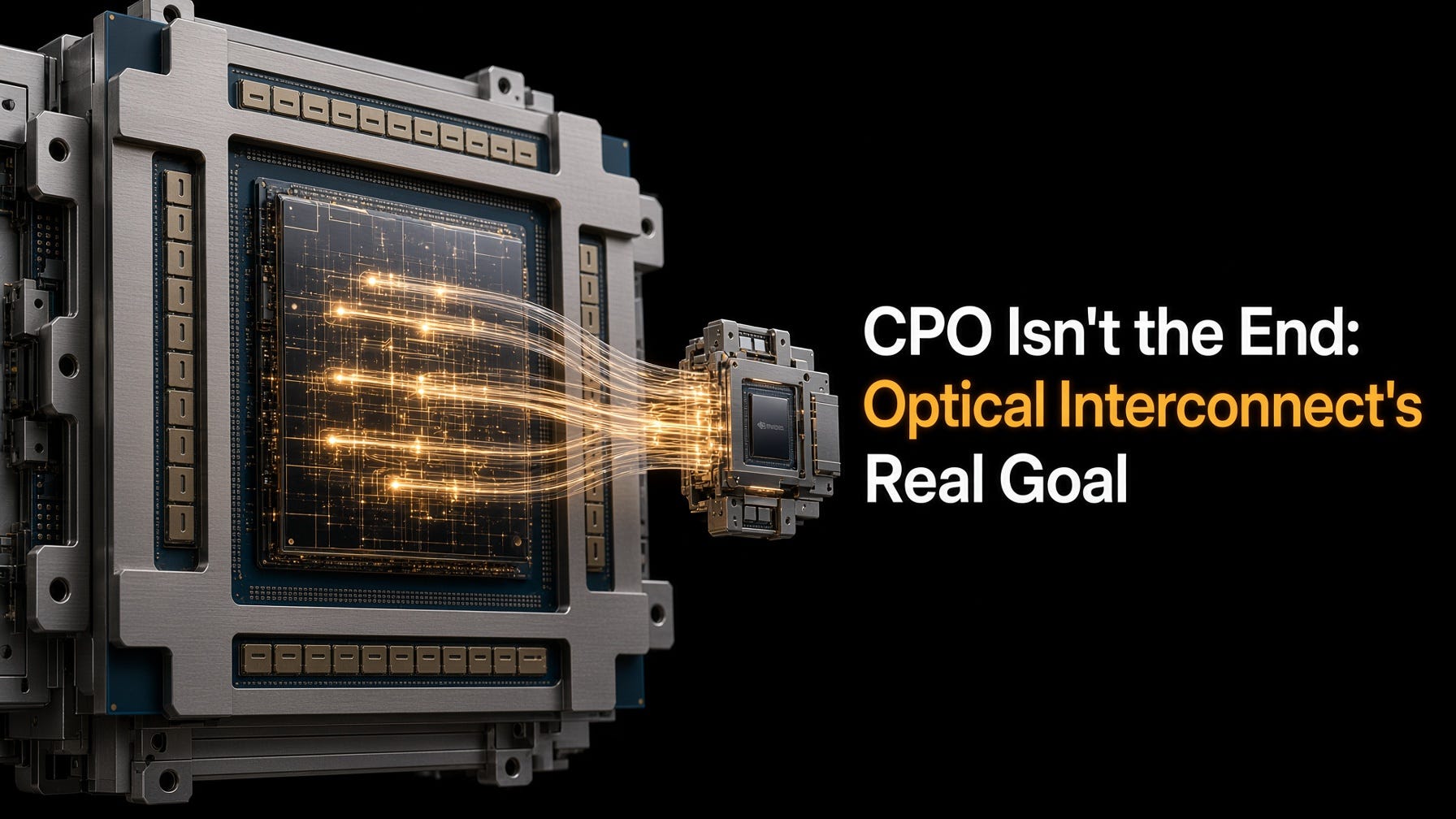
Explosive growth in cloud computing and AI—from generative computing and inference to (eventually) agentic systems—is creating unprecedented demand for bandwidth, as the volume of data that must be moved both within and between data centers continues to surge. This, in turn, is exposing the growing limitations of the underlying interconnect technologies, which span not only data-center and rack-level architectures but also reach deep inside the server—down to the package and chip level, connecting XPUs, memory, and other system components.
Copper-based (electrical) interconnects have long been the industry’s workhorse thanks to their low cost, simplicity, and reliability. Today, however, they are increasingly running into fundamental limits: while energy-efficient electrical links are possible, their reach is typically very short (on the order of millimeters). At longer distances and higher lane rates, power consumption rises sharply, thermal constraints become more severe, and signal integrity degrades. In other words, electrical I/O is rapidly becoming a critical bottleneck to scaling next-generation AI and machine-learning systems.
Optical interconnects have emerged as the key path forward. By transmitting data with light rather than electrical signals, they are far less sensitive to distance, delivering significantly higher energy efficiency while largely sidestepping the crosstalk and thermal problems inherent to copper links. Yet as the industry pushes toward multi-terabit-per-second interfaces, ultra-high energy efficiency, and extremely low (sub-microsecond) latency, optical interconnects themselves are being pushed to new limits.