Tech
CPO Scales Up, Glass May Be Key
Meng Li · chippub
Sep 22, 2026 · 1 min listen · Last updated September 22, 2026
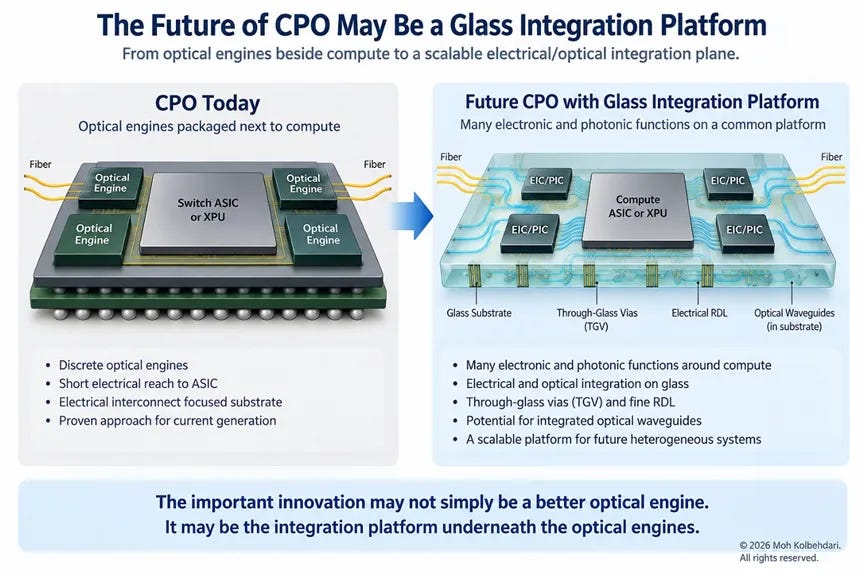
Co-Packaged Optics (CPO) is usually described as a distance problem. Move the optical engine closer to the switch ASIC or XPU. Shorten the electrical path. Cut SerDes power. Raise bandwidth density. That direction is real. Optical functions are gradually moving closer to compute.
Listen · chippub
CPO Scales Up, Glass May Be Key
0:00-1:10
Pick your daily storyteller
Subscribe to match with Theo, Jessica, Chloe, Mason, Brock — your voice, every brief.
Live · Kokoro-82M