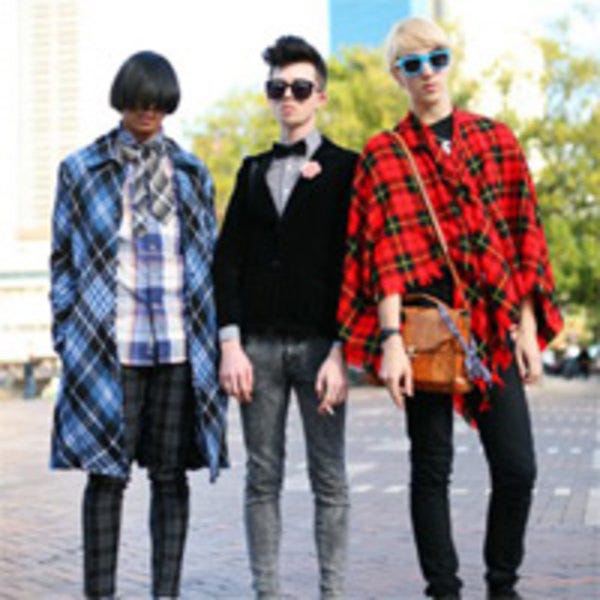
The Weird Al of our generation, Kyle Gordon, is out with another musical “parody” that is somehow too good to be truly satirical. “I’m A Whore” perfectly encapsulates the type of music that I listened to in the early 2010s while serving “Jell-O shots” which was actually a Tupperware of lime Jell-O made with tequila, petrified with a couple of loose strings of cilantro. “I’m A Whore”* *is so nostalgic for me that I’ve been listening to it constantly and trying my best not to sing “getting fucked in a rusty dumpster” at the UPS store. And when Kyle Gordon first tweeted a preview of his song, he titled it with none other than a single year: 2010.
The viral nature of this, frankly, major banger, has brought up 2010s nostalgia once again. Technically, “I’m a Whore” is more indie sleaze than hipster, but the two were definitely connected (and some would say, more of a square-rectangle situation than two unique subcultures.) And while plenty of things were big in the early 2010s—business casual clubwear, birds on everything, iridescent backpacks at Coachella, God help me, the hipsters are still the emblem that I find the most evocative of this time in history, specifically the late 2000s to mid 2010s. Nothing screams 2010 more than an arrogant guy with a handlebar mustache and pastel suspenders, bringing a rotary phone on the subway so everyone can see how ironic he is.
So how did one small subculture—a subculture, in fact, who prided themselves on being ironic and hard for the masses to understand—become the dominant cultural force of a decade? I’ll tell you: by being really easy to mock, and being privileged enough, per 2010s standards, that nobody felt bad about mocking them.
I have a great deal of experience with hipsters, given that I have spent time in New York City and San Francisco, between the years 2005 and 2016. This is basically like saying you lived in Uzbekistan in the early 1200s and were at least somewhat acquainted with Genghis Khan’s army. As a result, I know what made hipsters such an interesting subculture that everyone sought to write about them and parody them, from Kyle Gordon to Portlandia to the viral 2009 Tumblr LATFH (Look At This Fucking Hipster) which was later turned into a book. The easiest way to get a laugh, circa 2010, was to make a joke about hipsters. They were the perfect punch line—ridiculous, goofy, visually identifiable, and most importantly, not terribly downtrodden, so nobody felt that bad for making fun of them. In fact, they probably thought they were better than you.
Hipsters were counter-cultural, but in a way that didn’t apply to the punks and Goths of yore. Hipsters weren’t rebelling against the mainstream—they were simply too good for it. To be a hipster was to be above it all, to use a fax machine ironically, to do everything with a hint of derision and “you wouldn’t get it.” Hipsters were into music you have never heard of, not because the music was weird and edgy but because you weren’t cultured enough to get the reference. Hipsters wore clothes you might have found odd, not because they wanted to shock you but because they were plugged into a world you could never dream of understanding. And to make fun of hipsters was to “punch up,” because arrogance was part of their whole deal. Suddenly, a new extremely ripe genre for parody fell into the laps of every comedian, satirist and blogger.
Importantly, hipsters never publicly identified as such. To identify as a hipster, or even admit knowledge of hipsters, was to eject yourself from the in-group. A Goth kid might have worn a flame-embellished T-shirt that literally spelled out the word “Goth,” (ie: me in seventh grade) but a hipster would never dream of wearing a quirky cardigan that spelled out “Hipster.” The first rule of hipsterdom was that you had to deny being one. Obviously, this changed over time—but in the 2000s, the “hipster who insists they aren’t a hipster” was a common meme. It was even mentioned in the 2013 movie, *This is the End, *where Jay Baruchel’s hipster-adjacent character denies being a hipster, while his friends quiz him on all the mainstream things on which he looks down. It was also parodied on The Onion.
In college, I had a brief encounter with a flock of hipsters which has stuck with me for almost twenty years. During freshman orientation week in 2007, I made the mistake of getting extremely drunk at a party. A few hipsters—including their leader, a guy in an ironic ascot and tweed blazer who went by the pseudonym “Hymen Cavendish”—took notice of me and absconded with me to their dorm, along with an equally confused freshman boy in a popped collar polo shirt named Dave.
Dave and I had landed in the den of the hipsters: a place so exclusive and so shrouded in mystery that it felt almost dreamlike, a place to which surely, countless other freshmen who wrote bad poetry had been denied access. But we were not only there. We were taken by force. We were the hipsters’ concubines. As we sat there on the dumpy second-hand velvet couch, staring at Hymen Cavendish and his band of merry thieves smoking cigarettes, we couldn’t help but wonder what they wanted with us. Was the latest hipster trend a fedora fashioned from freshman skin?
I have limited recollection of that night, but I remember that Dave and I were brought in as a form of entertainment for the hipsters, who treated us the way Russian royalty in the 1700s might have treated a dancing bear. We may have literally been asked to dance at one point. We were also asked all sorts of questions, and they laughed at our answers, even if they weren’t funny. I realized I was probably being used for some kind of joke, the way a bunch of drunk adults might ask a toddler, “What’s the worst word you know?” but Dave and I were too drunk and out-of-the-loop to understand. We continued to accept the free drinks they continually shoved in our faces.
The hipsters let us sleep over on their couches, and the next morning at around 7 AM, they roused us, dressed us in insanely preppy clothing which they had lying around, took us outside and snapped a bunch of photos of us near the trees meant to satirize the humorless, irony-free, painfully preppy school magazine. At the end of the ordeal, I recall feeling used and weird, but not fully understanding why. Nobody had touched me or said anything hurtful, but for a full twelve hours I was made painfully aware of how little I was in on the joke. This was an overdose of the hipster experience. Most people just got a vague sense that hipsters looked down on them, sans kidnapping.
These same hipsters published a daily school pamphlet meant to be satirical (with Hymen Cavendish as editor in chief) but their jokes were always so esoteric and weird that the student body didn’t understand them and repeatedly groaned that it was pretentious. One day, the daily pamphlet was literally just a photocopied image of Jafar from Aladdin. When people failed to get the joke, the hipsters pretended to have abandoned the publication and handed it over to student government. Then, they proceeded to write terribly corny “normal” content for several weeks while pretending to be the staff of the school magazine, only to reveal that only idiots would have enjoyed the fake normal-person pamphlet.
I have to admit, they were cooking with that one.
But you can see why people made fun of them, if only because “they made fun of us first” seemed like a good enough reason. But that wasn’t the only reason that hipsters became an easy target. The start of Woke 1 (see: early to mid 2010s) meant that the list of acceptable mockery targets in comedy and parody was dwindling, in some ways for the better. And this shift happened pretty quickly—I Now Pronounce You Chuck and Larry came out in 2007, and the movie followed two straight men pretending to be gay-married for life insurance purposes, complete with Rob Schneider portraying an egregiously racist caricature of an Asian person. Just a few short years later, it would be unfathomable for such a movie to be green lit. By the 2010s, aware that casual racism, homophobia, sexism and perhaps not even fatphobia were going to fly as much, mainstream comedy writers, satirists and comedians realized hipsters were a much safer and funnier punching bag with mass appeal.
Hipsters were typically white, upper middle class, and straight—literally the only fully acceptable target during Woke 1. In fact, when I typed “hipster” into the search bar for Substack royalty-free images, almost every image was of a thin white man. Suddenly, every comedy writer who wanted to mock people but didn’t want to say anything bigoted had an easy way out. And to make matters even easier, hipsters never admitted to being hipsters, so even they could not get offended, at least not publicly. Not that anyone was particularly worried about offending white men in the 2010s, but these jokes also weren’t offensive to white men in general, because most white men weren’t hipsters. In fact, many of the biggest lampooners of hipsters were upper middle class white men themselves.
The End of Austin, an Austin-based independent news site and blog, noted in 2016:
We hate hipsters don’t we? It’s probably their detached air of superiority that irks us most, but in reality, we hate it all.
They also acknowledged that social justice issues that were popular to discuss in the early 2010s contributed to the mockery of hipsters. Not only were hipsters privileged and therefore fair game, but they were supposedly actively harming others:
The liberal-arts-grad social justice bloggers began their anti-hipster campaigns. Hipsters became targets of sweeping erudite critiques. Hipsters were suddenly sexist, racist, privileged purveyors of cultural appropriation. They caused East Side gentrification. They perpetuated rape culture. They scandalously fooled the world into buying fake bean-to-bar chocolate.
This was a fair characterization of the 2010s social justice oriented hipster hate wave. The pre-polycule-scandal Lindy West penned a famous essay about “hipster racism” asserting that hipsters were ironically being racist as a way to be racist for real. In it, she used the example of Zooey Deschanel ironically using the hashtag #thuglife about herself on Twitter, among others. This was also the accusation leveraged against the hipster DJ who hosted Kill Whitey parties, which he said were intended to ironically make fun of white people, but others felt these events were a way to ironically make fun of Black people making fun of white people. In Vice, Noel Ransome said that he hated hipster racists more than “hicks” who shout racial slurs. Lena Dunham also caught accusations of hipster racism in 2017, the only evidence being that she was reportedly friends with a girl in college who said a racial slur “ironically.” Academic Robin James asserted that the very concept of something being *hip *was racist: “Discourses of taste and hipness produce individual bodies as white, and maintain Whiteness as a socio-political norm.”
Hipster racism was a real thing, and some hipsters absolutely were “ironically racist.” But this reputation eventually meant that all hipsters were fair game for the accusation (and associated mockery) under the guise of social justice.
But the hipster, even as our cultural punchline, eventually started to go mainstream in metropolitan areas. In a way, going mainstream was the worst possible thing to happen to a hipster, far more upsetting than being mocked on Portlandia. Is a hipster still a hipster if he is the dominant cultural force and not something niche and ironic?
This was when “hipster” stopped meaning “weird theatrical guy in a retro costume who wants everyone to call him Hymen” and started meaning “upper middle class tech worker who likes artisanal cocktails.” A bit niche, but far more accessible, and predictably visible from the street as every “bacon-cupcake food truck” drove by the offices of some doomed startup called Vooka or Blamify or something else stupid. Part of this transition was simply that hipsters were getting older. And no matter how ironic and weird you are at twenty, the curse of the unc comes for us all. Even Hymen Cavendish.
Hipsters probably had to tone down some of the weirdness and quirky behavior to survive as adults, especially adults with normal jobs. Perhaps some people still found them pretentious as they slapped mint leaves to release the essence as part of their painfully expensive mason jar Moscow mule recipe. But “you probably never heard of it” eventually transitioned into “I made it myself,” which is a lot less abrasive. Thus, people who previously either didn’t like, didn’t understand, or didn’t know any hipsters were able to engage with this new sanitized “hipster culture.” And who didn’t want to eat homemade stone-ground mustard? Even if someone was a bit pretentious about it, wasn’t it nice for them to take pleasure in making things?
By the mid to late 2010s, the “hipster” had gone beyond normalcy and into painfully-uncool-mainstream territory, which was antithetical to the ethos of the hipster. It was no longer about being obscure and niche, or about knowing things nobody else knew. If anything, hipsters retreated from the pretentious and rapidly barreled toward corny, if not totally cheugy. It’s striking that mainstream bands like fun, Mumford & Sons, and their corny “stomp clap hey” music became synonymous with hipsters—Hymen Cavendish would never.
The hipster aesthetic going mainstream in the 2010s meant that the original hipsters—the ones who reveled in being into stuff nobody else was into—had to abandon their schtick. They either became mainstream “hipsters” themselves as they matured (thereby no longer really being hipsters) or they had to start doing something else to continue being sufficiently countercultural. I tried to look up Hymen Cavendish to see what he’s up to now, but I realized I actually don’t know his real name.
In 2009, the hipster was the obnoxious-as-shit guy in your literature class, but by 2017, he was your friendly neighborhood barista, your coworker, the bagel guy who made the bagels with the homemade kimchi aioli. How can you make fun of these wholesome pillars of the community?
Now in the 2020s, things like craft breweries, home canning, modern farmhouse decor, food trucks, beards and tattoos are, if anything, painfully normal. Not even urban, not even mainstream-cool. They are the trademark of a city block that’s been “gentrified.” They are the Austin Instagram momfluencer’s favorite things. They are, dare I say, apparently the worst thing in the world: millennial. The male hipster aesthetic of suspenders, beards and undercuts is so conventional that it no longer gives off Portland, it gives off tweets that say, “A truly based patriarch doesn’t let his wife wear shoes” from a man with Christian/husband/father in his bio. What was once meant to look ironically old-fashioned has come full circle and now is more of an aesthetic you’d see among [Christian polygamy influencers.](https://www.cartoonshateher.com/p/there-are-only-so-many-women-…