Tech
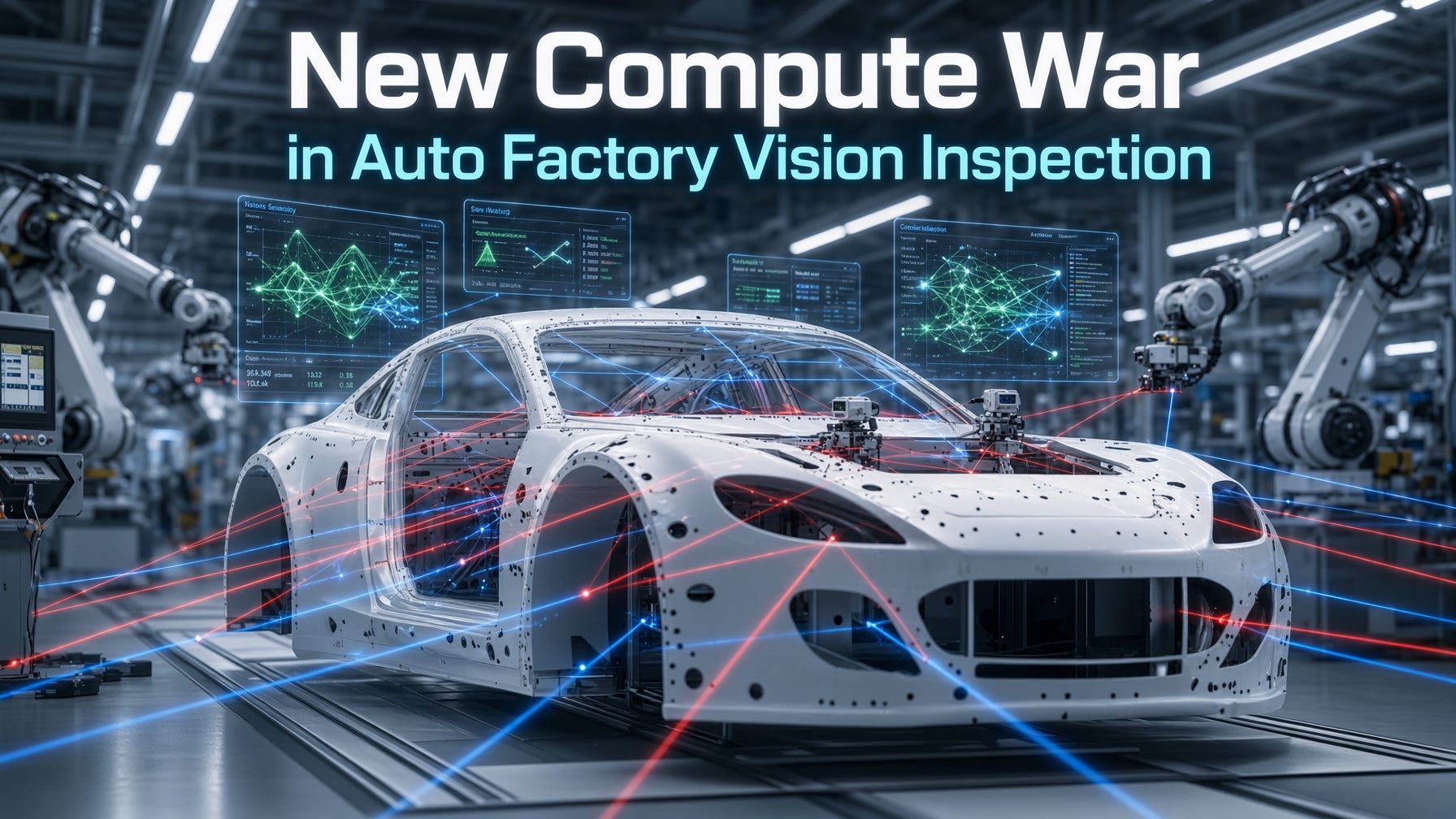
New Compute War in Auto Factory Vision Inspection
Meng Li · chippub
Sep 29, 2026 · 1 min listen · Last updated September 29, 2026
Over the past century, automobile manufacturing has undergone two major transformations: the assembly line and industrial robotics. In the era of new energy vehicles, emerging technologies represented by intelligent visual inspection are driving the industry toward a new round of “efficiency” transformation.
Listen · chippub
New Compute War in Auto Factory Vision Inspection
0:00-1:06
Pick your daily storyteller
Subscribe to match with Theo, Jessica, Chloe, Mason, Brock — your voice, every brief.
Live · Kokoro-82M