Tech
Optical Chips: An Inflection Point Is Here!
Meng Li · chippub
Oct 30, 2026 · 1 min listen · Last updated October 30, 2026
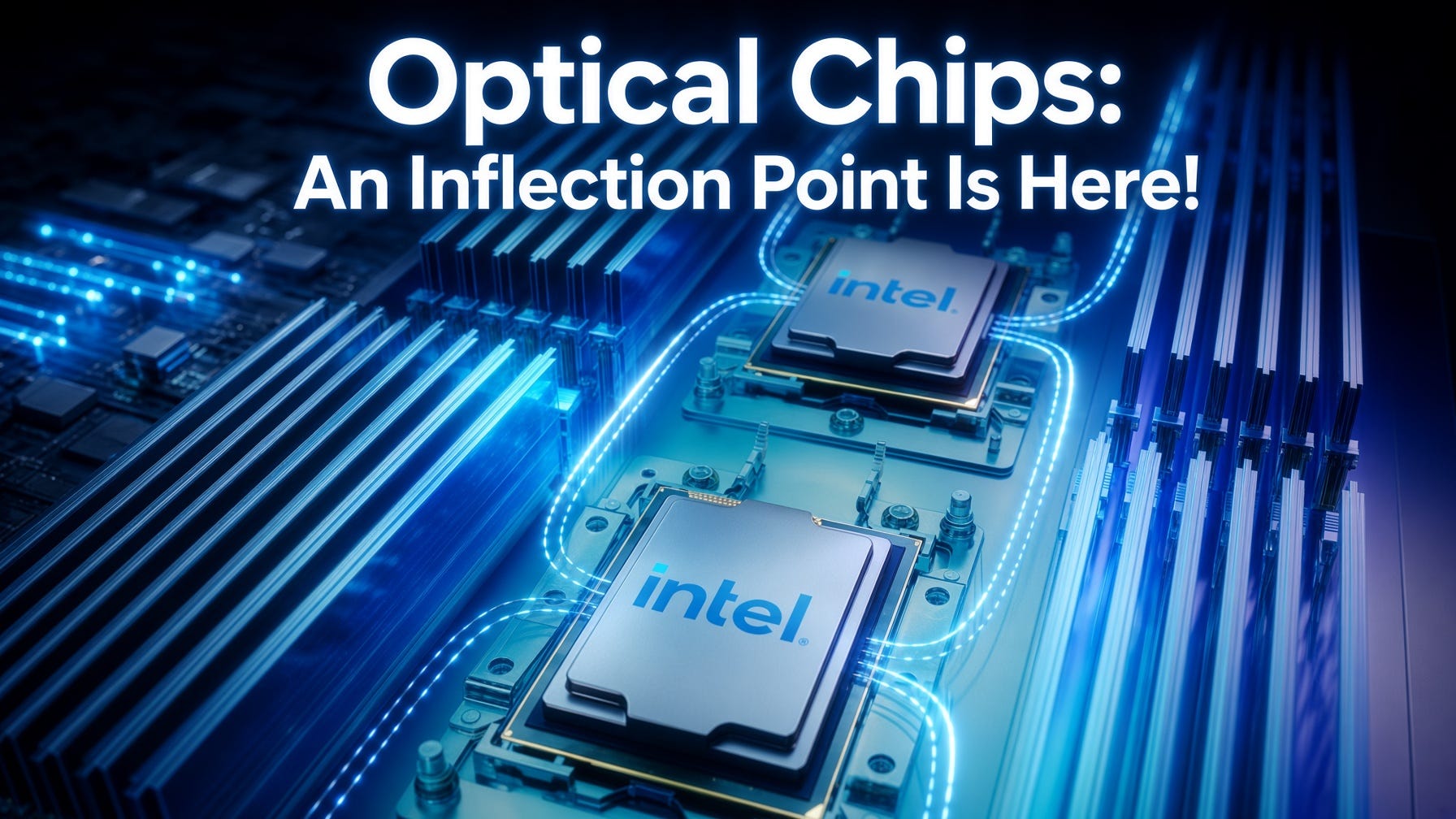
In 2026, the optical chip industry is entering a new wave of growth. Recently, global semiconductor giants have been making frequent moves. In mid-October, Intel() showcased its latest progress in silicon photonics at the OCP Global Summit, focusing on integrating InP lasers with 300mm silicon photonics wafers.
Listen · chippub
Optical Chips: An Inflection Point Is Here!
0:00-1:20
Pick your daily storyteller
Subscribe to match with Theo, Jessica, Chloe, Mason, Brock — your voice, every brief.
Live · Kokoro-82M