Tech
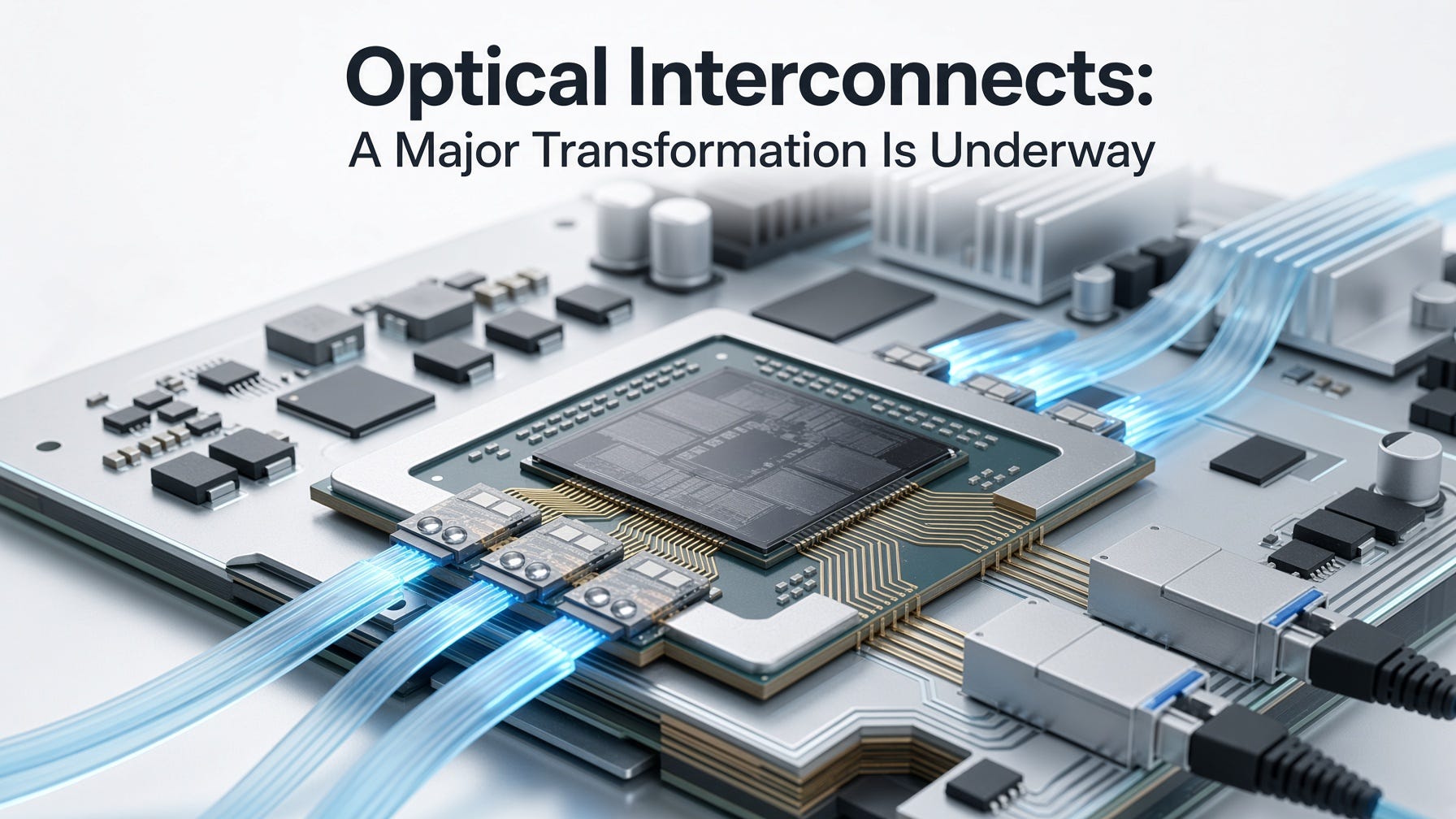
Optical Interconnects: A Major Transformation Is Underway
Meng Li · chippub
Nov 24, 2026 · 1 min listen · Last updated November 24, 2026
The network architecture of AI data centers is reaching a new turning point. Over the past few years, 800G optical modules have ramped rapidly alongside AI cluster buildouts and become a key component of high-speed data center interconnects. 2T optical interconnects are entering the industry’s field of view, and the traditional optical module architecture is running into new challenges.
Listen · chippub
Optical Interconnects: A Major Transformation Is Underway
0:00-1:13
Pick your daily storyteller
Subscribe to match with Theo, Jessica, Chloe, Mason, Brock — your voice, every brief.
Live · Kokoro-82M