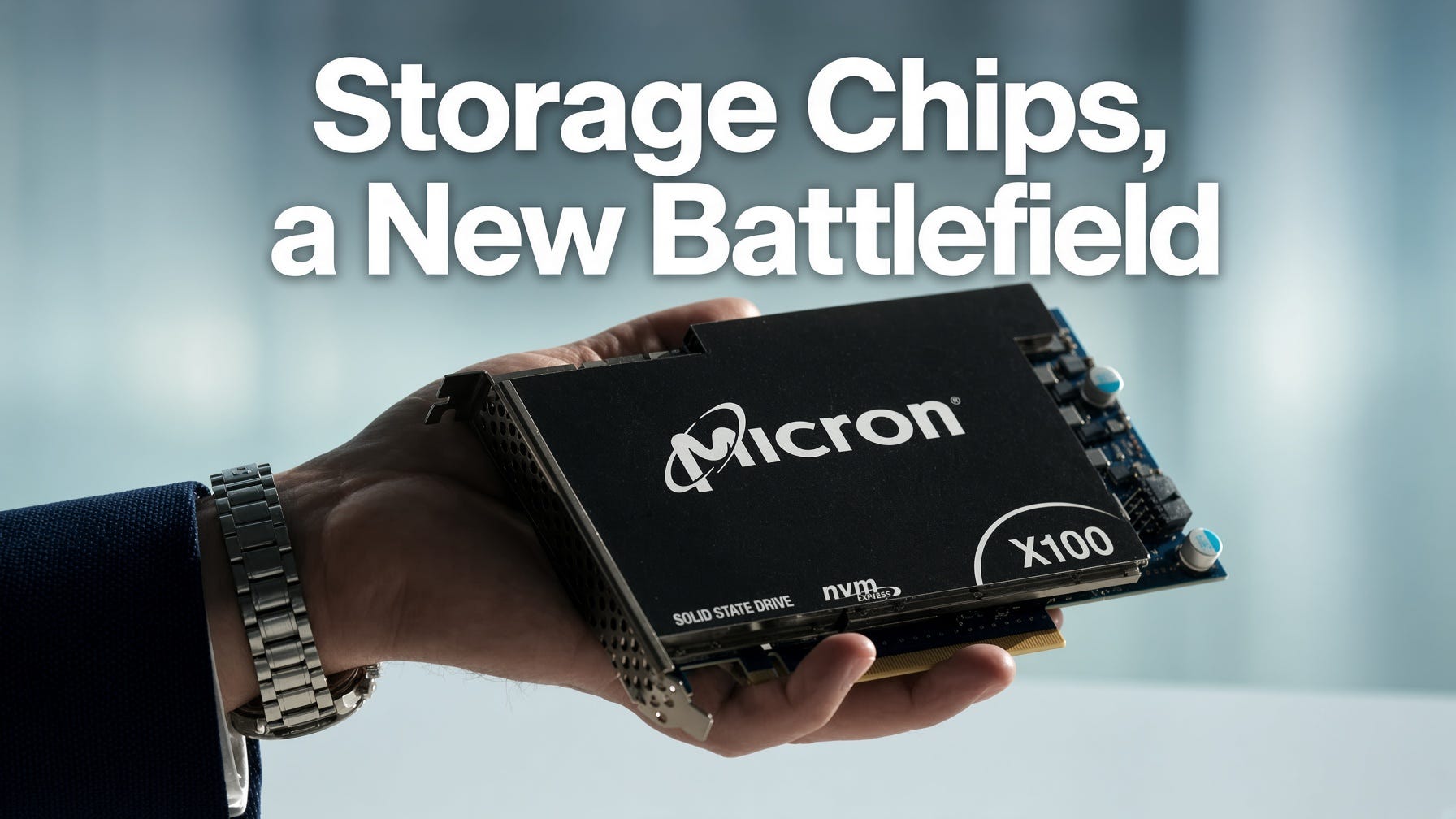
Storage chips are shifting from standardized commodities to strategically customized components of AI infrastructure. This transformation is profound and irreversible.
Intel CEO Lip-Bu Tan’s recent comments on a podcast have stirred considerable waves in the memory industry: “In the past, I always viewed memory as a low-margin commodity business and stayed well clear of it. But the AI era is completely different—we are now developing entirely new memory architectures.”
A person who once actively fled the memory battlefield is now loudly announcing a return—and the way back does not appear to be a simple return to conventional DRAM, but rather a bet on entirely new customized memory architectures.
This signal is worth examining closely.
Intel is not alone. Samsung is reconstructing 3D memory with zHBM; SK Group Chairman Chey Tae-won has similarly stated outright that memory is no longer merely a commodity that any product can replace, and has raised the slogan of becoming a “full-stack AI memory creator.” Micron executives have gone further, declaring that memory is no longer an ordinary item on the bill of materials, cutting consumer brands and going all-in on the AI customized market.
The actions of the leading players all point in the same direction: the memory industry is moving comprehensively from competition based on capacity and price in standardized products to competition based on architecture and customization in differentiated products—undergoing a paradigm shift from “general-purpose” to “customized.”