Tech
The Real Bottleneck of Optical Chips
Meng Li · chippub
Oct 14, 2026 · 1 min listen · Last updated October 14, 2026
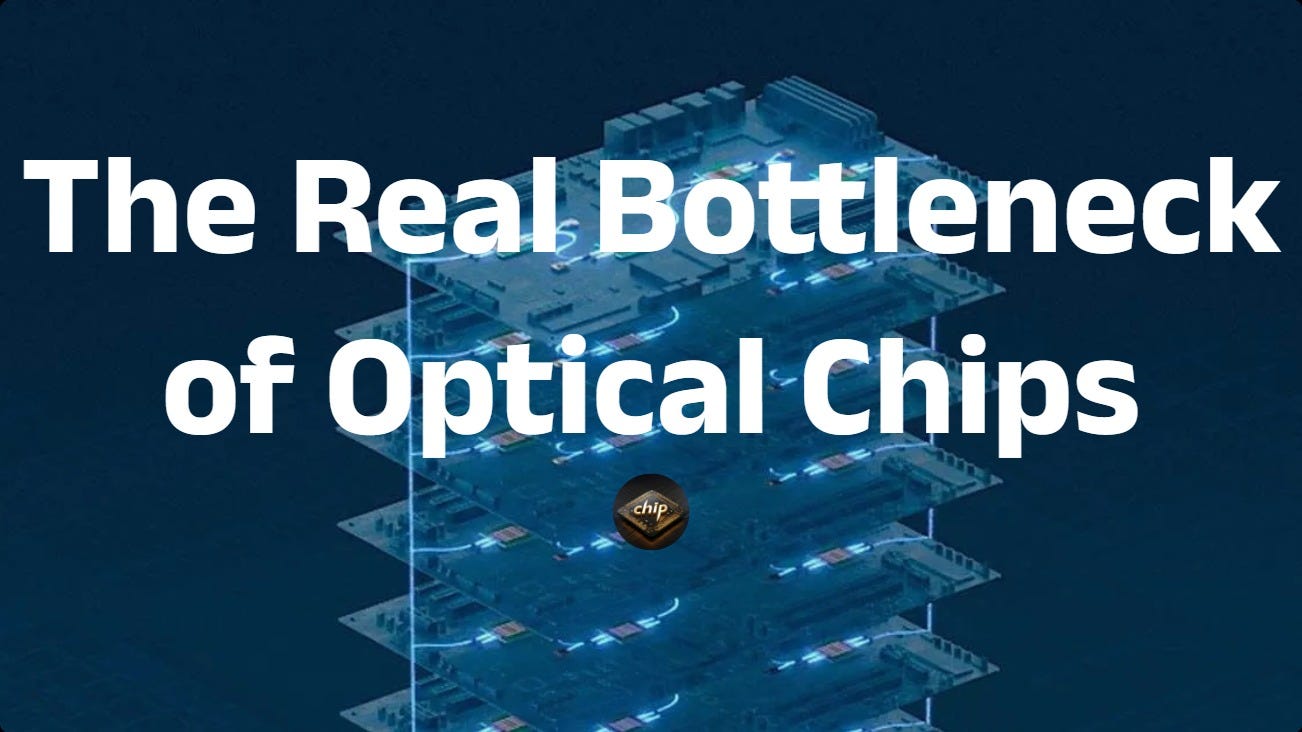
Optical interconnects essentially involve converting electrical signals into optical signals, transmitting them through optical fiber, and then converting the optical signals back into electrical signals at the receiving end. The structure appears simple, but in practical applications, the most challenging part is stably generating the optical signal.
Listen · chippub
The Real Bottleneck of Optical Chips
0:00-1:05
Pick your daily storyteller
Subscribe to match with Theo, Jessica, Chloe, Mason, Brock — your voice, every brief.
Live · Kokoro-82M