This article is free, but most of my 4-5 weekly articles are paid, so consider becoming a free or paid subscriber if you enjoy it!
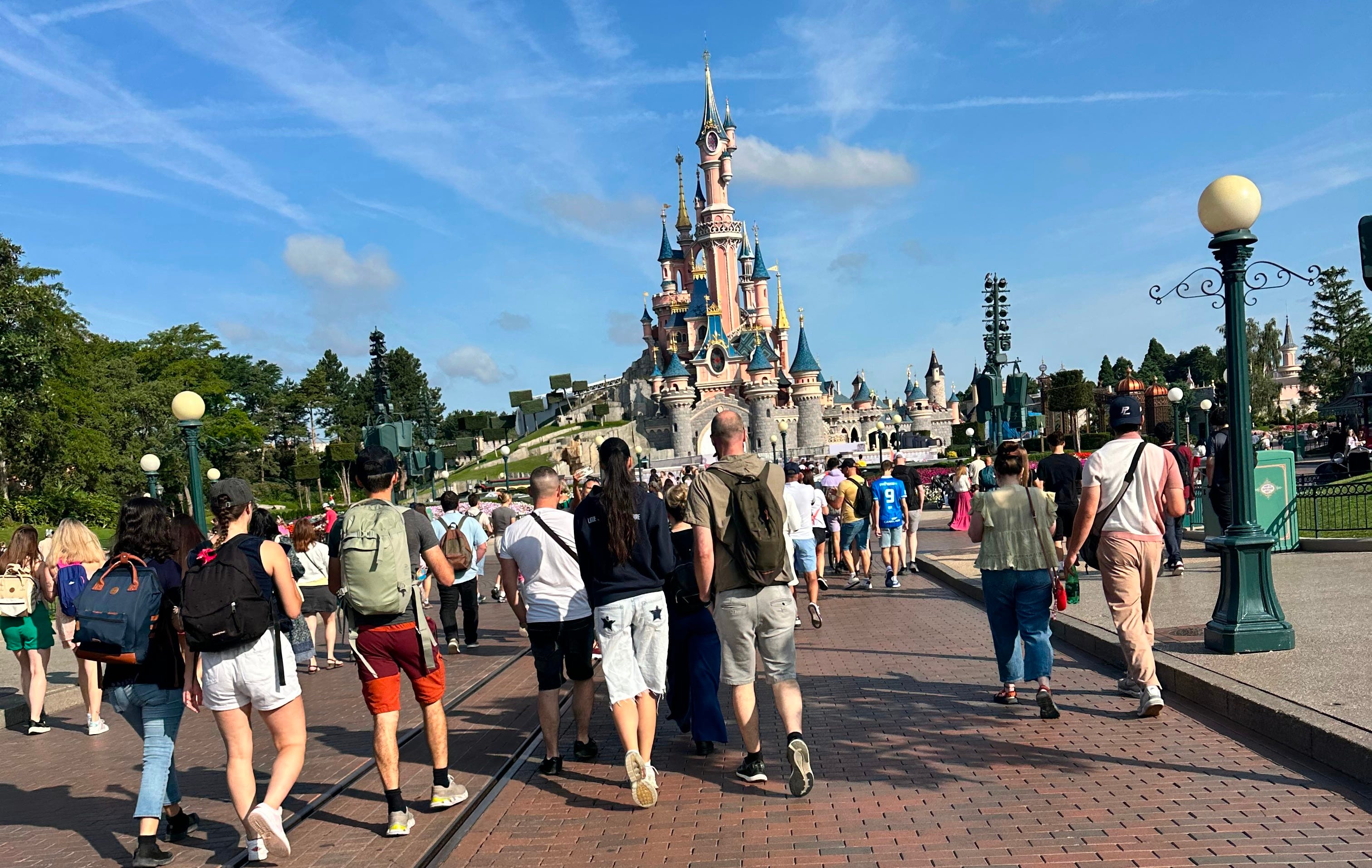
This summer, my husband and I took our kids to Disneyland Paris. It was my first Disney trip since a Los Angeles family trip when I was twelve, when the caricature artist painted a comically enormous chin on me, only to revise it after my mom whispered, “That’s an insecurity of hers,” to him.
But anyway.
Disneyland Paris is not as intense as Disneyworld in Orlando (where I’ve actually never been, I’m a bit scared.) Disneyland Paris is much smaller, much cheaper, and it’s a day trip because you can get there on a forty-minute train, provided you are in Paris to begin with. (I am aware at this point, someone might say something like, “Wow, real OUT OF TOUCH, assuming EVERYONE is always in Paris.” Privilege checked!)
But one thing about Disneyland Paris which is the same as any Disney location? There is a lot of waiting. And not just waiting—waiting with children who don’t always understand why they have to wait. We took an early morning train so we would arrive before it opened, figuring this was our only chance to take our daughter on the very popular Frozen ride. The wait time for that ride was already over an hour before the park opened. So with this reality check in mind, we expected to wait a lot, and warned our kids that being bored in line was the price they’d pay for fun rides. Our kids whined a little, but complied.
But you know who didn’t comply? Certain poorly-behaved adults.
As we waited at the front gates for the park to open (at which point we could swipe our tickets and start waiting for rides) we noticed that everyone was basically cooperating, fully aware that waiting was part of the deal, except for four adults in their twenties wearing Mickey Mouse ears and backpacks, who frantically scampered past the line, giggling. They were convinced that they had figured out the “one secret trick” to avoiding the wait times at Disney—just break the rules, while hoping everyone else follows them.
Nobody did anything about it. They had cut a bunch of families, for the most part, and none of us were looking to brawl—or worse, be a Karen. They cut everyone, probably entered the ride lines before everyone else, and did the whole thing without a hint of shame.
Later, when we were waiting for a ride, we noticed there was a single rider line, where people riding alone could fill spare spots and enjoy shorter wait times. My husband noticed four young women pretending not to know each other in the line, then laughing and performing a taunting dance together when the ride attendants weren’t looking, basking in the victory of having fooled them. Immediately, the attendant noticed what they were doing and kicked them out of the line. The same thing happened with two other adults who had been pretending to be unacquainted. Finally, a third man excused himself from the line and admitted that he and his friends were also taking advantage of the single rider line but he’d rather not suffer the indignity of being found out and ejected.
Obviously, none of this is a big deal. Despite what some on Bluesky might insist, I am not advocating that these people be drawn and quartered in the town square. But they activated a very particular pet peeve of mine, which is that even when rules seem small and inconsequential, breaking them for pure selfishness doesn’t only imply that the rule-breaker don’t care about the rules. It implies that they still want to enjoy a society where everyone else follows the rules, but they don’t, because they are special. And unlike fare evasion or shoplifting, these people cannot claim, even insincerely, that financial hardship or a rebellion against capitalism, AI, or Jeff Bezos was at the heart of their decision. They were at Disneyland!
I would argue, as I have before, that most people who evade fare or shoplift are also not doing it because they must steal to survive. Not to beat a dead stolen lemon, but when well-off writer Jia Tolentino notoriously joked about shoplifting a couple lemons from Whole Foods and people responded by confronting her outside her home, I thought that was a bit much. It was, after all, just lemons. But this behavior pissed people off (even if they went too far) precisely because Jia Tolentino (and other upper middle class people who steal for thrills, convenience, or for political statements) are not only stealing, but benefiting from a society where most people don’t steal. If literally every customer stole from Whole Foods instead of paying, there would simply be no Whole Foods, or the security would ramp up significantly to the point that shopping there would be very unpleasant (see: everything now locked up at CVS after people decided the rules didn’t apply to them). In that same interview, Hasan Piker defended shoplifting by pointing out that a certain amount of loss is baked into these businesses’ pricing model. That may be true, but it still assumes that only certain people will shoplifting. Why do you deserve to be in that subset but everyone else doesn’t?
The same is true, quite frankly, of Disney. Sure, things will not fall apart if only some people cut the lines. But why do you get to be one of those people?
Perhaps some rules are unnecessary and meant to be broken, but generally a good litmus test is: if everyone broke this rule, what would happen? Most of the time, you’ll find that if everyone broke a rule you’d like to break, the location where the rule-breaking took place would become completely unusable and descend into full CHAZ-tier anarchy. True, throwing a soda can on the ground should not earn you prison time, but if everyone littered all the time, the streets would be a disaster. Anyone who frequently litters has not just ignored a rule. They have decided that they are special and this rule doesn’t apply to them, but should still apply to everyone else (because surely, they don’t want to wade through two feet of empty hot Cheetos bags every day.)
The dog owner who proudly walks around town with an unleashed and aggressive dog is just taking a bet that other people will leash their own aggressive dogs, who might otherwise pose a danger to his. (And don’t get me started on the copious dog shit everywhere—I’m sure the people who allowed their dog to leave it are still very happy that other people are not smearing dog poop everywhere.) The person taking up two parking spots with her car has benefited from a parking space where everyone else only took up one. Sure, none of this should be jailable, but certainly we must do something. Genuinely, bring back this:
People who break these “minor” rules are essentially the same people who refused to do any work for their school projects, but still got to enjoy a good grade because the nerds stepped in and finished it for them. Most of society does not want bedlam; they will follow the rules even if other people don’t. But it doesn’t take many people to completely ruin an experience for the rule-followers.
I can’t help but notice that public spaces are made less convenient, less safe and less enjoyable because of selfish rule-breakers, or measures taken specifically to deter selfish rule-breakers. Thought you could enjoy the pretty fountain at the park? Well, you can’t, because someone threw garbage in the water and now it’s being drained for cleaning. Thought you could enjoy the donated plastic Barbie van at the park with your children? Well, you can’t, because someone lit it on fire and it melted onto the slide in spiky fragments, making the entire play structure unsafe until the city can come to fix it (yes, this actually happened near me a few years ago.) Oh, someone donated a little Fisher Price plastic food truck to the playground, so cute! Oh wait, a bunch of teenagers stomped on it overnight and now the park is littered in broken pieces of plastic. You thought you could enjoy a walk outside with your baby? Well, despite the “NO DOGS” sign, someone has shown up with his traumatized rescue pit bull who is “oh so friendly” and doesn’t need a leash.
It’s easy to call people like me crotchety Squidwards, but it doesn’t take that many people to devolve a society into a place where everything is filthy, unusable, unsafe or just unpleasant. Demonizing anyone (especially a woman) who stands up for these rules as a “Karen” has backfired, as now the Mrs. Crumplebottom elders of society who used to unofficially keep everyone in line by wagging their fingers at rule-breakers are too afraid to be recorded out of context. Assuming that anyone who breaks these rules is just poor has also backfired, since it’s abundantly clear that plenty of people break the rules for reasons that have nothing to do with financial hardship. The chess park is dead, the mural is vandalized, the playground is unusable, dog shit is all over the streets, adults are cutting children at Disneyland, but hey…at least the rule-breakers don’t have to be inconvenienced.