In an earlier essay, we talked about what the Stoics meant by total freedom.
We can’t be free if our freedom depends on what others may or may not do:
*Will my boss give me a big raise? Will my spouse be faithful to me forever? Will my friends stand by me when I need them?*We cannot be free if our freedom depends on our bodies:
*Do I look handsome enough? Will I always be healthy? What will happen when I get old?*We cannot be free if our freedom depends on something happening or not happening:
*I hope it doesn’t rain when I am on holiday. I hope our next president is X and not Y.*We cannot be free if our freedom depends on our desires being fulfilled:
I will be free when I make a lot of money. I will be free if everyone applauds me and treats me with respect.
Why not? Because none of these is in our hands. What others do, what happens to our bodies, what happens in the world around us, and whether our desires are fulfilled or not are externals, and we cannot control them. Sure, we can try to make these things happen, and we may even succeed. But it is also true that we may not.
When we take time to think about it, it becomes clear that the only true and lasting freedom is the unconditional one. No one can give it to us, and no one can take it away from us. But can it be achieved? For the Stoics, the answer is a resounding YES! It is achievable now, wherever we are, no matter the current conditions of our lives, no matter what happened in the past, and no matter what may happen in the future.
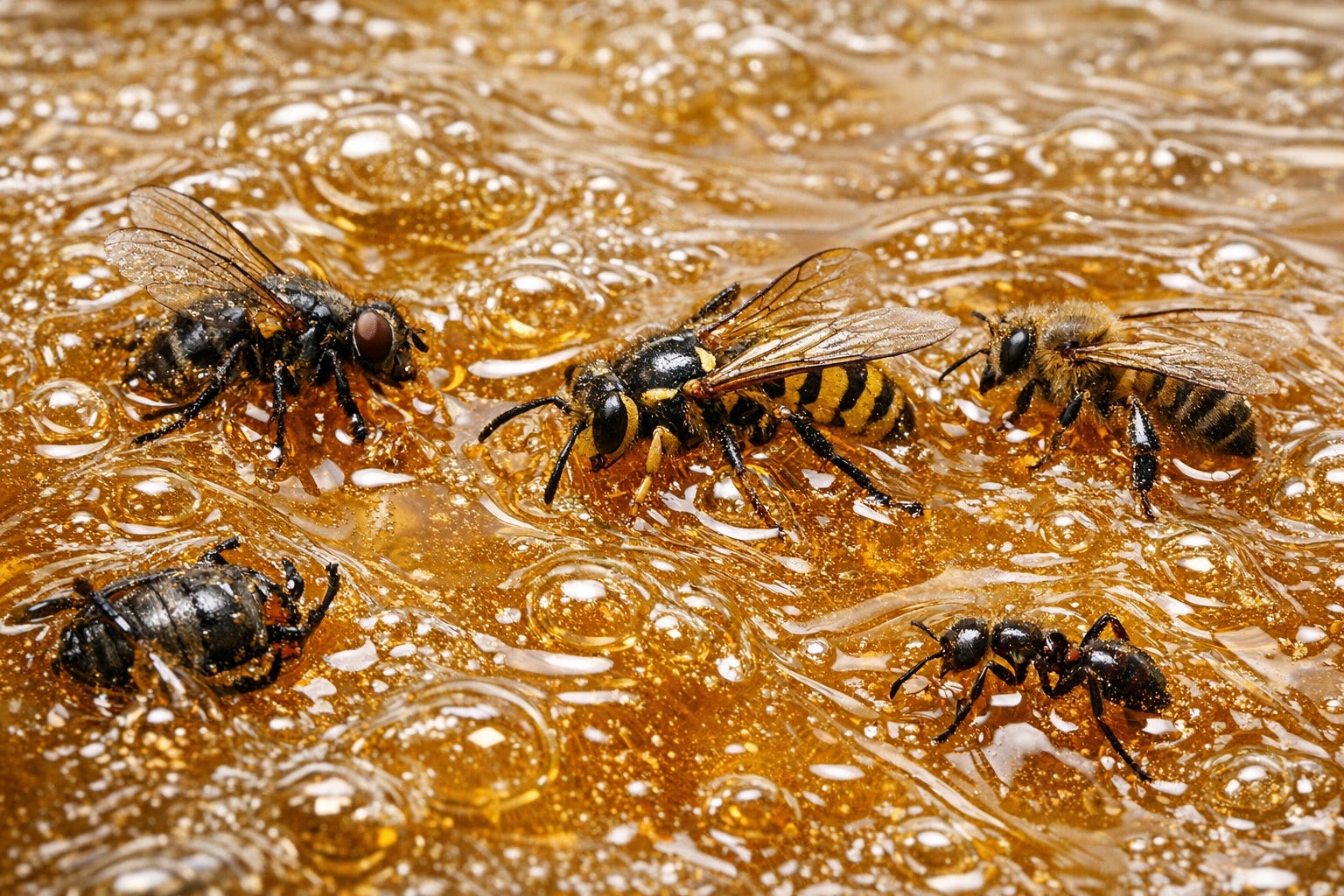
If anyone can be free right now, regardless of their circumstances, why aren’t we? Why do we struggle through our lives when we have wings to fly right now? Why are we insects trapped in honey rather than eagles that soar?
The Stoics knew why. We live this way because we don’t know any better. We struggle through our lives without ever realizing that we don’t have to. We spend our entire lives looking for freedom in places where it doesn’t exist. We mistake the fleeting pleasures of life and remain trapped in honey, giving up our freedom to soar. The short-lived pleasures of externals trap us like the honey that traps insects. We fail to see that our freedom does not depend on externals. To the extent that we believe freedom can be gained through someone else, something else, being somewhere else, or getting something else, we will go on searching for it in places where it does not exist. We will keep struggling with the trap we created for ourselves.
How do we escape the struggle? How do we escape the honey in which we are trapped?
Freedom is unconditional. No one gives it to us and no one can take it away from us. Most of us do not know this because we don’t see it. A truly free person is poor but still free, ugly but still free, sick but still free, disabled but still free, in danger but still free, imprisoned but still free, dying but still free, in disgrace but still free.
This may sound odd at first. How can someone who is poor, ugly, sick, crippled, in danger, imprisoned, or disgraced be free? But we have all seen people who are poor yet not constrained by it, sick yet not constrained by it, imprisoned and yet not constrained by it.
Actor Michael J. Fox, at the height of his fame, was diagnosed with Parkinson’s disease. He was barely thirty years old. How did he take it?
If you were to rush into this room right now and announce that you had struck a deal—with God, Allah, Buddha, Christ, Krishna, Bill Gates, whomever—in which the ten years since my diagnosis could be magically taken away, traded in for ten more years as the person I was before, I would, without a moment’s hesitation, tell you to take a hike. - Michael J. Fox, Lucky Man
Michael J. Fox was sick and yet free.
Gandhi was accused of treason. He was given the opportunity to defend himself. Instead, he told the judge that the charges were true and said,
I … invite and submit to the highest penalty that can be inflicted upon me for what in law is a deliberate crime. - Mahatma Gandhi, speaking at his trial
Gandhi was sentenced to six years in prison. Gandhi was in prison and yet free.
I can multiply the examples, but I am sure most of us have already seen free people, even though they are ugly, poor, or disabled, and yet exude freedom.
Does that mean we should accept being poor, sick, imprisoned, or in disgrace? Not necessarily. Many things we consider “good” in life and work toward achieving, such as wealth, health, physical safety, and financial independence, do not determine our character. If we desire them, there is nothing that stops us from pursuing them, as long as we don’t compromise our virtue and character while getting them.
Being healthy is good, being sick is bad? No, my friend. Enjoying health in the right way is good, and making bad use of your health is bad. - Epictetus,Discourses, 3.20
What does Epictetus mean by this? If you are healthy and you use it to help yourself and others, it is good; if you use it to hurt others, it is bad. It is the same with all other indifferents, such as wealth, possessions, beauty, and reputation. They are in themselves neither good nor bad. Having them will not make us free or unfree. We can use them to gain limited freedom, but total freedom comes when we realize we can be free even when sick or imprisoned.
So, we are unfree because we work toward the wrong goal: trying to accumulate indifferents in our lives. We fail to realize that indifferents by themselves cannot make us free. But if we develop the inner resources, even when none of the indifferents are present in our lives, we will be free.
The Stoics called the things that most people consider desirable—such as health, wealth, and the absence of unnecessary restrictions—“preferred indifferents.” What did they mean by this? They meant that while indifferents can be used for good or bad ends, they are still indifferents. Stoics did not object to preferred indifferents. We know that Seneca was the richest private citizen of his time, Musonius Rufus gained a great reputation while still alive, and Marcus Aurelius was the emperor of the largest empire of his time (although not by his own choice).
If all this is true, why can’t we pursue our desires in our quest to be free?
There are two ways we can pursue indifferents. We can treat them as preferences or as “must-haves.” What is the difference? Let’s say I would prefer to be financially independent. I can pursue this goal by working hard, saving regularly, and investing. There is no harm in it. But if I believe that financial independence is something I must absolutely have in order to be free, then I cannot be free. I have tied my freedom to financial independence, and that is not in my hands. No matter what I do, things outside my control can stop me from becoming financially independent, such as a stock market collapse, unexpected and prolonged illness, an unexpected war, or high inflation. If we tie our freedom to an indifferent, we give up our ability to be free from things outside our control.
If you wish never to be disappointed, never to be compelled, never to be hindered, wish for nothing which belongs to others. - Epictetus,Discourses, 3.24
We have been taught by our family, friends, and society at large that a single-minded pursuit of health, wealth, possessions, reputation, and so on is good and will lead us to freedom. We admire people who devote themselves entirely to such pursuits. It is hard for most of us to believe that many things we pursue relentlessly could stand between us and freedom. Why? What are we doing wrong?
When we are convinced that indifferents will make us free, we tend to pursue those indifferents we don’t have now. Those who are wealthy believe perfect health will make them free; those who are healthy believe wealth will make them free; those who have both wealth and health believe that a good reputation will make them free.
What you possess now, you would think it the greatest of blessings if it were not yours. - Seneca, Moral Letters, 9.3
Since we will always lack something, no matter what we have, pursuing externals will keep us seeking more and more of them. Since we can play this game all our lives, we can never be free.
The flip side of going after what we don’t have is failing to appreciate what we do have. This is why multimillionaires feverishly work toward the next million, academics work toward their next credential, and politicians work toward a larger constituency.
Do not dream of having what you do not have; rather, reflect on the greatest blessings you do have, and remember how much you would miss them if they were not yours. - Marcus Aurelius,Meditations,7.27
More of such indifferents will not set us free. However, appreciating what we do have will make us realize that we already have what we need to be free.
Another thing we intuitively believe is that if we relentlessly pursue acquiring what we generally agree is good—such as a good education, being a good Stoic, being an excellent person, or achieving quietude—it will make us free.
Remember that it is not only desire for office and wealth that debases men and makes them subservient to others, but also desire for quiet, and leisure, and travel, and learning … what difference does it make, then, whether you set your desire on becoming a senator, or on not becoming one? -Epictetus,Discourses,3.24
What makes us unfree is not the objects we pursue, but our belief that freedom can be bought by any of these means. No indifferents can lead us to freedom. Pursuing indifferents is not the problem; confusing them as prerequisites for freedom is.
Whenever we believe we “must” have something in order to be free, we create a situation that leads us in the opposite direction: slavery.
If I believe that a big promotion is necessary in my quest for freedom, I create a master plan. Who is my master? My boss, who has the power to promote me.
If I believe that I need an excellent reputation to be free, I create another master. Who is my master? Anyone whose opinion matters to me.
So it is with other things. The moment we think we have to have something, we put ourselves in a position of having a master. When we have a master, we don’t have freedom. We have slavery.
Wherever the object of desire is placed, there we must necessarily be subject. - Epictetus, Discourses, 4.4
We are not free because we seek freedom in places where it doesn’t exist.
We believe indifferents, even if they are “preferred” indifferents, will help us achieve freedom.
Because of that belief, we treat preferred indifferents such as wealth, health, education, and reputation as essential conditions for achieving freedom.
Such pursuits cannot lead us to freedom. They can harm us. The harm comes about because:
We value things we don’t have.
We fail to appreciate the value of things we already have.
We believe cultural narratives that place a high value on certain externals.
We fail to see how the pursuit of indifferents can lead to slavery instead of freedom.
Take time to reflect on the following, preferably in writing:
List three things you currently believe you
musthave in order to be free (for example: security, approval, success, health, status).For each one, ask:
*Is this fully in my control?*Notice how much of your daily anxiety, effort, or frustration is tied to protecting or acquiring these things.
Now imagine losing one of them. Ask yourself honestly:
*What part of me would remain untouched?*Finally, write one sentence completing this thought:
“Even without ___, I can still be free because ___.”
180426